<home # start here # guides # builds # services # shop # about # categories>
One of the most fascinating questions in archaeology is why early humans devoted enormous amounts of time, labor, and resources to symbolic systems before basic survival challenges had been fully solved. Across the Neolithic world, communities built ceremonial structures, carved symbolic imagery, created ritual spaces, and developed shared beliefs while still facing uncertain food supplies, disease, environmental fluctuations, and technological limitations.

Traditional views assumed that religion, art, and symbolic communication emerged only after societies became economically secure. However, discoveries at sites such as Göbekli Tepe challenge this assumption. Monumental ritual architecture appears to have been constructed by hunter-gatherers and early agricultural communities before large-scale farming was fully established (Schmidt, 2010).
The archaeological evidence suggests that symbolic systems were not luxuries developed after survival was guaranteed. Instead, they may have been essential tools that helped humans survive in the first place.
What Are Symbolic Systems?
Symbolic systems include religious beliefs, rituals and ceremonies, shared myths and stories, art and iconography, monumental architecture, burial customs, music and dance and social identities and group markers. These systems allow large groups of unrelated people to cooperate around shared ideas. Unlike simple survival technologies such as tools or shelters, symbolic systems create social cohesion. They help establish trust, organize labor, reduce conflict, and coordinate collective action. Anthropologists increasingly argue that symbolic systems functioned as a type of social technology.

Göbekli Tepe: Ritual Before Farming?
The most famous example comes from Göbekli Tepe in southeastern Türkiye. Dating to approximately 9600–8200 BCE, the site contains massive T-shaped limestone pillars decorated with animals, abstract symbols, and human-like features (Schmidt, 2010). Some pillars weigh several tons and required coordinated labor to quarry, transport, and erect.
Remarkably, evidence suggests that these monumental structures were built before widespread agriculture developed in the region (Dietrich et al., 2012). This finding led archaeologists to reconsider the traditional sequence of social development. Instead of agriculture producing religion, religion and shared symbolic systems may have encouraged cooperation, which later facilitated agriculture (Hodder, 2020). In this interpretation, ritual gathering sites helped bring dispersed populations together, creating social networks that increased resilience and survival.

Architecture as Social Glue
Buildings are more than shelters. Neolithic ceremonial structures provided physical locations where communities could share information, exchange resources, resolve disputes, arrange marriages, coordinate hunting and farming and establish social identities. Constructing monumental architecture required planning, communication, and collective effort. By participating in building projects, individuals reinforced social bonds and demonstrated commitment to the community.
Archaeologists sometimes describe these projects as “costly signals” because they visibly demonstrate cooperation and trust among participants (Trigger, 1990). From this perspective, symbolic architecture may have improved survival prospects by strengthening social networks.

Shared Beliefs and Cooperation
Human survival often depends on cooperation beyond immediate family groups. Shared symbolic systems provide mechanisms for trusting strangers, creating common identities, encouraging reciprocal behaviour, reducing internal conflict and organizing labor. Research in cognitive archaeology suggests that symbolic thought allowed humans to imagine larger communities united by common beliefs rather than biological relationships alone (Mithen, 1996). Such capabilities would have been particularly valuable during periods of environmental uncertainty. Groups capable of coordinating hundreds of individuals may have possessed advantages over smaller, less organized populations.
The Evidence from Çatalhöyük
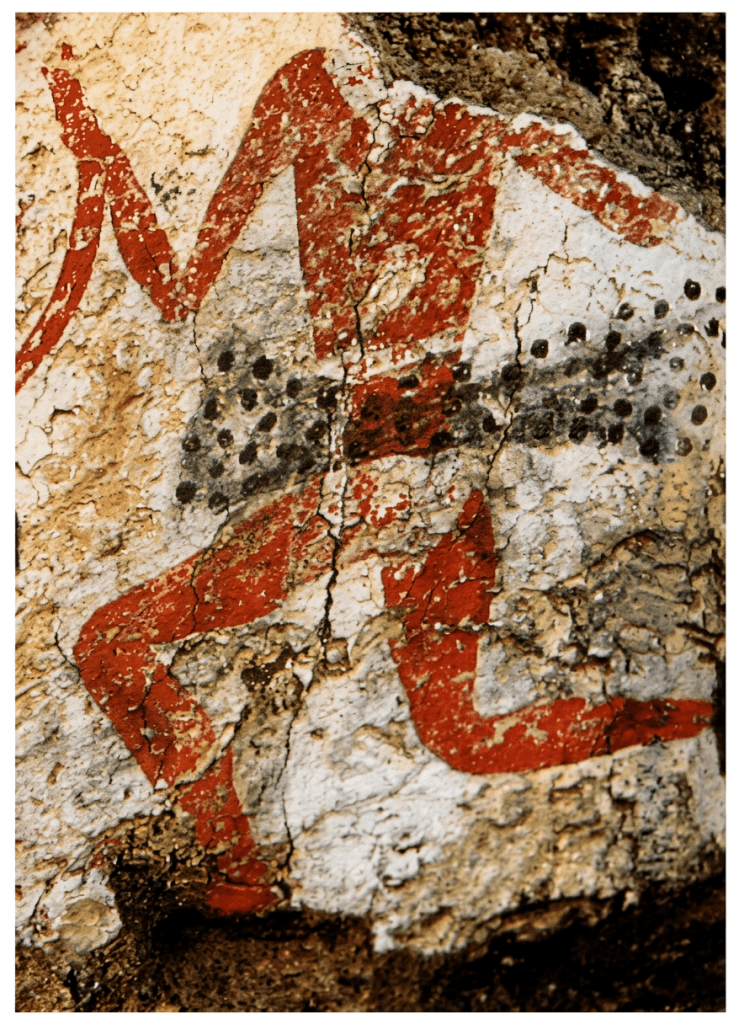
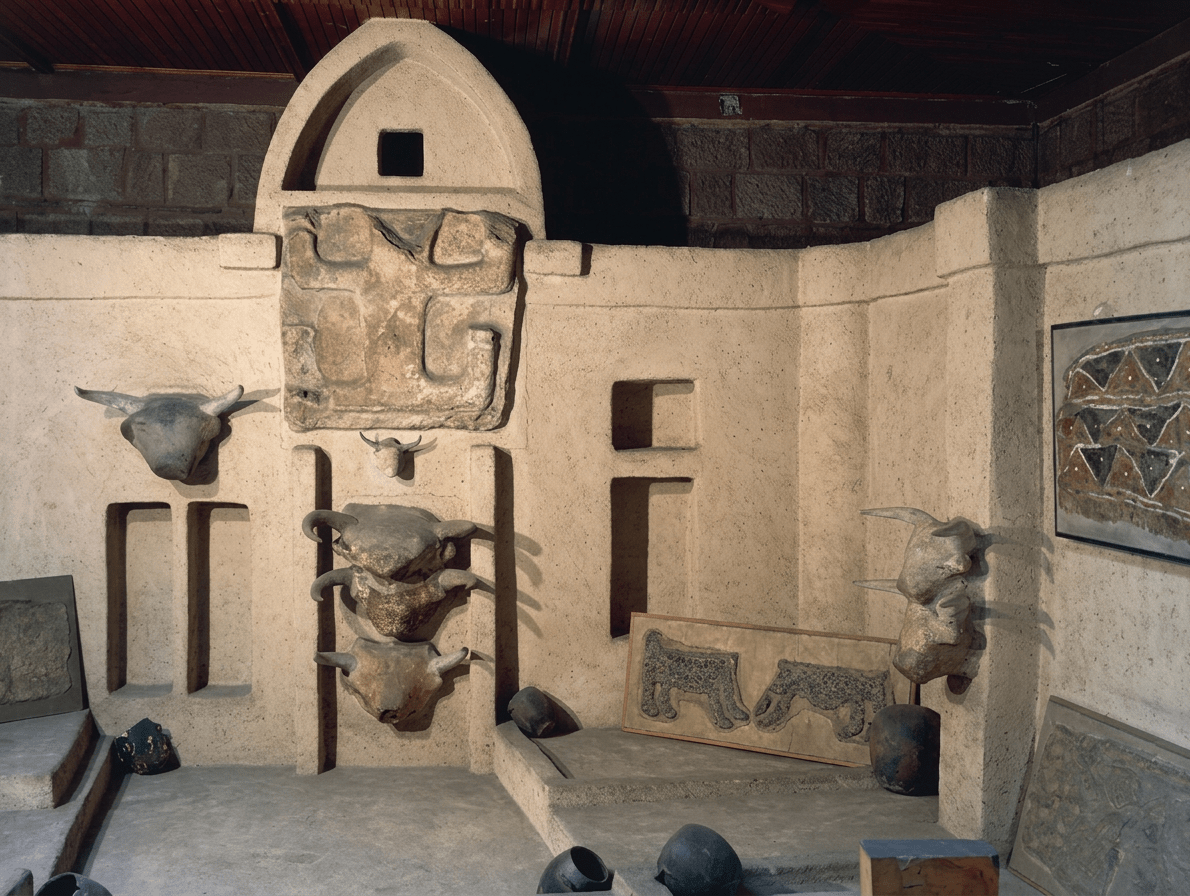
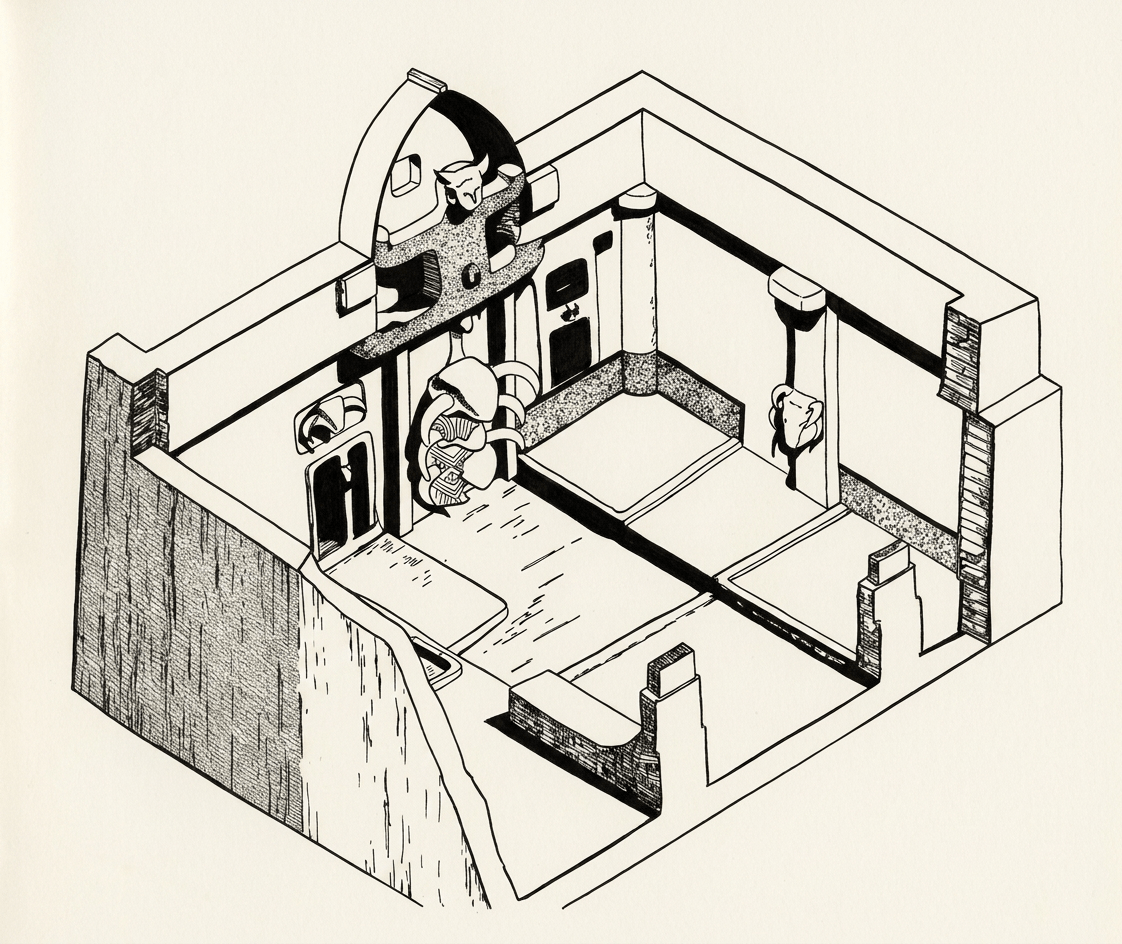
At the Neolithic settlement of Çatalhöyük, symbolism permeated daily life. Archaeologists have documented elaborate wall paintings, bull horn installations, human burials beneath houses, ritualized domestic spaces and symbolic animal imagery. These features appear throughout the settlement rather than being isolated in special temples (Hodder, 2006). The evidence suggests that symbolic meaning was integrated into everyday life, architecture, and social relationships. Residents invested substantial labor into symbolic expression while still relying on relatively simple farming technologies and facing significant survival challenges.
Symbolism as an Adaptive Strategy
Rather than competing with survival needs, symbolic systems may have enhanced survival through several mechanisms (information transmission, group identity, conflict reduction, resource sharing and psychological resilience)
Information Transmission. Stories, rituals, and symbols helped preserve practical knowledge across generations.
Group Identity. Shared beliefs strengthened cooperation among large populations.
Conflict Reduction. Common rituals may have reduced tensions and reinforced social norms.
Resource Sharing. Ritual gatherings facilitated exchange networks during periods of scarcity.
Psychological Resilience. Belief systems helped communities cope with uncertainty, death, environmental change, and social stress. These benefits could outweigh the costs associated with constructing ceremonial architecture or performing rituals.
Lessons for Understanding Neolithic Architecture
The archaeological record increasingly indicates that symbolic systems were not secondary developments that followed economic success. Instead, symbolic architecture may have helped create the social conditions necessary for long-term survival and societal growth.
Sites such as Göbekli Tepe and Çatalhöyük demonstrate that early communities invested heavily in shared meanings, collective identities, and ceremonial spaces. These investments helped coordinate cooperation on scales that would otherwise have been difficult to achieve. In this sense, symbolic systems were as important to human survival as tools, food production, and shelter.
The question is not why humans invested in symbolic systems before survival was ensured. The archaeological evidence suggests that symbolic systems were part of the survival strategy itself.
Neolithic architecture reveals that ceremonial buildings, ritual spaces, and shared beliefs acted as powerful social technologies. They enabled cooperation, transmitted knowledge, strengthened group identity, and created resilient communities capable of facing uncertain environments. The monuments of the Neolithic world remind us that humans survived not only because they learned to grow food and build houses, but also because they learned to share stories, symbols, and meanings that united people into larger and more effective societies.
References: Dietrich, O., Heun, M., Notroff, J., Schmidt, K., & Zarnkow, M. (2012). The role of cult and feasting in the emergence of Neolithic communities. Antiquity, 86(333), 674–695.
Hodder, I. (2006). Çatalhöyük: The Leopard’s Tale. Thames & Hudson.
Hodder, I. (2020). Where Are We Heading? The Evolution of Humans and Things. Yale University Press.
Mithen, S. (1996). The Prehistory of the Mind: A Search for the Origins of Art, Religion and Science. Thames & Hudson.
Schmidt, K. (2010). Göbekli Tepe—the Stone Age sanctuaries: New results of ongoing excavations with a special focus on sculptures and high reliefs. Documenta Praehistorica, 37, 239–256.
Trigger, B. G. (1990). Monumental architecture: A thermodynamic explanation of symbolic behaviour. World Archaeology, 22(2), 119–132.
Leave a Reply