<home # start here # guides # builds # services # shop # about # categories>
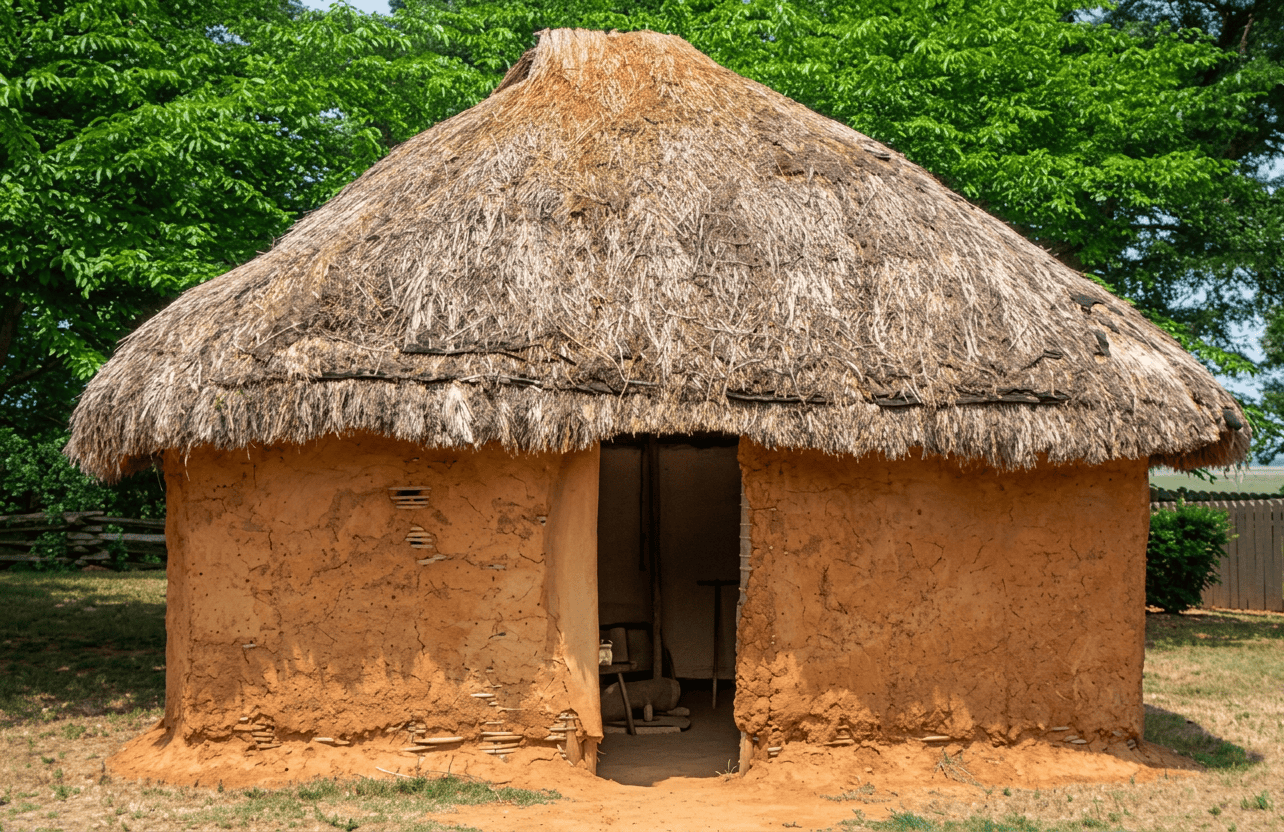
For thousands of years, humans built warm, durable, repairable homes using little more than wood, earth, grass, fiber, and water. As well as, a little patience.
One of the most important and widespread ancient construction methods was wattle and daub. Wattle and daub is a flexible wall system used across prehistoric Europe, the Near East, Africa, Asia, and beyond. It is still being used in some environments like Uganda, Brazil, and others today. And, in many home interiors as mud and plaster.

From early farming villages near Jericho, to later settlements throughout Neolithic Europe, wattle and daub helped communities create: houses, workshops, granaries, livestock shelters, fences, & defensive structures. The system was inexpensive, adaptable, and remarkably effective.
Even today, versions have survived in: natural building, eco architecture
wilderness cabins, heritage restoration, off-grid housing & sustainable design projects.
This guide explains: what wattle and daub is, how ancient builders constructed it, the materials and tools required, climate advantages and weaknesses, step-by-step construction methods, & how the technique still influences modern natural building
What Is Wattle and Daub?
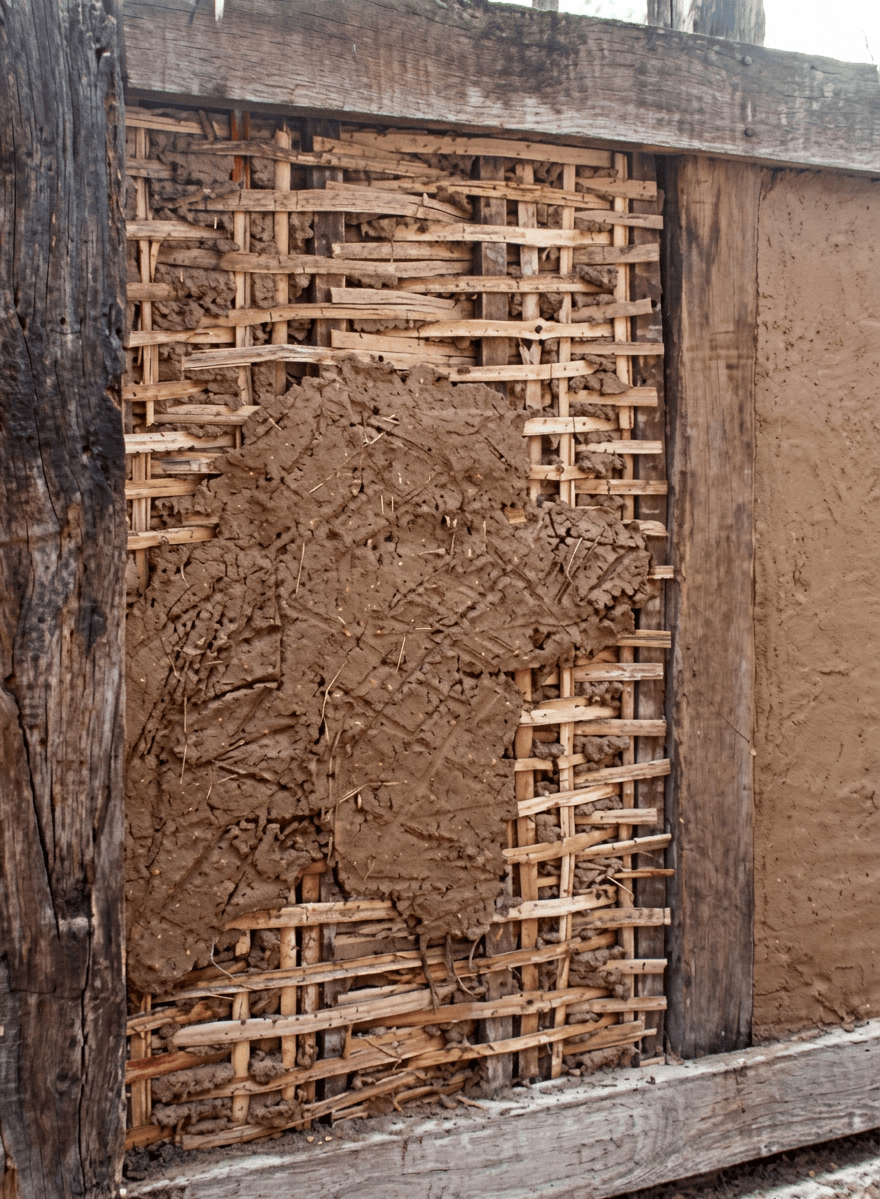
Wattle and daub is a composite wall-building method. It combines: Wattle, or a woven framework of flexible branches or reeds. &, Daub: wet earthen mixture applied over the woven structure.
Once dried, the wall becomes: insulated, wind resistant, relatively lightweight, repairable
& surprisingly strong. The system functions somewhat like reinforced natural concrete: the woven frame handles tension and flexibility, the daub provides mass and insulation.
Why Ancient Builders Used Wattle and Daub
Neolithic communities often needed materials that were: local, renewable, lightweight, easy to repair, fast to construct.
Wattle and daub solved many problems
It required: no advanced metallurgy, minimal stone shaping, limited heavy transport & simple tools. It also worked across many climates.
Where Was Wattle and Daub Used?
The method appeared across vast regions of the ancient world. In southwest Asia, it was used in early farming settlements, of the Levant and Anatolia. In Europe, it was common in: neolithic longhouses, iron age villages & medieval rural homes. In Africa, it was used in many traditional earthen architecture systems. And, Asia, various woven-earth construction methods emerged independently.
Core Components of Wattle and Daub Construction
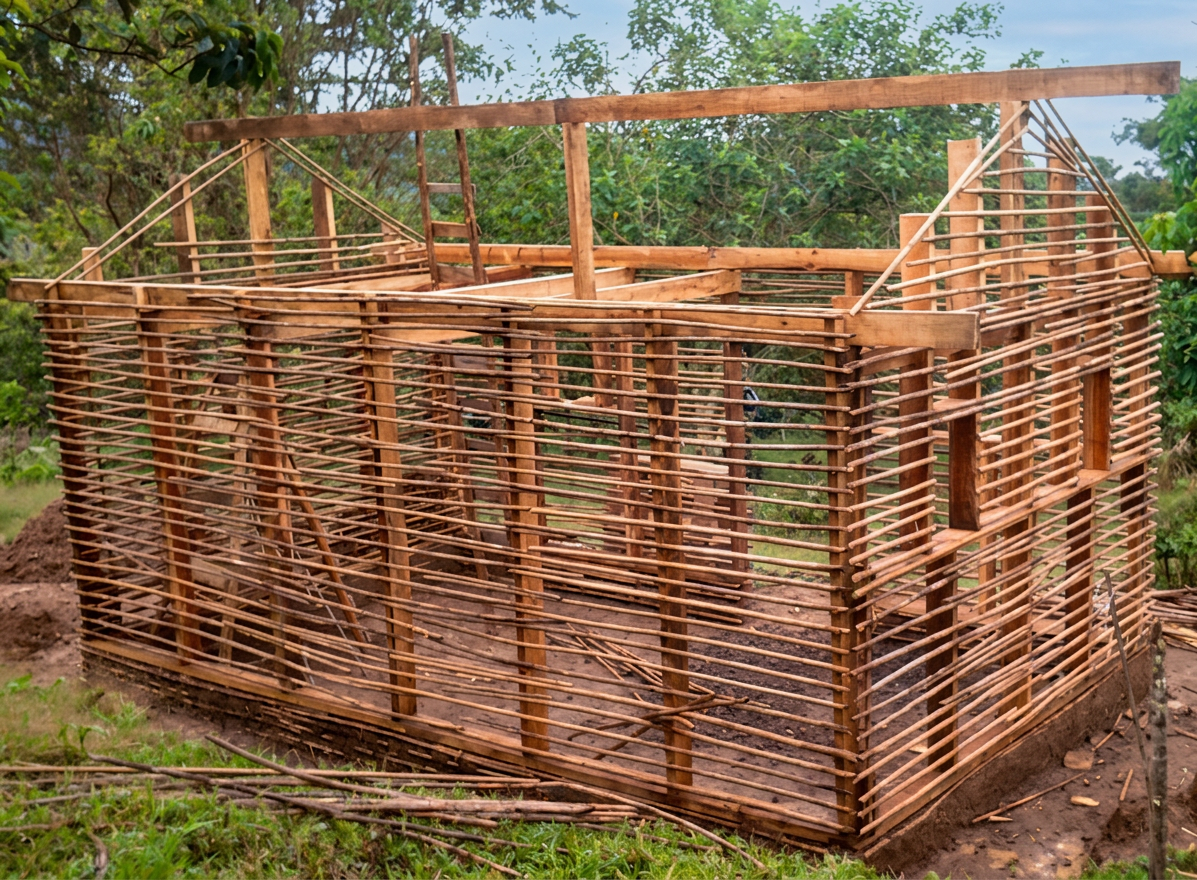
- Structural Frame. The main structure usually consisted of: timber posts, saplings, poles, & split wood. These formed: wall supports, roof supports, load-bearing skeletons
- Wattle Framework. The “wattle” was the woven interior lattice. Materials included: willow, hazel, reeds, bamboo, flexible branches, vines & other. Builders wove branches horizontally between upright stakes. It created: flexibility, crack resistance & surface grip for the daub.
- Daub Mixture. Daub recipes varied by region. Most included: clay-rich soil, sand, straw, grass fibers, dung, ash & water. Each ingredient served a purpose. Clay: binding material. Sand: reduces cracking. Straw/Fiber: adds tensile strength. & Dung: improves cohesion and water shedding.
How Ancient Builders Made Daub
Daub was often mixed: by foot, with wooden paddles, in pits & on hides or mats. The process resembled kneading thick clay mortar. Builders adjusted recipes depending on: humidity, local soils, climate & wall thickness.
Tools Used in Wattle and Daub Construction
Neolithic builders relied on surprisingly efficient toolkits. Stone Tools: axes, adzes, scrapers, hammerstones, & flint blades. Bone & Antler Tools: awls, wedges, & perforators. Fiber Technologies: rope, lashings & woven carrying baskets. &, Fire was also important for: clearing land, hardening wooden stakes & processing clay.

Step-by-Step Wattle and Daub Construction Guide
Step 1: Choose the Building Site. Ancient builders prioritized: drainage, sunlight, nearby timber, nearby water, nearby clay deposits, & wind protection. They avoided: swampy ground, flood zones, & unstable slopes.
Step 2: Build the Structural Frame. Large vertical posts were set into: post holes, compacted soil, & stone sockets. Horizontal beams connected the frame. A simple neolithic-style house might use: 6–20 main posts, cross beams & roof supports.
Step 3: Install Upright Wattle Stakes. Thin stakes were inserted vertically between major posts. Spacing varied depending on: branch flexibility, wall thickness, & desired insulation. Typical spacing: 4–10 inches apart.
Step 4: Weave the Wattle: Flexible branches were woven horizontally through the stakes. The weaving pattern resembled: basketry, fencing, & fish traps. Builders alternated: over-under patterns, twisting vines & layered reeds. The tighter the weave: the stronger the wall, & the better the daub adhesion.
Step 5: Prepare the Daub. A common recipe: 30–50% clay soil, sand, chopped straw, dung, & water. The mixture should feel: sticky, fibrous, workable & not overly wet. Too much clay causes cracking. Too much sand weakens cohesion.
Step 6: Apply the Daub. Daub was pressed into the woven lattice by hand. Builders pushed material: through the weave, onto both sides, & into gaps and cracks. Walls were often built in layers. Drying time depended on: weather, humidity & wall thickness
Step 7: Smooth and Finish Walls: After partial drying, walls were: smoothed by hand,
plastered, & burnished. Some settlements added: lime plaster, pigments, painted designs & symbolic markings.
Step 8: Construct the Roof. Roofs protected the vulnerable earthen walls. Common materials: reeds, straw, bark, timber poles & grasses. In rainy climates: steep roofs worked best. In dry climates: flatter roofs were common. Good roofing dramatically increased wall lifespan.
Step 9: Drying and Maintenance: Wattle and daub homes required regular care. Communities repaired: cracks, weather damage, water erosion & roof leaks. Maintenance was expected and normal. A well-maintained structure could survive for decades.

Advantages of Wattle and Daub
- Local Materials. Most materials could be gathered nearby.
- Low Energy Construction. No industrial machinery required.
- Flexible Walls. Walls resisted movement and vibration well.
- Thermal Regulation. Earthen walls moderated temperature swings.
- Repairability. Damage could be patched quickly.
- Lightweight Construction. Less demanding than full stone walls.
Weaknesses of Wattle and Daub
Water Vulnerability. Poor roofing destroys walls quickly.
Maintenance Requirements. Cracks must be repaired.
Pest Damage. Organic materials attract insects and rodents. And,
Structural Limits. Large multi-story buildings become difficult.

How Long Did Wattle and Daub Buildings Last?
Without maintenance: only years or decades. With ongoing repair: generations. Many ancient settlements show repeated rebuilding cycles. Some communities: replastered yearly, rebuilt roofs seasonally & recycled wall materials. Architecture was seen as living infrastructure.
Archaeological Evidence of Wattle and Daub
Evidence survives through: post holes, burnt clay fragments, woven impressions in hardened daub, settlement patterns & collapsed wall remains. Fires sometimes accidentally preserved structures by: hardening clay, baking wall fragments, & preserving branch impressions.
Wattle and Daub in Famous Ancient Settlements
Çatalhöyük: used earthen wall systems with timber and reed elements. Jericho was an early farming settlement that used mudbrick and organic reinforcement systems. Neolithic Longhouses of Europe had timber frames with woven wall sections became widespread. And, Skara Brae, though largely stone-built, could have even had organic partition systems.

Climate Adaptation
Different regions modified the technique. In Wet Regions: steeper roofs, & raised foundations, thicker thatch. Dry Regions: thicker daub walls, flat roofs, & thermal cooling strategies. Cold Regions: additional insulation layers, smaller openings, & shared heat spaces.

Modern Natural Building Revival
Today, wattle and daub inspires: eco architecture, earth building, permaculture projects, historical reconstruction, survival shelters & experimental archaeology. Modern builders often combine ancient techniques with: improved drainage, stabilized plasters, engineered timber, & passive solar design.
Lessons From Ancient Builders
Wattle and daub demonstrates that architecture does not always require: industrial supply chains, concrete, steel, & synthetic insulation. Instead, ancient communities achieved durable shelter through: cooperation, local knowledge, environmental adaptation, maintenance culture & renewable materials. These principles remain increasingly relevant in discussions around: sustainability, resilient housing, low-impact living, disaster recovery & climate adaptation.

Wattle and daub was one of humanity’s most important building technologies. It connected: woodworking, basket weaving, earth science, engineering, thermal design & craft tradition. For thousands of years, it has provided ordinary people with functional, repairable, climate-adapted homes using materials gathered directly from the surrounding landscape. Far from primitive, it represents a sophisticated understanding of: structure, insulation, flexibility, resource management, & long-term maintenance. And, many of its lessons still apply today.
Recommended products
-

low tool high skills t-shirt
Price range: $60.00 through $70.00 -

na bold t-shirt
Price range: $60.00 through $70.00 -

sustainable building consulting
$2,000.00 -

log cabin shell
$20,000.00 -

experimental reconstruction products
-

jomon neolithic man women dig hole sticker
$4.00 -

course education service
$700.00 -

Pleistocene & megafauna coloring book
$2,500.00 -

f2j $450 long sleeve t-shirt
Price range: $80.00 through $90.00 -

button down shirt
Price range: $140.00 through $150.00 -

black peace button
$7.50

Leave a Reply