<home # start here # guides # builds # services # shop # about # categories>

One of the most surprising discoveries in European archaeology began not with a university excavation, but with a construction worker digging a trench.
In 1972, a local excavator operator named Raycho Marinov uncovered unusual objects while carrying out utility work near the modern city of Varna. What initially appeared to be isolated artifacts soon proved to be one of the most important prehistoric cemeteries ever discovered. Archaeologists eventually revealed hundreds of graves containing thousands of gold objects, copper tools, ornaments, and prestige goods dating to approximately 4500 BCE (Ivanov, 2000; Renfrew, 1986).
The discovery stunned researchers. Prior to Varna, many scholars assumed that large social inequalities emerged much later, alongside Bronze Age kingdoms and early states. Instead, the cemetery suggested that significant differences in wealth and status existed thousands of years earlier than expected (Renfrew, 1986).
The site raises a profound question: was the Varna Necropolis the earliest clear evidence of social inequality, and if so, why did inequality emerge so suddenly?

The Discovery That Changed European Prehistory
When Marinov reported his discovery, archaeologists initially suspected an important prehistoric site. As excavations continued, however, the scale of the find became increasingly extraordinary.
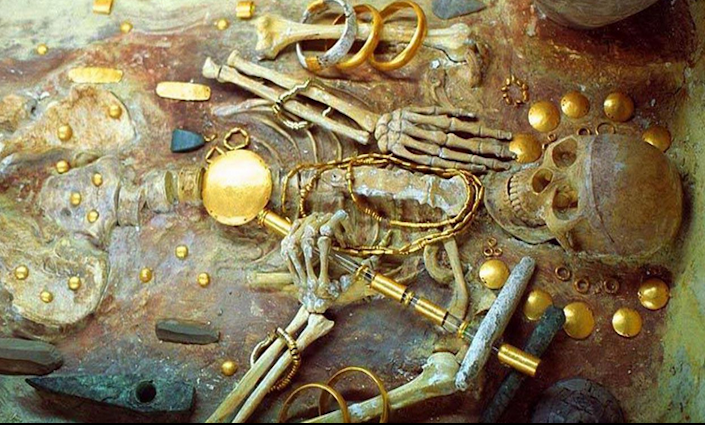
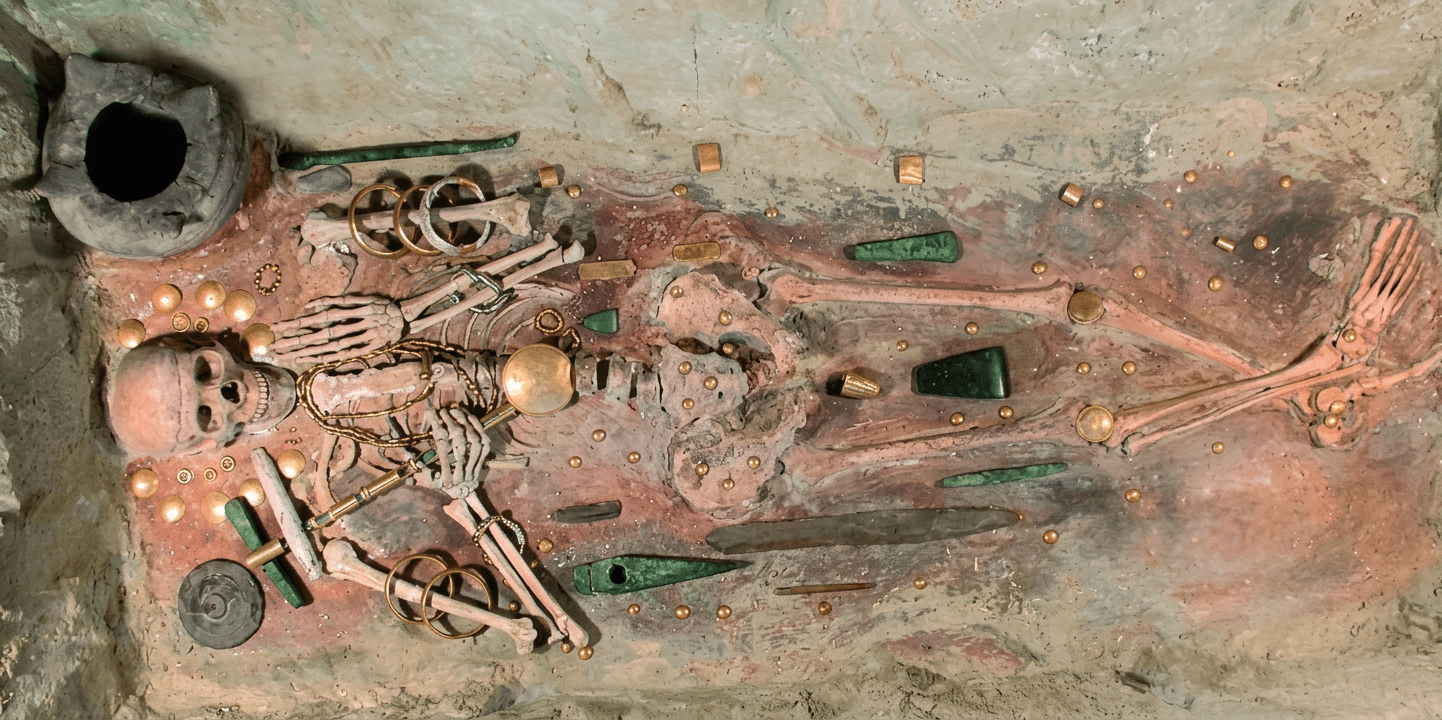
Researchers uncovered: More than 300 graves, Thousands of gold artifacts, Copper tools, Stone and flint objects, Imported prestige goods and Elaborate burial offerings. The quantity of gold alone was unprecedented. At the time of its discovery, the Varna cemetery contained the oldest known collection of worked gold in the world (Ivanov, 2000).
Archaeologists quickly recognized that the site challenged existing theories about prehistoric Europe. What they expected to find were relatively egalitarian farming communities. What they found instead was evidence that some individuals possessed vastly greater wealth than others (Renfrew, 1986).
Grave 43: A Remarkable Burial
Among the most famous graves is Grave 43. The burial contained more than one kilogram of gold, copper implements, stone tools, elaborate ornaments and symbols of status and authority. The individual interred there possessed far more wealth than most others in the cemetery. Some graves contained few objects. Others contained extraordinary quantities of prestige goods. This uneven distribution is what makes Varna so important. The cemetery does not simply show wealth. It shows that wealth was distributed unequally.
Was This the First Evidence of Inequality?
The answer depends on how inequality is defined. Earlier societies certainly experienced differences in age, influence, skill, and prestige. Hunter-gatherer groups often recognized respected leaders, skilled hunters, ritual specialists, or elders. However, Varna provides some of the earliest strong archaeological evidence for institutionalized inequality. Signs include: dramatically unequal grave goods, concentrations of prestige items, symbolic displays of authority, differential burial treatment and possible hereditary status. The wealth differences visible in the cemetery appear larger and more systematic than those seen at many earlier Neolithic sites (Chapman, 2013). For this reason, many archaeologists view Varna as one of the earliest convincing examples of social stratification in Europe.
Did Inequality Really Appear Suddenly?
At first glance, inequality seems to emerge abruptly at Varna. Yet archaeological evidence suggests a longer process. By 4500 BCE, southeastern Europe had already experienced agriculture for several millennia, permanent villages, population growth, long-distance trade, craft specialization and resource accumulation. These developments created opportunities for wealth differences to develop gradually. The cemetery may not record the beginning of inequality. Instead, it may record the moment when inequality became publicly visible. In other words, social differences may have existed for generations before they appeared so dramatically in burial practices (Chapman, 2013; Higham, 2021).

Gold, Copper, and Prestige
One reason inequality may have emerged is the increasing importance of prestige goods. By the fifth millennium BCE, communities across southeastern Europe were producing and exchanging gold ornaments, copper tools, exotic shells and decorative stone objects. Unlike food, prestige goods are often used to communicate status. Ownership of rare objects can signal leadership, success, influence, ritual authority and family connections. The concentration of these materials in a small number of graves suggests that certain individuals occupied elevated positions within society.
Trade Networks and Emerging Elites
Varna did not exist in isolation. The community participated in extensive exchange networks stretching across southeastern Europe and beyond. Access to valuable materials may have allowed certain individuals or families to accumulate wealth. Over time, successful traders, craft specialists, ritual leaders, or community organizers could have acquired increasing influence. This process is familiar throughout human history. Control over valuable resources often translates into social power.
The Role of Population Growth
Larger communities tend to generate more complex social structures. As populations expand coordination becomes more difficult, leadership roles become more important, specialized occupations emerge and economic differences increase. The growth of Neolithic settlements throughout the Balkans created conditions where social distinctions could become more pronounced. Varna may represent one outcome of this increasing complexity.

How Does Varna Compare to Similar Sites?
Several other prehistoric sites reveal signs of emerging social differentiation, although none match Varna’s concentration of gold.
Durankulak. Durankulak contains rich burials and evidence of social distinctions, but generally lacks the extraordinary concentration of gold seen at Varna (Todorova, 2002).
Cucuteni-Trypillia settlements. Large settlements demonstrate social complexity and organizational sophistication, although evidence for extreme wealth differences is less clear (Anthony, 2007).
Ain Ghazal. This settlement shows ritual complexity and symbolic behavior but lacks the dramatic wealth concentrations found at Varna.
Çatalhöyük. Often cited as relatively egalitarian, Çatalhöyük demonstrates substantial social cooperation without obvious elite burials (Hodder, 2006).
Compared with these sites, Varna stands out because inequality is visible, measurable, and dramatic.
What Does This Mean for Architecture?
Although Varna is a cemetery rather than a settlement, it reveals important lessons about social organization. Architecture reflects social relationships. As societies become more unequal, architecture often changes through larger houses for elites, specialized ceremonial buildings, storage control, defensive structures and monumental construction. Varna may document an early stage in the social transformations that later produced chiefdoms, cities, palaces, and states. The cemetery provides a glimpse into changing relationships between wealth, power, and community.
Why Inequality Emerges
Archaeologists continue to debate this question. Possible contributing factors include (resource control, trade networks, specialized knowledge, inheritance and population growth)
Resource Control. Individuals gain influence through access to valuable goods.
Trade Networks. Long-distance exchange creates opportunities for wealth accumulation.
Specialized Knowledge. Craft workers, ritual specialists, and leaders may acquire prestige.
Inheritance. Wealth begins passing between generations.
Population Growth. Larger communities require more formal social structures.
Most likely, inequality emerges through a combination of these factors rather than a single cause.
The Varna Necropolis remains one of the most important archaeological discoveries ever made. Unearthed unexpectedly by construction worker Raycho Marinov in 1972, the cemetery transformed scholarly understanding of prehistoric Europe. Its rich burials revealed that substantial social inequality existed by approximately 4500 BCE—far earlier than many researchers had anticipated (Ivanov, 2000; Renfrew, 1986).
Whether Varna represents the first evidence of inequality or simply the earliest clear evidence remains open to debate. What is certain is that the site documents a society in which wealth, status, and social distinction had become visibly concentrated in the hands of a few individuals. Rather than appearing suddenly, inequality likely emerged gradually through trade, specialization, population growth, and the accumulation of prestige goods. Varna preserves the moment when these processes became unmistakably visible in the archaeological record. The cemetery stands as a reminder that the roots of social inequality extend deep into prehistory, long before the rise of kings, states, or written history.
References: Anthony, D. W. (2007). The horse, the wheel, and language: How Bronze-Age riders from the Eurasian steppes shaped the modern world. Princeton University Press.
Chapman, J. (2013). Fragmentation in archaeology: People, places and broken objects in the prehistory of south-eastern Europe. Routledge.
Higham, C. (2021). The world before us: How science is revealing a new story of our human origins. Yale University Press.
Hodder, I. (2006). Çatalhöyük: The leopard’s tale—Revealing the mysteries of Turkey’s ancient “town”. Thames & Hudson.
Ivanov, I. (2000). The Varna Eneolithic necropolis: Excavation history and discoveries. Regional Museum of History, Varna.
Renfrew, C. (1986). Varna and the emergence of wealth in prehistoric Europe. In A. Appadurai (Ed.), The social life of things: Commodities in cultural perspective (pp. 141–168). Cambridge University Press.
Todorova, H. (2002). Durankulak: The prehistoric cemetery. Deutsches Archäologisches Institut.
Bailey, D. W. (2005). Prehistoric figurines: Representation and corporeality in the Neolithic. Routledge.
Gimbutas, M. (1991). The civilization of the goddess: The world of Old Europe. HarperCollins.
Leave a Reply