<home # start here # guides # builds # services # shop # about # categories>

One of the most fascinating questions in archaeology is whether large human communities require kings, elites, governments, or rigid social classes to function. For much of modern history, scholars assumed that as populations grew, hierarchy naturally followed. More people meant more leaders, more bureaucracy, and greater social inequality.
The remarkable Neolithic settlement of Çatalhöyük challenges that assumption.
Occupied between approximately 7500 and 5700 BCE, Çatalhöyük was one of the largest and most densely populated settlements of the Neolithic world. At its peak, several thousand people may have lived there, packed closely together in mudbrick houses with no obvious streets, palaces, temples, or elite residences.
For decades, archaeologists have debated whether Çatalhöyük represents evidence that large populations can exist with relatively limited social hierarchy—or whether hierarchy existed in forms that are difficult to detect archaeologically. The site remains one of the most important case studies for understanding community organization, cooperation, and architecture in early settled societies.
What Was Çatalhöyük?
Located on the Konya Plain of central Anatolia, modern-day Turkey, Çatalhöyük consisted of hundreds of tightly packed mudbrick buildings built side by side. Unlike later cities, the settlement lacked streets, public squares, defensive walls, palaces, government buildings and monumental temples. Instead, houses were built directly against one another, creating a dense architectural landscape. Residents moved across rooftops and entered homes through openings in the ceiling using ladders. The result was a settlement unlike almost any modern city.

How Large Was Çatalhöyük?
Estimating ancient populations is difficult, but researchers generally suggest several thousand residents. Possibly between 3,000 and 8,000 people at different times. Continuous occupation for nearly two millennia. For the Neolithic period, this was an exceptionally large community. Many contemporary settlements contained only a few dozen or a few hundred people. Çatalhöyük therefore raises an important question: How did such a large population organize itself?
The Traditional Expectation: Large Settlements Need Hierarchy
In many ancient civilizations, population growth was accompanied by political leaders, religious authorities, social classes, administrative institutions and wealth inequality. Examples include later societies in: Mesopotamia, Egypt, China and Mesoamerica. Because of this pattern, archaeologists once expected to find evidence of elite rulers at Çatalhöyük. Surprisingly, they found very little.
Evidence for Relative Equality
Excavations led by Ian Hodder revealed a striking degree of similarity among houses. Most homes shared comparable sizes, similar construction methods, similar interior layouts, similar access to resources and similar burial practices. Researchers found little evidence for royal residences, elite compounds, vast wealth differences and permanent political institutions. This has led some scholars to describe Çatalhöyük as a relatively egalitarian society.
Architecture and Social Equality
Architecture often reveals social hierarchy. In many societies, elite households are larger, more elaborate, and better supplied than ordinary residences. At Çatalhöyük, however, the architectural differences are modest. Most homes contained living platforms, hearths, storage areas, wall paintings and burial locations beneath floors. Many households appear to have participated in similar activities and enjoyed similar access to resources. The settlement lacks the monumental public architecture commonly associated with centralized authority.

The House as the Center of Society
One of the most important interpretations of Çatalhöyük is that the household—not a palace, temple, or government building—formed the primary social unit. Each house functioned as residence, workshop, storage facility, ritual space, burial location and educational environment Children learned skills within households. Ancestors were buried beneath floors. Family histories were maintained within domestic spaces. Architecture reinforced kinship and community rather than centralized political authority.
Evidence That Hierarchy May Have Existed
Not all archaeologists agree that Çatalhöyük lacked hierarchy. Some evidence suggests social differences may have been present. Researchers have identified houses with more elaborate artwork, structures rebuilt repeatedly over generations, differences in access to certain materials and variation in symbolic objects. These differences may indicate prestige, family influence, ritual importance and informal leadership. The absence of kings does not necessarily mean the absence of social ranking. Hierarchy can exist in subtle forms.
Hidden Hierarchies
Modern archaeology increasingly recognizes that hierarchy is not always obvious. Leadership can be based on knowledge, ritual expertise, age, family reputation, economic influence, social networks. Such systems leave fewer archaeological traces than palaces or royal tombs. It is possible that Çatalhöyük contained influential individuals whose authority was exercised through relationships rather than institutions.
Cooperation Without Kings
One of the most important lessons from Çatalhöyük is that complex cooperation does not always require centralized government. The settlement demonstrates collective management of construction, food production, resource sharing, waste disposal and social norms. Thousands of people lived together successfully for centuries. This suggests that social cooperation can emerge through shared traditions, cultural expectations, kinship networks and collective identity. Rather than relying exclusively on formal authority.
The Role of Shared Beliefs
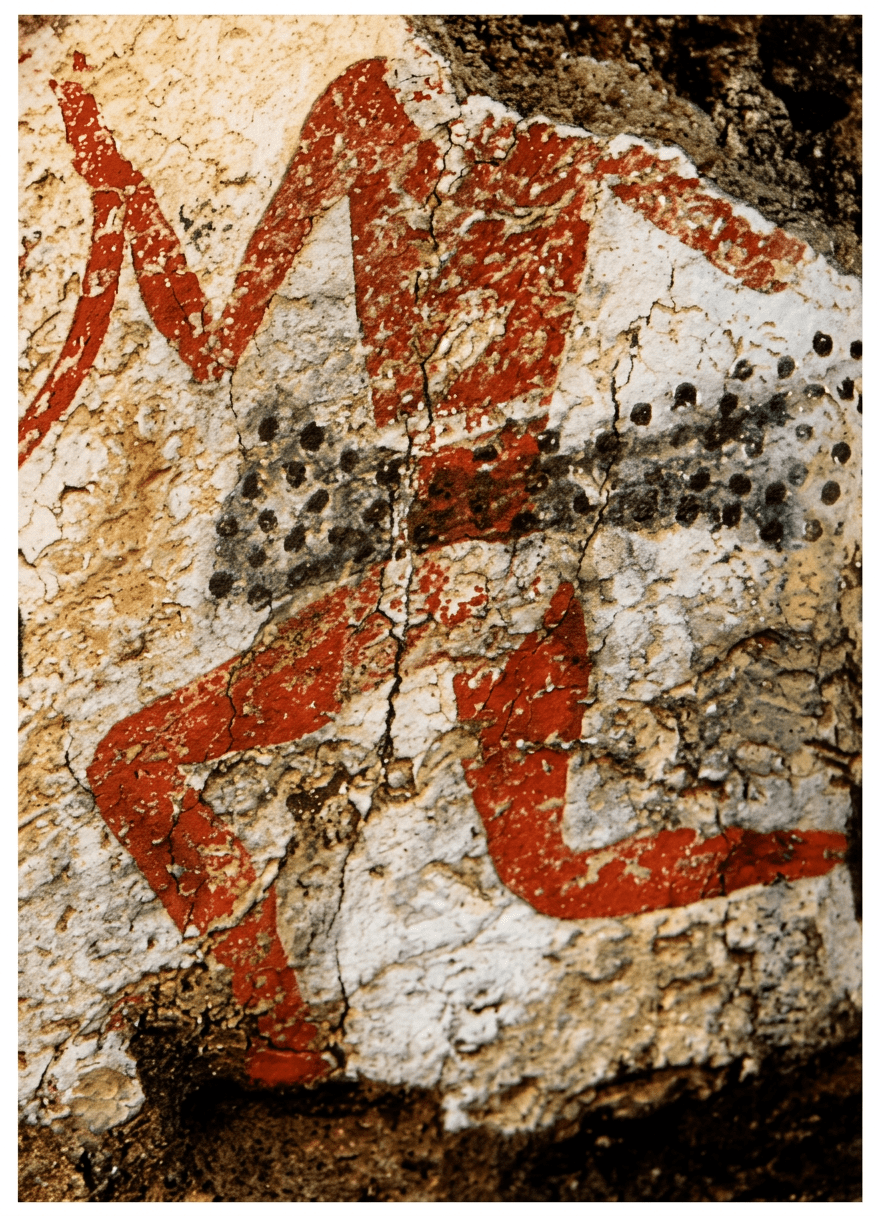
Like many Neolithic communities, Çatalhöyük appears to have possessed a rich symbolic culture. Archaeologists discovered wall paintings, animal imagery, plastered skulls, symbolic installations and burial rituals. These practices may have helped create social cohesion. Shared beliefs can reinforce norms, reduce conflict, promote cooperation and strengthen identity. Just as laws help organize modern societies, cultural traditions may have helped organize Neolithic communities.
Population Density and Social Challenges
Dense living creates practical problems. Residents of Çatalhöyük faced challenges including waste management, fire risk, disease transmission, resource distribution and conflict resolution. The fact that the settlement persisted for nearly two thousand years suggests that effective solutions existed. These solutions may have relied more on social expectations and community cooperation than on formal political institutions.

Can Large Populations Exist Without Clear Hierarchy?
Çatalhöyük suggests the answer may be yes—at least under certain conditions. Several factors may have contributed (strong community traditions, household autonomy, economic similarity, cultural unity, gradual growth)
Strong Community Traditions. Shared customs reduced uncertainty and conflict.
Household Autonomy. Families maintained significant independence.
Economic Similarity. Limited wealth differences reduced social tensions.
Cultural Unity. Common beliefs strengthened cooperation.
Gradual Growth. The settlement expanded over generations, allowing institutions and practices to evolve naturally.
However, maintaining equality becomes more difficult as populations grow and societies become more specialized.
This may explain why later civilizations developed more formal hierarchies.
Comparisons with Later Cities
Unlike later urban centers such as Uruk, Çatalhöyük shows little evidence for state administration, professional armies, bureaucracy, royal authority and monumental government buildings. Yet it still supported a large population. This demonstrates that there is no single path to social complexity. Human societies have experimented with many different organizational models.

Lessons for Neolithic Architecture
Çatalhöyük offers several important insights for students of Neolithic architecture (architecture reflects social structure, houses can be more than homes, density does not require centralization, equality leaves architectural evidence and community design shapes society).
Architecture Reflects Social Structure. The absence of palaces and public monuments suggests different forms of organization.
Houses Can Be More Than Homes. Domestic buildings served economic, social, ritual, and educational functions.
Density Does Not Require Centralization. Large populations can organize themselves through shared norms and local cooperation.
Equality Leaves Architectural Evidence. Similar house sizes may reflect relatively equal access to resources.
Community Design Shapes Society. The physical arrangement of buildings influences social relationships and daily life.

Modern Relevance
The question posed by Çatalhöyük remains relevant today. Can large populations function without rigid hierarchies? Modern examples include: cooperative housing projects, indigenous governance systems, worker-owned organizations, community land trusts and some intentional communities. While no modern society operates exactly like Çatalhöyük, the site reminds us that centralized authority is not the only method humans have used to organize complex communities. History contains a wider range of social experiments than is often assumed.
Between approximately 7500 and 5700 BCE, the people of Çatalhöyük created one of the largest and most densely populated settlements of the Neolithic world. Despite housing thousands of residents, the settlement lacks clear evidence for kings, palaces, state institutions, or sharply defined social classes. This does not prove that hierarchy was absent. Informal leadership, family influence, ritual authority, and social prestige may all have existed. Nevertheless, Çatalhöyük demonstrates that large populations can cooperate and thrive without the highly centralized political structures commonly associated with later civilizations.
For students of Neolithic architecture, Çatalhöyük offers an extraordinary example of how buildings, households, traditions, and shared beliefs can organize society. Its densely packed homes suggest that cooperation, cultural identity, and community participation may have been as important as political authority in shaping the first large settlements of human history.
References: James Mellaart. 1967. Çatal Hüyük: A Neolithic Town in Anatolia. London: Thames & Hudson.
Ian Hodder. 2006. The Leopard’s Tale: Revealing the Mysteries of Çatalhöyük. London: Thames & Hudson.
Hodder, I. (Ed.). 2014. Religion at Work in a Neolithic Society: Vital Matters. Cambridge University Press.
Hodder, I. 2018. Religion, History, and Place in the Origin of Settled Life. University Press of Colorado.
Farid, S. 2014. “Neighborhoods and Social Organization at Çatalhöyük.” In Humans and Landscapes of Çatalhöyük.
Trevor Watkins. 2004. “Building Houses, Framing Concepts, Constructing Worlds.” Paléorient 30(1): 5–23.
David Graeber & David Wengrow. 2021. The Dawn of Everything. Farrar, Straus and Giroux.
Steven Mithen. 2003. After the Ice: A Global Human History, 20,000–5,000 BC. Harvard University Press.
Leave a Reply