<home # start here # guides # builds # services # shop # about # categories>

Few prehistoric monuments inspire as much fascination as Stonehenge. Rising from the chalk plains of southern England, the monument has been interpreted as a temple, observatory, burial ground, ceremonial center, political symbol, and even an ancient calendar.
The reality is likely more complex.
Stonehenge was not built in a single event or by a single generation. Instead, it evolved over roughly 1,500 years, with major construction phases occurring between approximately 3000 and 1500 BCE. During that time, communities repeatedly modified, expanded, and reimagined the site.
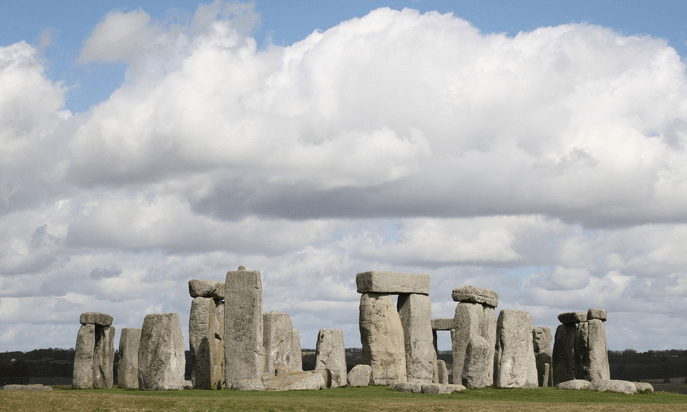
The monument’s significance may lie less in any single purpose and more in what it reveals about human cooperation. Stonehenge required planning, labor, engineering, social organization, and shared beliefs on a scale rarely seen in prehistoric Europe.
The central question may therefore be not whether Stonehenge was religious, astronomical, or political—but how these functions combined to create one of humanity’s most enduring monuments.
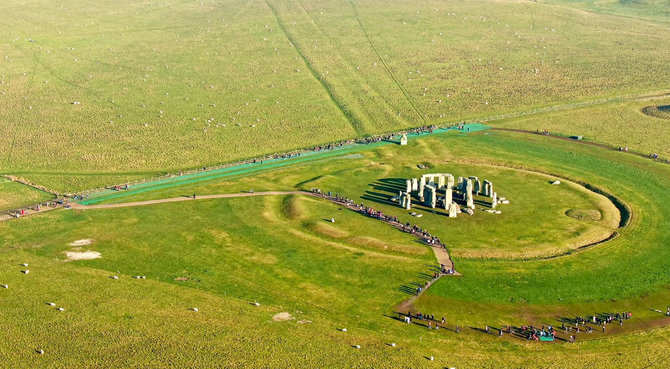
The Monument We See Today Was Not the First Stonehenge
Many visitors imagine Stonehenge as a single construction project. Archaeology tells a different story. The site developed through multiple phases (Phase One 3000 BCE, Two 2900-2600 and Three 2600 to 2400)
Phase One (c. 3000 BCE). The earliest monument consisted primarily of a circular earthwork enclosure, a surrounding ditch, internal pits known as Aubrey Holes and cremation burials. At this stage, Stonehenge was already a significant ceremonial landscape.
Phase Two (c. 2900–2600 BCE). Additional timber structures and ritual activity appeared. The monument continued to evolve rather than remaining fixed.
Phase Three (c. 2600–2400 BCE) The famous stone settings were introduced. Large sarsen stones and smaller bluestones transformed the site into the monument recognized today.
Later Modifications
Communities continued rearranging stones, adding features, and modifying the layout for centuries. This long history suggests that Stonehenge remained important to successive generations, each adapting it to changing social needs.

Moving Stones Across Great Distances
One of the most remarkable aspects of Stonehenge is the transportation of its building materials. The monument contains two major stone types (Sarsen and Bluestones)
Sarsen Stones. The largest stones originated primarily from the Marlborough Downs, approximately 20–30 kilometers away. Some weigh more than 20 tonnes.
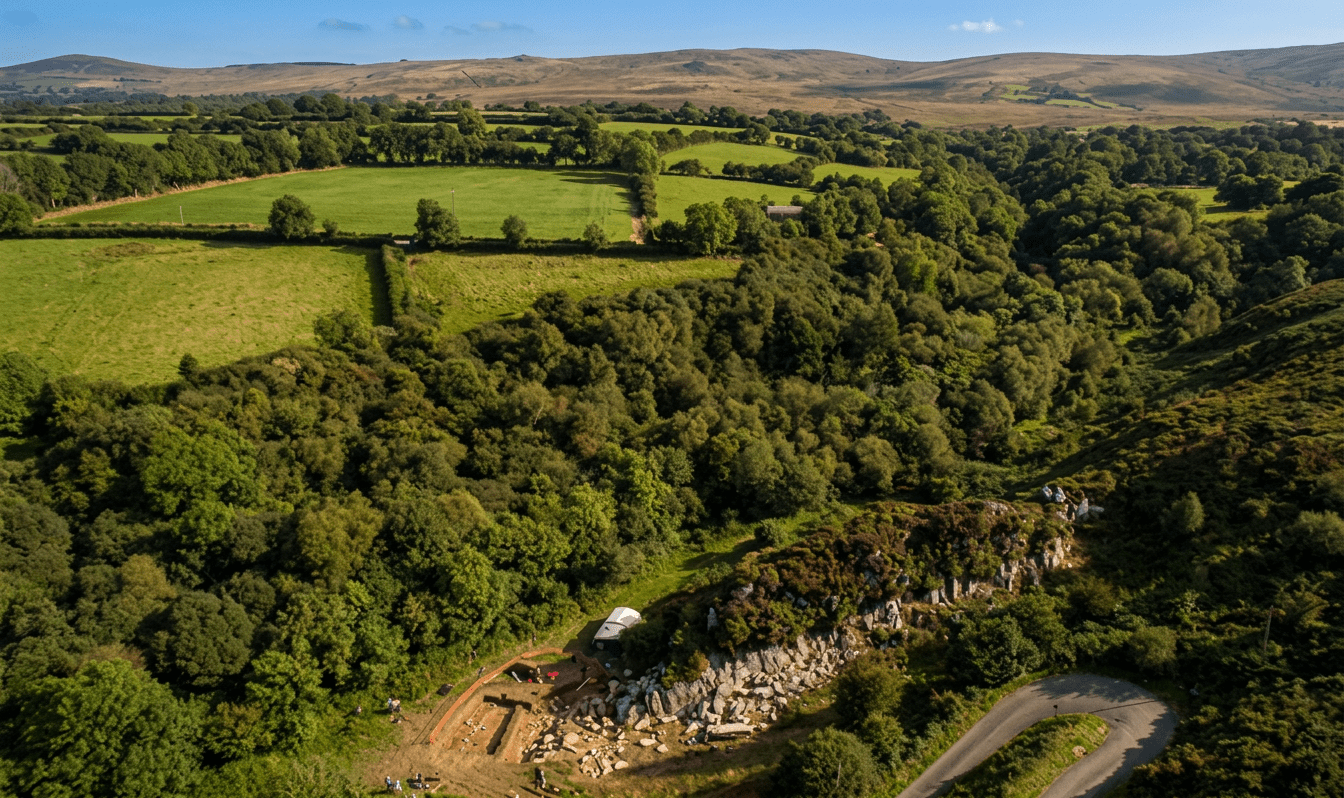
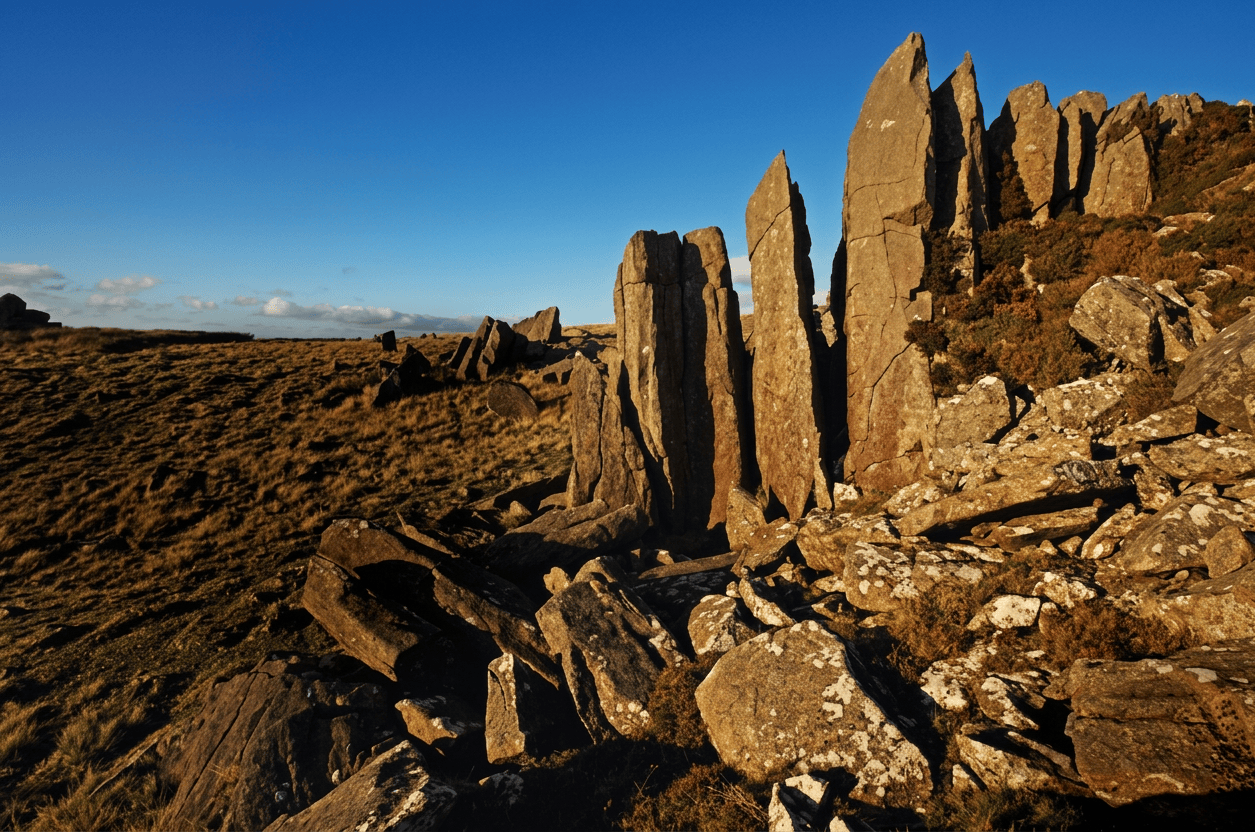
Bluestones. The smaller bluestones came from the Preseli Hills of western Wales. These stones traveled roughly 200 kilometers before reaching Stonehenge. Whether transported entirely by human labor, waterways, or a combination of methods, the achievement remains extraordinary. Moving even a single multi-ton stone would have required planning, skilled labor, cooperation among groups, knowledge of terrain and leadership and coordination. The transport effort alone suggests organization extending far beyond a small local community.
Monumental Cooperation on an Unprecedented Scale
Stonehenge demonstrates something often overlooked in discussions of prehistoric societies: the ability of large numbers of people to work together toward a shared goal. Construction required quarrying stone, shaping blocks, transporting materials, digging foundations, erecting megaliths and maintaining the site. No single household could have accomplished such tasks. The monument represents collective action involving hundreds, and perhaps thousands, of individuals over many generations. This cooperation may be Stonehenge’s greatest achievement. Regardless of its exact purpose, it demonstrates a society capable of organizing labor beyond immediate family or village interests.
Was Stonehenge Religious?
Many archaeologists believe religion played an important role. Evidence includes human burials, cremation deposits, ritual objects, ceremonial landscapes and processional routes. The monument sits within a broader sacred landscape containing numerous prehistoric features. Nearby sites include Durrington Walls, Woodhenge, Multiple burial mounds and Ceremonial avenues. These features suggest Stonehenge functioned as more than a practical structure. It was likely a place where communities gathered for ceremonies, rituals, remembrance, and collective identity.
Estimated Influence: Religion
Many scholars would place religion among the monument’s primary functions, perhaps accounting for a substantial portion of its significance. However, religion alone may not explain the monument’s complexity.
Was Stonehenge Astronomical?
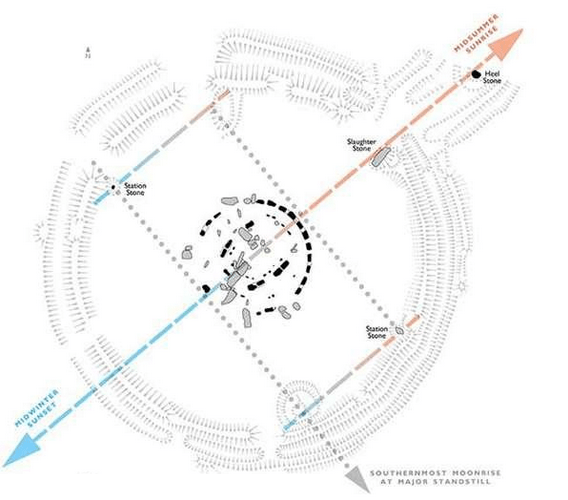
One of the most famous characteristics of Stonehenge is its alignment with the Sun.
At the summer solstice. The Sun rises near the Heel Stone. Sunlight enters along the monument’s principal axis.
At the winter solstice. The setting Sun aligns with the monument in the opposite direction.
These alignments are unlikely to be accidental. They indicate deliberate attention to celestial events. However, there is ongoing debate regarding how extensive Stonehenge’s astronomical role may have been. Most archaeologists agree that solar alignments were intentional, seasonal observations mattered and the monument incorporated cosmological symbolism. There is less agreement regarding claims that Stonehenge functioned as a sophisticated observatory capable of predicting eclipses or tracking numerous celestial cycles. Current evidence supports symbolic and calendrical functions more strongly than advanced astronomical calculations.
Estimated Influence: Astronomy
Astronomy likely played an important role, particularly through solar alignments and seasonal symbolism, but it probably formed only one component of the monument’s broader significance.
Was Stonehenge Political?
Politics in prehistory looked very different from modern governments. Nevertheless, Stonehenge may have served important political purposes. Large monuments often help communities express shared identity, demonstrate collective power, strengthen alliances, coordinate regional gatherings and establish leadership legitimacy. The transportation of Welsh bluestones suggests connections between distant regions. Some researchers propose that Stonehenge symbolized unity among groups spread across Britain. If true, the monument may have acted as a political center as much as a religious one. Communities gathering for ceremonies would also exchange information, establish relationships, arrange marriages, and reinforce social networks.
Estimated Influence: Politics
Political functions may have been deeply intertwined with ceremonial activities rather than existing separately. The monument likely reinforced social cohesion and regional cooperation.
Religion, Astronomy, and Politics Were Not Separate
One challenge in interpreting Stonehenge is that modern categories may not apply neatly to prehistoric societies. Today we distinguish religion, politics, science and astronomy. Neolithic people may not have. For them seasonal cycles affected survival, rituals reinforced community bonds, leaders derived authority through ceremonial roles and celestial events carried symbolic meaning. These activities likely formed part of a unified worldview. A solstice ceremony could simultaneously be religious, astronomical or political. The same event might honour ancestors, mark seasonal change, and strengthen alliances among communities.
The Broader Landscape
Recent research increasingly emphasizes the landscape surrounding Stonehenge rather than the monument alone. The region contains henges, burial mounds, processional avenues, settlement remains and ceremonial structures. Together these features form a complex ritual landscape. Stonehenge functioned as one component within a much larger system of social and ceremonial activity. Understanding the monument therefore requires understanding the communities that built and used it.

Lessons for Neolithic Architecture
Stonehenge demonstrates several important principles of prehistoric architecture (architecture can create identity, cooperation produces monumentality, buildings express ideas, landscapes matter and construction can span generations)
Architecture Can Create Identity. Monuments help define who belongs to a community.
Cooperation Produces Monumentality. Large-scale construction reflects organizational capacity as much as engineering skill.
Buildings Express Ideas. Architecture communicates beliefs, values, and social relationships.
Landscapes Matter. Monuments often derive meaning from their surrounding environment.
Construction Can Span Generations. Stonehenge reminds us that important projects may continue for centuries rather than years.
Stonehenge stands as one of humanity’s greatest examples of monumental cooperation. Built and rebuilt over centuries, it required extraordinary levels of planning, labor, engineering, and social coordination. The transportation of stones from distant regions alone demonstrates the capacity of prehistoric communities to organize large-scale collective efforts.
Was Stonehenge religious, astronomical, or political? The evidence suggests it was all three. Solar alignments indicate deliberate engagement with celestial cycles. Burials and ceremonial activity reveal religious significance. Long-distance cooperation and regional gatherings point toward important political and social functions.
Rather than serving a single purpose, Stonehenge likely operated as a multifunctional center where cosmology, ritual, identity, and community converged. Its enduring legacy lies not only in the stones themselves but in what they reveal about humanity’s ability to cooperate across generations in pursuit of shared meaning.
References: Darvill, T. (2022). Stonehenge: The biography of a landscape. Tempus.
Parker Pearson, M. (2012). Stonehenge: Exploring the greatest Stone Age mystery. Simon & Schuster.
Parker Pearson, M., Pollard, J., Richards, C., Thomas, J., Tilley, C., & Welham, K. (2021). Stonehenge for the ancestors: Part 2. Synthesis. Antiquity, 95(384), 1611–1628.
Pitts, M. (2022). How to build Stonehenge. Thames & Hudson.
Pollard, J., & Ruggles, C. (2001). Stonehenge and the theory of astronomical alignments. Archaeopress.
Ruggles, C. (2015). Handbook of archaeoastronomy and ethnoastronomy. Springer.
Parker Pearson, M., et al. (2015). Craig Rhos-y-felin: A Welsh bluestone megalith quarry for Stonehenge. Antiquity, 89(348), 1331–1352.
Bevins, R., Ixer, R., & Pearce, N. (2014). Provenancing the Stonehenge bluestones: New geological evidence. Journal of Archaeological Science, 41, 79–89.
Darvill, T., & Wainwright, G. (2009). Stonehenge excavations 2008. Antiquaries Journal, 89, 1–19.
Leave a Reply