<home # start here # guides # builds # services # shop # about # categories>

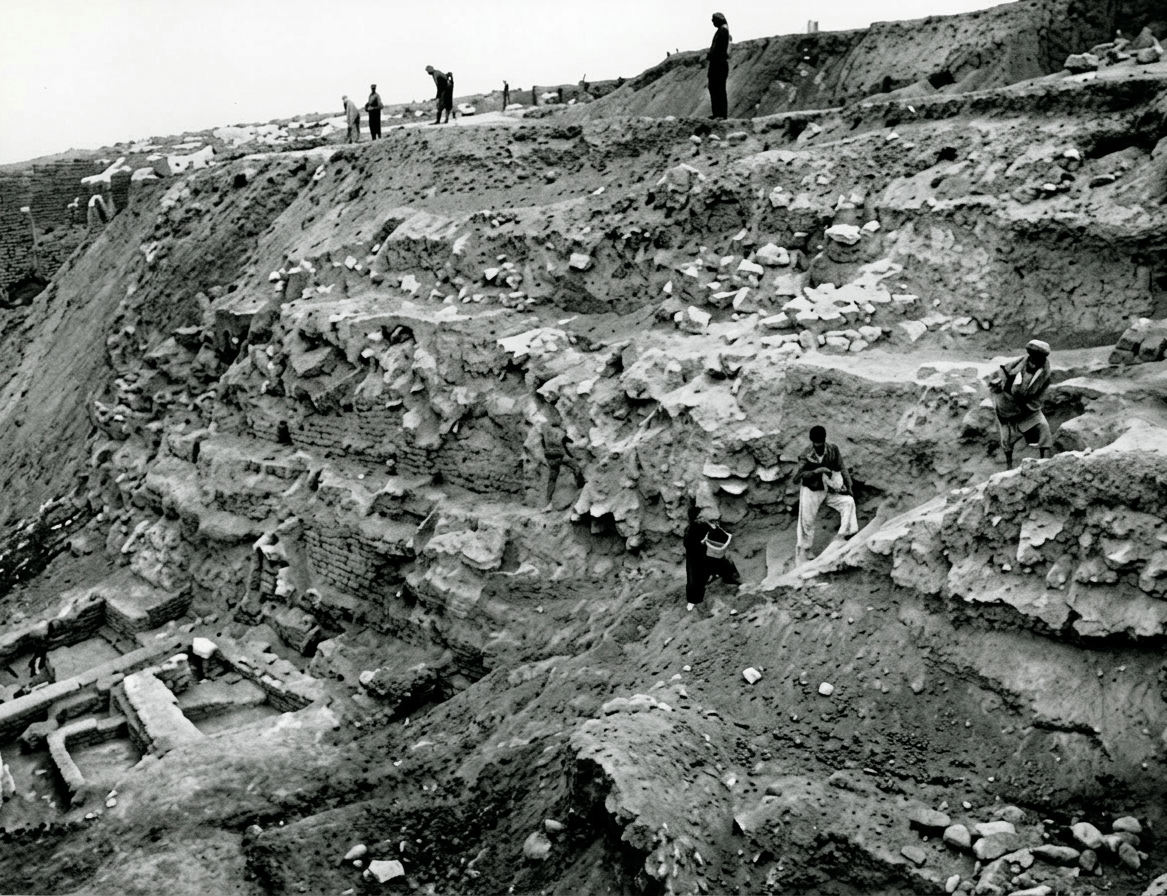
Few archaeological sites have generated as much debate as Tell es-Sultan, the ancient settlement commonly known as Jericho. Occupied for thousands of years and located near a reliable spring in the Jordan Valley, Jericho contains some of the earliest evidence for permanent settlement, monumental architecture, and community organization in human history.
Among its most famous features are a massive stone wall and a large stone tower dating to the Pre-Pottery Neolithic A (PPNA), approximately 10,000–8,500 BCE. These structures have prompted generations of archaeologists to ask two related questions: Was Jericho the world’s first city?
Why were its walls built?

The answers remain debated. The walls may have served multiple purposes simultaneously, including flood control, defense, social organization, ritual activities, status display, and perhaps even protection from animals and pests. Understanding Jericho helps us understand how architecture shaped the transition from mobile hunter-gatherer groups to the first permanent communities.
The Setting: Why Jericho Matters
Jericho developed around the spring of Ain es-Sultan, one of the most reliable freshwater sources in the Jordan Valley. The site offered fresh water year-round, productive agricultural land, access to wild plant resources, hunting grounds and connections to regional trade routes. These advantages made Jericho an attractive location long before cities existed.
By approximately 10,000 BCE, substantial numbers of people were living there for extended periods, making it one of the earliest known sedentary communities in Southwest Asia.

Was Jericho the First City?
The answer depends on how we define a city. Modern cities generally include dense populations, specialized occupations, administrative systems, social hierarchy, public architecture and economic specialization. Jericho possessed some of these characteristics but not all.
Evidence Supporting Jericho as a City
Jericho included permanent architecture, long-term occupation, monumental construction, community planning and population concentrations larger than many contemporary settlements. Some estimates suggest that hundreds, and possibly over a thousand people, may have lived at the site during its peak PPNA occupation. For this reason, many popular accounts describe Jericho as the world’s first city.
Why Some Archaeologists Disagree
Many archaeologists prefer terms such as proto-city, large village or early sedentary settlement. This caution exists because Jericho lacked several features associated with later urban societies. That is: writing, government institutions, formal administration, markets and large-scale social stratification. In this view, Jericho represents an important step toward urban life rather than a fully developed city. A reasonable conclusion is that Jericho was among humanity’s earliest large permanent settlements and a precursor to later cities.

The Famous Stone Wall
One of Jericho’s most remarkable features is its stone wall. In early layers, dating to approximately 9,500–9,000 BCE. The wall enclosed part of the settlement and was accompanied by a massive stone tower. The wall measured up to 3 meters (10 feet) thick, 4–5 meters (13–16 feet) high in places, and constructed from locally available stone. Building such a structure required substantial labor, planning, and cooperation. The question is: why?
Theory 1: Flood Control
Many archaeologists consider flood protection one of the strongest explanations. Jericho sits near steep hills and seasonal drainage channels. Heavy rainfall events could produce sudden floods carrying water, mud, gravel and debris. The wall may have functioned as a retaining structure; a flood barrier; and protection against erosion. Under this interpretation, the wall reflects practical environmental engineering rather than warfare.
Evidence Supporting Flood Control: location near flood-prone terrain, construction consistent with retaining structures, limited evidence of warfare during the earliest occupation phases and significant investment in protecting valuable settlement space. This remains one of the most widely accepted interpretations.
Theory 2: Defense Against Human Threats
The traditional interpretation is defense. The wall and tower certainly resemble defensive architecture from later periods. Possible defensive functions include protection against raiding groups, resource competition and territorial disputes. Supporters argue that communities storing food would naturally become targets.
Problems with the Defense Theory. Evidence for organized warfare at this early date remains limited. Archaeologists have found few weapons clearly associated with conflict, limited evidence of battle damage and little indication of large-scale warfare. This does not mean conflict was absent, only that the evidence remains inconclusive. Most researchers today view defense as possible but not definitively proven.
Theory 3: Social Organization and Community Identity
Another explanation focuses on social cooperation. Building a large wall required hundreds of people working together. The project may have helped create: community identity, shared purpose, social cohesion and leadership structures. In this view, the wall’s importance may have extended beyond its practical function. The act of construction itself could have strengthened the community. Architecture became a tool for organizing society.

Theory 4: Ritual and Symbolic Meaning
The nearby tower has generated significant discussion. Standing approximately 8.5 meters (28 feet) high, it is among the earliest known monumental towers in human history. Some researchers propose ritual functions. Other possible uses include ceremonial gatherings, seasonal observations, community events and symbolic displays of collective power. The tower may have represented more than engineering. It may have embodied shared beliefs and social identity. Like the monumental enclosures at Göbekli Tepe, Jericho’s structures could have helped unite people around common ideas.
Theory 5: Status and Prestige
Monumental architecture often communicates power. The wall and tower may have demonstrated community wealth, organizational ability, control of resources and social prestige. Visitors approaching Jericho would immediately recognize that the settlement possessed extraordinary capabilities. The structures may have signaled importance both to residents and outsiders.
Theory 6: Protection from Animals and Pests
An often overlooked possibility involves protection from wildlife. As communities became more sedentary and began storing food, they attracted: wild boar, foxes, rodents, predatory animals and insects. Stored grain represented a valuable resource. Walls could have helped control movement into settlement areas and reduced access to food stores.
Pest Control and Early Architecture
Although the wall was likely too large to be built solely for pest control, protecting food resources was almost certainly a concern. Throughout history, architecture has served pest-management purposes: raised storage facilities, sealed containers, boundary walls and controlled access points. For students of Neolithic architecture, Jericho provides an early example of how settlement design may have contributed to resource protection.

Could the Wall Have Served Multiple Functions?
Most modern archaeologists believe this is the most likely explanation. The wall may have simultaneously: reduced flood damage, protected valuable resources, controlled access, expressed community identity, supported ritual activities and demonstrated social organization. Ancient builders rarely separated practical and symbolic purposes as strictly as modern observers often do. A structure could solve environmental problems while also expressing social values.

Jericho and the Birth of Permanent Settlements
Regardless of its exact purpose, the wall demonstrates several important developments (long-term planning, labor organization, environmental adaptation, monumental construction, and collective identity)
Long-Term Planning. The project required coordination over extended periods.
Labor Organization. Large numbers of people worked toward a common goal.
Environmental Adaptation. Residents modified the landscape to improve survival.
Monumental Construction. Communities invested resources in projects beyond individual households.
Collective Identity. Architecture increasingly reflected group rather than family interests.
These developments would become defining characteristics of later civilizations.

Lessons for Neolithic Architecture
Jericho illustrates several key principles relevant to the study of early architecture: (water determines settlement, engineering predates cities, architecture solves multiple problems, community projects create community, and environment management is ancient)
Water Determines Settlement. Reliable water sources often determined where permanent communities emerged.
Engineering Predates Cities. Sophisticated construction existed thousands of years before urban states.
Architecture Solves Multiple Problems. Buildings and walls can serve practical, social, and symbolic functions simultaneously.
Community Projects Create Community. Large construction projects help organize and unify populations.
Environmental Management Is Ancient. Flood control and landscape modification are among humanity’s oldest architectural traditions.
Was Jericho the first city?
The answer depends on how “city” is defined. It was certainly one of the earliest large permanent settlements known to archaeology and an important precursor to later urban life. While some researchers describe it as the world’s first city, others prefer terms such as proto-city or large Neolithic settlement.
Why were its walls built?
The strongest evidence suggests that flood control played an important role, but defense, social organization, ritual activity, status display, resource protection, and wildlife management may also have contributed. Rather than serving a single purpose, the wall likely reflected the complex needs of one of humanity’s earliest permanent communities.

Between 10,000 and 7,000 BCE, the people of Jericho demonstrated something revolutionary: humans could reshape landscapes, organize labor, and build monuments that outlasted generations. Whether protecting against floods, signaling identity, or managing resources, Jericho’s walls reveal that architecture was already becoming a powerful force in the creation of settled society.
References: Kathleen Kenyon. 1957. Digging Up Jericho. London: Ernest Benn.
Kenyon, K. M. 1981. Excavations at Jericho. London: British School of Archaeology in Jerusalem.
Trevor Watkins. 2004. “Building Houses, Framing Concepts, Constructing Worlds.” Paléorient 30(1): 5–23.
Steven Mithen. 2003. After the Ice: A Global Human History, 20,000–5,000 BC. Harvard University Press.
Jacques Cauvin. 2000. The Birth of the Gods and the Origins of Agriculture. Cambridge University Press.
Ian Hodder. 2018. Religion, History, and Place in the Origin of Settled Life. University Press of Colorado.
Ran Barkai, and colleagues. 2011. “An Early Neolithic Tower at Jericho: Interpretation of the Structure through Astronomical and Landscape Analysis.” Journal of Archaeological Science 38(9): 1869–1875.
Leave a Reply