<home # start here # guides # builds # services # shop # about # categories>

One of the most fascinating questions in archaeology is whether early villages simply grew naturally or whether ancient people actively experimented with different ways of living together. Few sites provide a better opportunity to explore this question than Çayönü.
Occupied between approximately 8800 and 7400 BCE, Çayönü witnessed more than a thousand years of continuous development. During that time, its inhabitants repeatedly changed house designs, public buildings, village layouts, economic systems, and social practices. Rather than representing a single fixed culture, the settlement appears to document generations of adaptation and innovation.
Many archaeologists view Çayönü as evidence that social organization did not emerge fully formed. Instead, communities may have gradually discovered effective ways of living together through centuries of experimentation, success, failure, and adjustment.

Where Was Çayönü?
Çayönü is located in southeastern Türkiye near the upper Tigris River. The settlement occupied a strategic position between the highlands and lowland plains, giving residents access to diverse resources.
Its location made it an important crossroads between communities of the Fertile Crescent. People living there had access to wild cereals, hunting territories, timber resources, stone suitable for tools and trade routes linking neighboring regions. The settlement flourished during a critical period when humans were transitioning from mobile hunter-gatherer lifestyles toward permanent village life.

Why Çayönü Is Unique
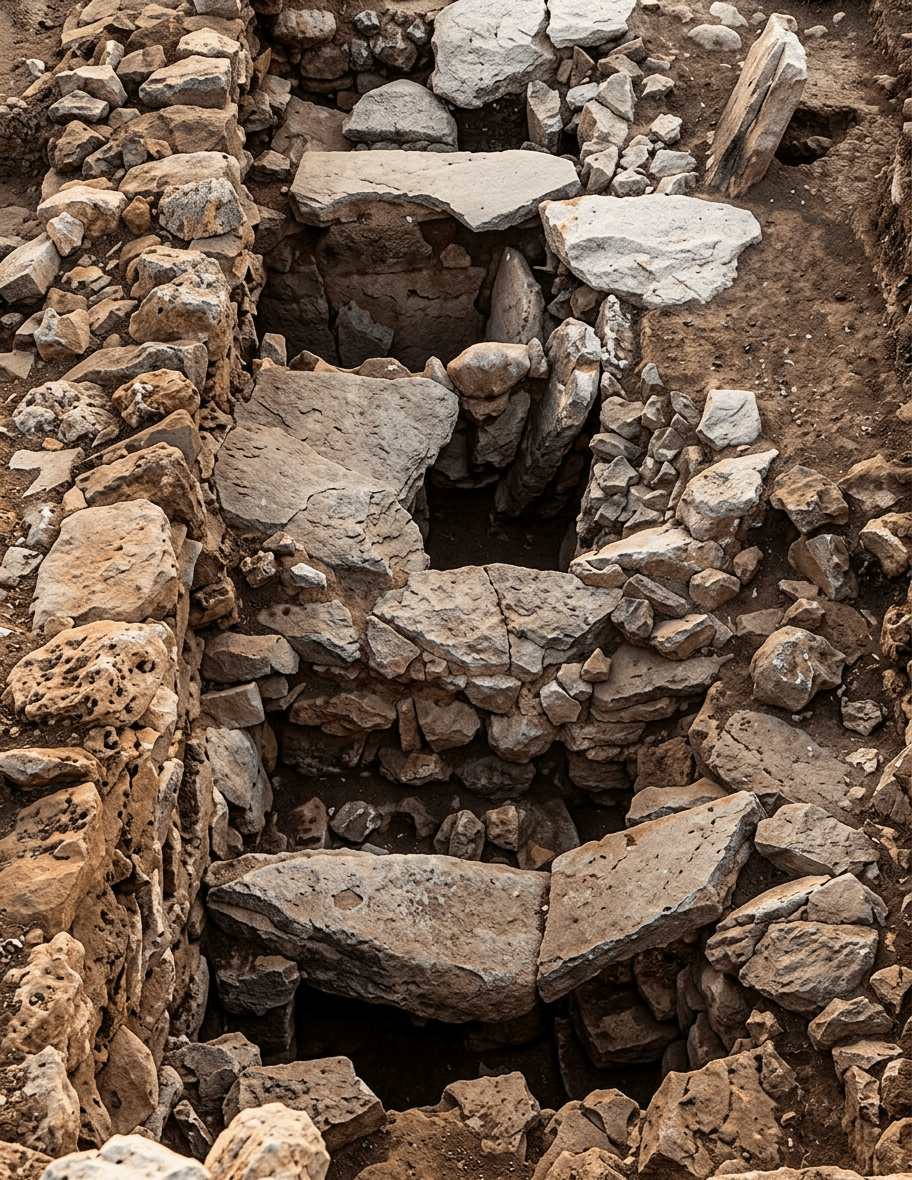
Most archaeological sites preserve a single architectural tradition. Çayönü preserves many. Over centuries, residents repeatedly rebuilt the settlement using different building plans. Archaeologists have identified several major architectural phases, including: round structures, grill-plan buildings, channel-plan buildings, cobble-paved structures, cell-plan buildings and larger rectangular houses. Each phase represents a different approach to organizing domestic and communal life. Instead of following a straight line toward “civilization,” the settlement reveals numerous attempts to solve practical social problems. Questions likely included: How should families live together?
How large should households be?
How should food be stored?
How should labor be organized?
Where should rituals occur?
How can disputes be minimized?
The architectural evidence suggests that these questions were continually revisited.
Architecture as Social Experimentation
Buildings are not simply shelters. They influence behavior. Changing house designs alters privacy, family structure, work patterns, storage systems, property ownership and social interaction. At Çayönü, The repeated transformation of architectural plans at Çayönü suggests that social organization was continually renegotiated over many generations (Erim-Özdoğan, 2011; Schirmer, 1990).

The Grill-Plan Buildings
One of the earliest famous designs consists of parallel stone foundation walls creating raised floors. These structures may have improved ventilation, reduced moisture, increased durability and standardized construction. The widespread use of a single building style suggests that villagers may have collectively adopted successful solutions and shared building knowledge.

The Cell-Plan Buildings
Later houses included multiple small compartments. These divisions may indicate more complex household organization, greater storage needs, emerging concepts of ownership and increased food management. Rather than one large communal interior, space became increasingly specialized. This change may reflect growing social complexity. The transition from grill-plan to cell-plan structures may reflect changing household organization and increasing social complexity (Braidwood & Braidwood, 1982; Özdoğan, 1999).


The Emergence of Public Architecture
Perhaps the strongest evidence for social experimentation comes from Çayönü’s communal buildings. Some structures differ dramatically from ordinary houses. Features include large stone construction, special paving, monumental design and evidence of communal use. These buildings required collective labor. Constructing them meant villagers had learned to coordinate workers, gather resources, share goals and manage leadership. Such projects demonstrate organizational abilities far beyond simple family groups.
Did Social Systems Develop Through Trial and Error?
The archaeological record suggests that they probably did. Modern societies often assume that social institutions emerged through deliberate planning. However, prehistoric evidence points toward gradual adaptation. At Çayönü, changes occurred over many centuries. Some innovations may have succeeded because they improved food security, reduced conflict, enhanced cooperation and organized labor more efficiently. Other approaches may have been abandoned because they created problems. The continual redesign of houses and public spaces resembles a long-term process of experimentation. Each generation inherited existing traditions but modified them according to new circumstances.

Evidence for Increasing Social Complexity
Several developments appear throughout the occupation of Çayönü (population growth, and domestication).
Population Growth. Permanent settlements allowed larger populations than mobile hunting groups.
Larger populations created new challenges: resource distribution, leadership, conflict resolution, collective decision-making and specialized activities. Archaeological evidence suggests increasing specialization. Residents practiced hunting, farming, tool production, food processing and construction. Specialized roles require greater social coordination.
Domestication. Çayönü is associated with some of the earliest evidence for animal domestication in the region. Managing herds required long-term planning, shared responsibilities and new economic relationships. These developments likely transformed village organization.
The Human Side of Experimentation
It is easy to discuss architecture and economics while forgetting the people involved. Every change at Çayönü affected real families. Someone proposed new building methods. Someone organized construction. Someone resisted change. Someone benefited. Someone lost influence. The archaeological layers preserve traces of thousands of human decisions made across centuries. Rather than a sudden revolution, village life appears to have emerged through countless small adjustments.
Lessons for Modern Society
One reason Çayönü remains relevant today is that it demonstrates how social systems evolve. Modern communities continue to experiment with housing design, neighborhood planning, resource management, cooperative living and shared infrastructure. The residents of Çayönü faced many of the same challenges: how do large groups cooperate? How do communities remain stable? How should shared resources be managed? And, what kinds of buildings encourage social cohesion?
Their solutions were not perfect, but they helped lay the foundations for later village societies throughout the Near East.
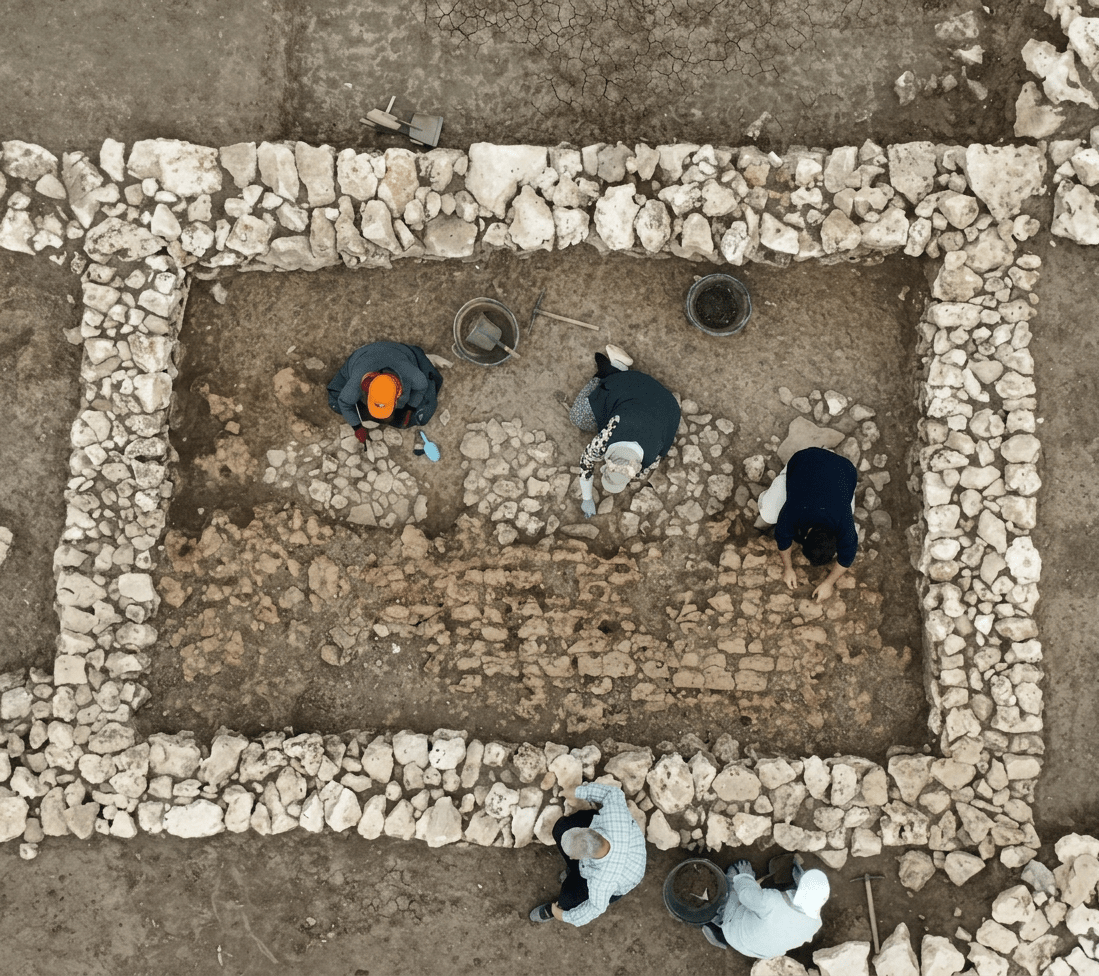
Çayönü may represent one of humanity’s earliest laboratories of social organization. Between roughly 8800 and 7400 BCE, its inhabitants repeatedly redesigned buildings, public spaces, and community structures while adapting to new economic and social realities. The settlement suggests that social organization did not emerge all at once. Instead, it likely developed through generations of experimentation, observation, and adjustment. Houses changed. Public buildings evolved. Economic systems expanded. Social relationships became more complex. Viewed in this way, Çayönü was not merely an early village. It was a centuries-long experiment in how humans could live together successfully. The archaeological remains reveal a powerful lesson: civilization was not invented in a single moment. It was built gradually through trial, error, cooperation, and innovation—one generation at a time.

References: Braidwood, L. S., & Braidwood, R. J. (Eds.). (1982). Prehistoric village archaeology in south-eastern Turkey: The eighth-millennium B.C. site at Çayönü, its chipped and ground stone industries and faunal remains. BAR International Series 138. British Archaeological Reports.
Erim-Özdoğan, A. (2011). Çayönü. In M. Özdoğan, N. Başgelen, & P. Kuniholm (Eds.), The Neolithic in Turkey: New excavations and new research (Vol. 1, pp. 185–269). Arkeoloji ve Sanat Yayınları.
Özdoğan, M. (1999). Çayönü: A conspectus of recent work. Paléorient, 25(1), 35–49.
Özdoğan, M. (2002). Defining the Neolithic of Central Anatolia and Eastern Anatolia. In F. Gérard & L. Thissen (Eds.), The Neolithic of Central Anatolia: Internal developments and external relations during the ninth–sixth millennia cal BC (pp. 253–261). Ege Yayınları.
Özdoğan, M. (2011). Archaeological evidence on the westward expansion of farming communities from Eastern Anatolia to the Aegean and the Balkans. Current Anthropology, 52(S4), S415–S430.
Rosenberg, M. (1994). Hallan Çemi, pig husbandry, and post-Pleistocene adaptations along the Taurus-Zagros Arc (Turkey). Paléorient, 20(1), 25–39.
Rosenberg, M., & Redding, R. W. (2000). Hallan Çemi and early village organization in Eastern Anatolia. In I. Kuijt (Ed.), Life in Neolithic farming communities: Social organization, identity, and differentiation (pp. 39–61). Kluwer Academic/Plenum Publishers.
Schirmer, W. (1990). Some aspects of building at the Aceramic Neolithic settlement of Çayönü Tepesi. World Archaeology, 21(3), 363–387.
University of Chicago, Institute for the Study of Ancient Cultures. (n.d.). The Joint Prehistoric Project. From Institute for the Study of Ancient Cultures – Joint Prehistoric Project.
Leave a Reply