< home # store # services # articles # game # app #contact >

Usually interpreted as some kind of spirit or master of animals. La Sorcerer est un bon drawing magnifique. Though its chamber. ‘The sanctuary’ may reflect something else.
Henri Breuil drew the horned humanoid torso, and the publication of his drawing became well known more than 100 years ago. In the 1920s
He asserted that the cave painting represented a shaman or magician. An interpretation which gives the image its name. A good idea. Breuils image interpritation has been commonly interpreted as a shaman performing a ritual to ensure good hunting.
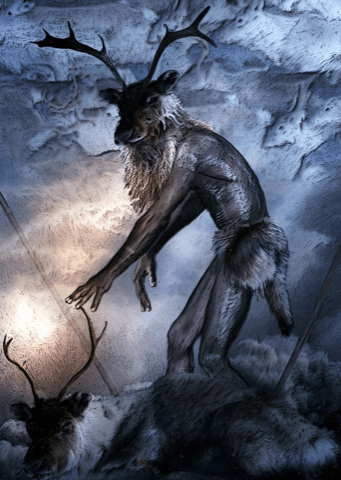
Comments included it was evidence of the concept of a horned God. Dating back to paleolithic times
Even though the horns are less noticeable now. Then some of the other parts. And, when the cave art is photographed versus seen in person.
Cracks or lines were exacerbated using firepits, or prehistoric gas lanterns
Though more than 10,000 years. We know from other cave art; and, frescos. Artists used accents in the materials surface. Because it was accented more by flickering fire light.
The Sorcerer is one of many examples of prehistoric cave art. It provides valuable insights into beliefs, customs, and artistic abilities of our distant ancestors. It is also a testament to the rich cultural heritage of prehistoric people, and their connection to the natural world.

Bibliography: Henri Breuil, Quatre cent siècles d’art paiétal (Montignac, 1954, p. 166 (Mary E. Boyle, tr., as Four Hundred Centuries of Cave Art, London: Zwemmer, 1952); Breuil, Les Cavernes du Volp, 1958.
Ucko, P. (1992). Subjectivity and the recording of Palaeolithic Cave Art, in T. Shay & J. Clottes (eds), The Limitations of Archaeological Knowledge, 141–180. Liege: University of Liege
Leave a Reply