< home # store # services # articles # game # app #contact >

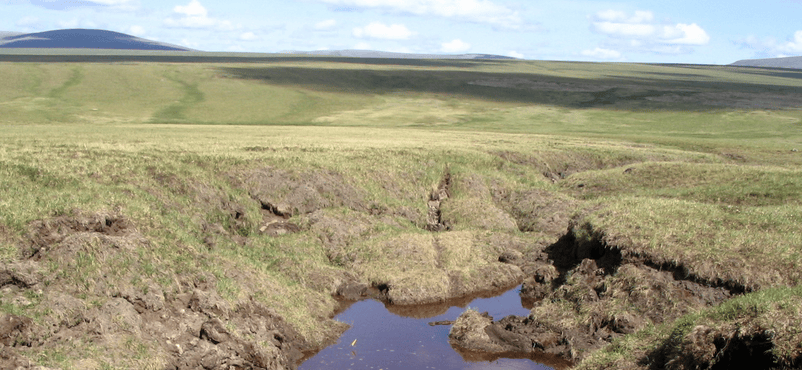
The neolithic age came rather late to different regions of earth. Especially in the north
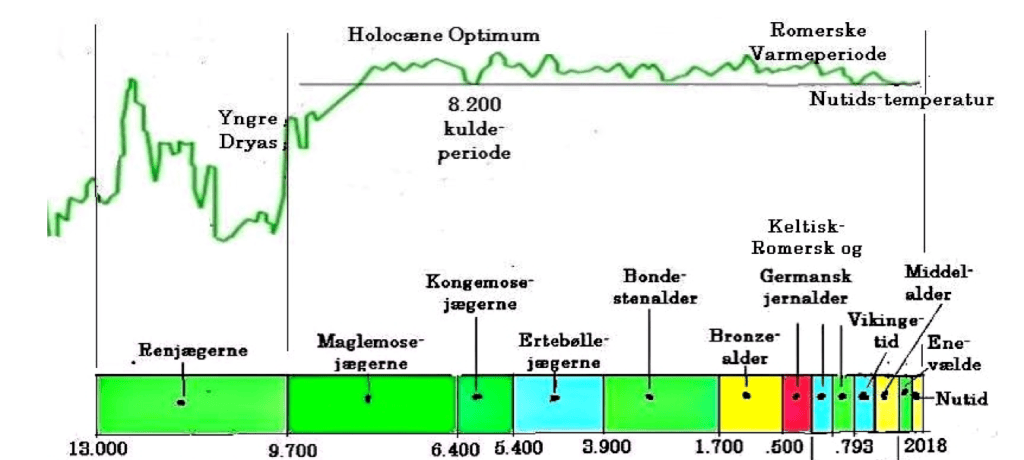
During the Weichselian glaciation, almost 115,000 till about 11,700 years ago. Scandinavia begin the deep unfreezing from ice cover.

About 15,000 to 13,000 BC years ago. The ice sheet, that covered almost all of Scandinavia, slowly began to melt away
It is decided that, in Denmark, the Ice Age finally ended about 9,700 years ago
The reindeer walked to the north, followed by the reindeer hunters
As the ice receded, reindeer, and what was left of pleistocene megafauna grazed the emerging tundra plains of Denmark, and southernmost Sweden. This was the era of nomadic cultures who hunted in vast territories. Some that spanned over 100,000 square km. They explored and lived as nomads in huts and teepees. Mostly following the reindeer migrations and wildlife across the barren tundra landscapes. As well, following salmon, cod, seals and whatever aquatic creatures they could find.
It was the finish of a great ice age. At the end of the pleistocene, the climate slowly warmed up. Fighting what little warmth, food, and shelter that was available. Nomadic hunters from central Europe slowly started becoming accustom to the Scandanavian region
And, traveling back and forth to where weather was more suitable in winter. It was around 12,000 BCE, when many glaciers were melting, that permanent, nomadic, habitation begin in the region
This barren land, there was not much plant cover, except for occasional arctic white birch and rowan.
Slowly but surely, eventually a taiga forest appeared. Around 11,400 BCE, the Bromme culture emerged in Southern Scandinavia
This was a more rapidly warming era, providing opportunity for other substantial hunting game animals than the ubiquitous reindeer. As former hunter-gather cultures, the Bromme culture was still largely dependent on reindeer and lived a nomadic life. Their camps diversified significantly, and they were the first people to settle Southern Scandinavia (and, the Southern Baltic area). Yet because they sometimes needed tools, supply, food; and, to trade. It was still a somewhat nomadic basis.

Local climate changes, around 10,500 BCE, included both cultural changes, and the first settling of the northern parts of Scandinavia
Initially, a thousand-year-long climate cool-down replaced the taiga with tundra again, and the local culture reverted to former traditions. Focusing on reindeer hunting. This culture is now referred to as the Ahrensburg culture.
Around 9,500 BCE, when the local climate warmed yet again. The pre-boreal era emerged, which triggered the Ahrensburg to settle the emerging tundra of northern Scandinavia
For the next two thousand years, the climatic phase known as the boreal reigned in the Scandinavian region.

Mesolithic: A culture called the Maglemosian (Maglemose) culture lived in the areas of Denmark and southern Sweden around 7200BCE
To the north in Norway, and along the coast of western Sweden. The Fosna-Hensbacka culture was living mostly in changing seasonal camps. Along the shores and close to the now thriving forests.
The 7th millennium BCE, the climate in Scandinavia was warming as it transitioned from the former boreal age to the atlantic period. Reindeer and their hunters had already migrated and inhabited the lands of northern Scandinavia, and forests had established.
Utilizing fire, boats and stone tools, these tribal cultures managed to survive in northern Europe. The northerners followed the herds, and the salmon runs, moving south during the winters, moving north again during the summers. They had far north cultural traditions. Including those similar to modern Finland, Russia, and across the Bering Strait into the northernmost strip of North America.
6,400 to 5,400 BCE (8,400 to 7,400 years before present). Kongemose culture, was the southern Scandanavian culture that followed maglemosian or maglemose
They acted as stewards for the aurochs, wisent, moose and red deer that roamed freely in the forests. All were game for tribes of what is now called the northern culture and guardians. Like their predecessors, the Kongemose tribes, they also hunted marine animals such as seals. And, they fished in the rich shallow waters.
North of the Kongemose people, lived other hunter-gatherers in most of southern Norway and Sweden, now dubbed the Nøstvet and Lihult cultures
Who are descendants of the Fosna and Hensbacka cultures. By the end of the 6th millennium BCE, as the sea levels rose gradually, these northerly tribal cultures continued their way of life. While the Kongemose culture was replaced by the Ertebølle culture. Adapting to climatic changes and flooding in their low lying southern regions. Where some areas were affected severely.
Climate
By the 6th millennium BCE, the climate of Scandinavia was generally warmer and more humid than today. The southern regions were clad in lush temperate broadleaf and mixed forests.

Neolithic
During the 5th millennium BCE, the Ertebølle people learned pottery from neighbouring tribes in the south, who had begun to cultivate the land and keep animals. Soon, they too started to cultivate land, and in 4000 BCE, they became part of the megalithic Funnelbeaker culture.
During the 4th millennium BCE, these Funnelbeaker tribes expanded into Sweden up to Uppland
The Nøstvet and Lihult tribes, (northern Scandanavians), learned new technology from the advancing farmers, but not agriculture. And, because of Pitted Ware cultures.
These Pitted Ware tribes halted the advance of the farmers and pushed them south into south-western Sweden. Some say that the farmers were not killed or chased away, but they voluntarily joined the Pitted Ware culture and became part of them
At least one settlement appears to be mixed, the Alvastra pile-dwelling.


3rd millennium BCE: Proto Indo European
Though the introduction of the proto indo europeans (PIE), in northern Europe is still debated. By the 3rd millennium BCE, it is agreed the northerners were over run. The language these early Scandinavians spoke is unknown, but towards the end of the 3rd millennium BCE, PIE were in the north.
New tribes, who many scholars believe spoke proto-indo-European were the Corded Ware culture. They became known as the Battle-Axe culture in Scandinavia
This new people advanced up to Uppland and the Oslofjord, and probably provided the Proto-Germanic language that was the ancestor of the modern Scandinavian. These new tribes used the battle axe as a status symbol, were cattle herders and big change had begun.

Ultimately, the neolithic age led to the copper and bronze age(s). It would usher in a time of cultural advancement, strength and environmental change in Scandinavia.
-
 neolithic europe melt sticker$4.00
 -
 wild hunt t-shirtPrice range: $60.00 through $70.00
 -
 hunter gatherer t-shirtPrice range: $60.00 through $70.00
Bibliography: Jørgen Jensen (2002): I begyndelsen, Gyldendal og Politikens Danmarks Historie (Vol. 1), ISBN 87-89068-26-2 (in Danish)
DALUM HJALLESE DEBATE CLUB (2023 Jan 20th) https://www.dandebat.dk/eng-index.htm
Leave a Reply