< home # store # services # articles # game # app #contact >
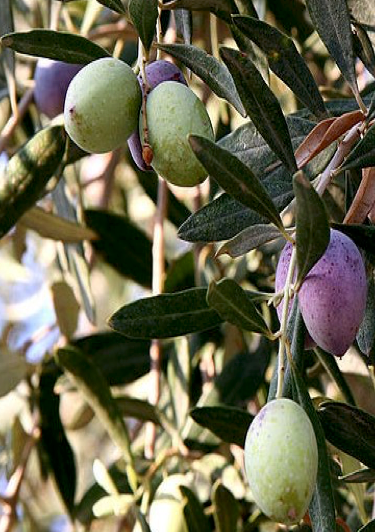
Olives were first cultivated for their oil-rich fruit. It became a cornerstone of ancient diets, economies, and cultures
The wood also provided excellent fuel because it burns when damp. Attractive characteristics.
It’s used not just for food, but for fuel, light; as an ointment, perfume, soap; and more
It is mentioned in the bible, that men with olive oil were considered prosperous.
It was exploited for tens of thousands of years; versus the transitional period when it became domesticated during the neolithic
The many attractive characteristic that drew people towards there management.
According to greek mythology Athena, the goddess of wisdom, struck her spear in to the earth. And, an olive tree appeared. Athenas tree was planted in Athens. Hence the cities name.
Domesticated olives were selected for larger fruit and seeds (stones); higher oil content; more regular bearing and productivity. The ease of harvesting (shorter trees, less thorny); and, more vegetative propagation (e.g., via cuttings or grafting)
Some trees are 2000 years old; and, their are many cultivators.
In Minoan Crete; the Cyclades, and Byblos olives were cultivated and traded as a part of the economy.
Olive oil was used for oil production: cooking, lighting, medicine, cosmetics, and religious rituals.
Trade good: Olive oil was a major export of ancient Mediterranean civilizations
Debate still persists about its origin and spread
Olive branches do symbolized peace, wisdom, and divine favor in many cultures.
Modern genetic studies show multiple domestication events, or at least introgression (interbreeding), between wild and cultivated olives, in different regions
As well as cultivated trees, that farmers forgot and became wild once again.
During the neolithic era, European olives (Olea europaea) had strong Mediterranean core domestication. Later there were regional adaptations with clonal propagation of preferred varieties. Check it out with some more neolithic architecture today!
Bibliography: Marquer, L.; Otto, T.; Arous, E. Ben; Stoetzel, E.; Campmas, E.; Zazzo, A.; Tombret, O.; Seim, A.; Kofler, W.; Falguères, C.; El Hajraoui, M. Abdeljalil (22 March 2022). “The first use of olives in Africa around 100,000 years ago” (https://www.nature.com/articles/s41477-022-01109-x). Nature Plants. 8 (3): 204–208. Bibcode:2022NatPl…8..204M (https://ui.adsabs.harvard.edu/abs/2022NatPl…8..204M). doi:10.1038/s41477-022-01109-x (https://doi.org/10.1038%2Fs41477-022-01109-x). ISSN 2055-0278 (https://search.worldcat.org/issn/2055-0278).
PMID 35318448 (https://pubmed.ncbi.nlm.nih.gov/35318448). S2CID 247615211 (https://api.se
manticscholar.org/CorpusID:247615211). Archived (https://web.archive.org/web/202203311509
28/https://www.nature.com/articles/s41477-022-01109-x)
“Olea europaea (map)” (http://bonap.net/MapGallery/County/Olea%20europaea.png). Biota of North America Program. Archived (https://web.archive.org/web/20150509101241/http://bonap.net/MapGallery/County/Olea%20europaea.png


Nili Liphschitz, Ram Gophna, Moshe Hartman, Gideon Biger, The beginning of olive (olea europaea) cultivation in the old world: A reassessment (https://www.sciencedirect.com/science/article/pii/030544039190037P), Journal of Archaeological Science, Volume 18, Issue 4, 1991, Pages 441–453, ISSN 0305-4403. “Abstract: The olive was one of the first fruit trees cultivated by man. It has been claimed that cultivation of the olive began in Israel during the Chalcolithic Period. Careful botanical examination of pollen grains, stones and wood remains gathered from
living trees and from archaeological contexts show that it is impossible to distinguish between wild and cultivated olives. The ample remnants of olive found in archaeological contexts, together with other finds, such as pottery vessels, oil lamps, and olive oil installations, indicate that the earliest widespread use of olives in Israel was in the Early Bronze Age.”
Leave a Reply