<home # start here # guides # builds # services # shop # about # categories>
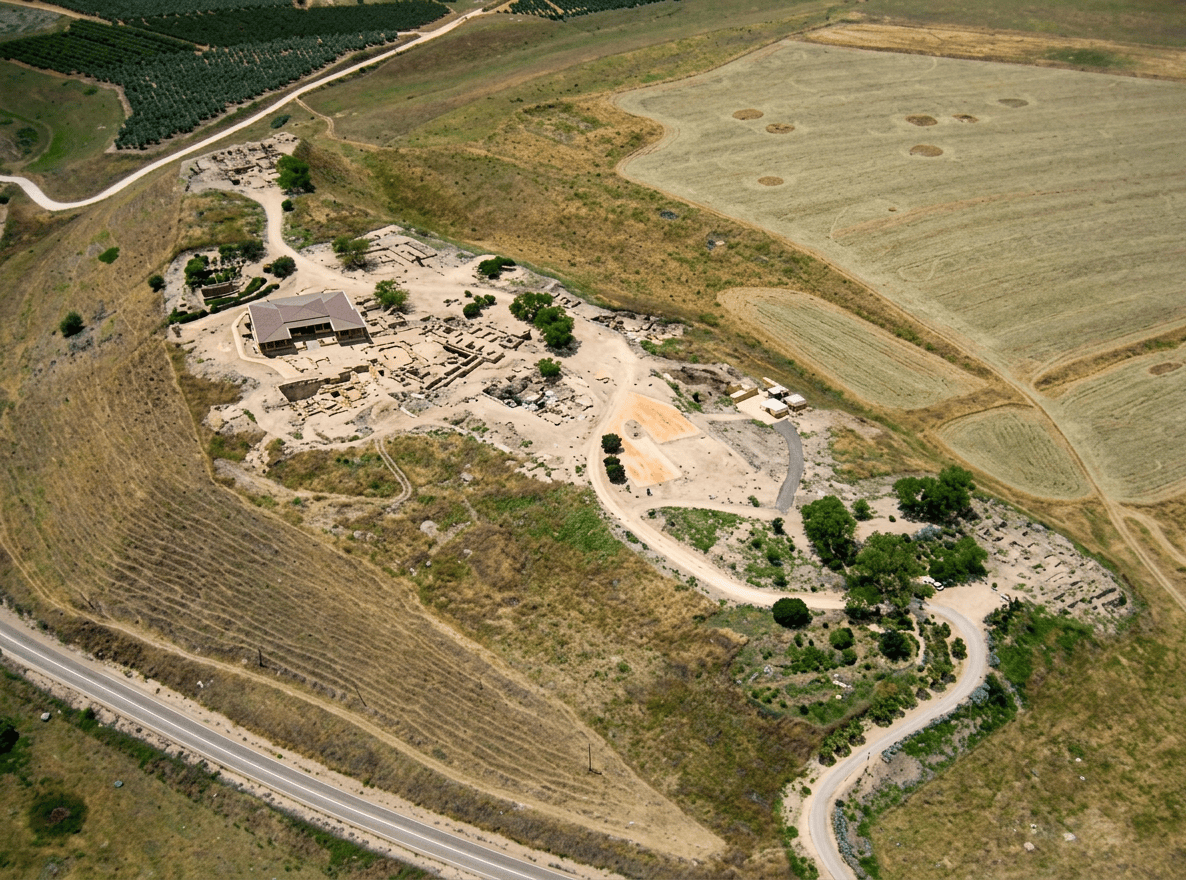
Today, Tel Hazor is famous as the largest Bronze Age and Iron Age tell in Israel, occupied mainly from the Early Bronze Age (c. 2800 BCE) through the Iron Age. The great palaces, temples, fortifications, and cuneiform archives all belong to these later periods.
However, small prehistoric remains have been identified on the tell, including evidence for Pre-Pottery Neolithic (PPN) activity, although these occupations were limited and were largely disturbed by thousands of years of later settlement. Consequently, our knowledge of Hazor’s Neolithic occupation is far more fragmentary than at sites such as Kfar HaHoresh, Yiftahel, Jericho, or ‘Ain Ghazal.
Its in a commanding position in the Hula Valley (Upper Galilee)
16 km north of the Sea of Galilee. Roughly 70 km northeast of Haifa.
Evidence for occupation:
Pre-Pottery Neolithic occupation; and
later Early Bronze Age expansion.
Unlike Kfar HaHoresh or Yiftahel, no extensive PPNB village has been excavated. The site was almost completely overbuilt by Bronze and Iron Age cities. Archaeologists recovered scattered prehistoric deposits indicating that Neolithic groups occupied the hill before urbanization began several millennia later.
Around 9,000 Years Ago the Hula Basin was among the richest ecological regions in the Levant
The landscape included: permanent marshes, Hula Lake, oak woodland, pistachio woodland, riparian forest and wetlands. Nearby trees probably included: wild pistachio, almond, wild fig, oak, terebinth, willow, poplar and ash. The abundance of freshwater and woodland made the Hula Basin one of the best environments for early farming.
Neolithic plant remains are limited but nearby contemporary sites indicate cultivation of einkorn wheat, emmer wheat, barley, lentils, peas and bitter vetch
Most agricultural reconstructions rely on nearby Upper Galilee PPNB settlements.
Hazor sits on sediments bordering the Hula Basin
Geology includes limestone and basalt. Unlike Kfar HaHoresh, Hazor lies relatively close to the Golan volcanic field.
Unlike later Hazor, no complete Neolithic architectural complex has been excavated. Neolithic architecture evidence is limited
Any prehistoric buildings were largely destroyed by Bronze Age palaces, temples, fortifications and Iron Age rebuilding.
If occupation resembled nearby PPNB villages, buildings were probably rectangular, stone founded, mudbrick walled and plaster floored.
However, this remains an informed inference rather than direct evidence.
The famous temples at Hazor belong to the Middle and Late Bronze Age, not the Neolithic.
At present there is no substantial published Neolithic assemblage of: figurines, gaming pieces or ritual sculptures
The spectacular figurines and cult objects from Hazor belong to the Bronze Age.
For the Neolithic period, Hazor is notable primarily because it demonstrates people occupied this strategic hill thousands of years before urbanization. And, that later cities almost completely obscured those earliest occupations
Its greatest archaeological importance, however, begins in the Early Bronze Age, when Hazor developed into one of the largest cities in the ancient Near East
Hazor experienced numerous destructions and rebuildings over more than two millennia, but these events do not apply to the Neolithic occupation.
From a Neolithic perspective, Tel Hazor is not comparable to sites such as Kfar HaHoresh, Jericho, Yiftahel, or ‘Ain Ghazal. Its prehistoric occupation is limited and poorly preserved beneath later urban layers. Instead, Hazor’s importance lies in demonstrating that a location which later became the largest Bronze Age city in Canaan had already attracted human groups during the Pre-Pottery Neolithic because of its strategic position overlooking the fertile Hula Basin and linking routes in the Jordan Valley, Upper Galilee, and Syria.
References: Ben-Tor, A., & Kreimerman, I. The Selz Foundation Hazor Excavations (annual reports).
Yadin, Y. (1972). Hazor: The Rediscovery of a Great Citadel of the Bible.
Gopher, A. (1994). The Flint Assemblages of the Pre-Pottery Neolithic B in Israel.
Kuijt, I., & Goring-Morris, N. (2002). Foraging, Farming, and Social Complexity in the Pre-Pottery Neolithic of the Southern Levant. Journal of World Prehistory.
Weiss, E., Kislev, M. E., & Hartmann, A. (2006). Autonomous cultivation before domestication. Science.
Leave a Reply