< home # store # services # articles # game # app #contact >
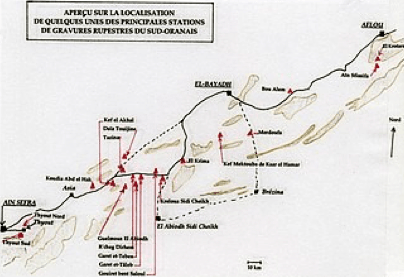

In the south Olan region. Numerous prehistoric rock paintings and engravings are found. They are significant archaeologically. The artworks there, are typically found on the surfaces of rocks and cliffs. In remote or sheltered locations. Viewing and analyzing them helps provide valuable insights into the lives, and practices of the these prehistoric people that lived there, and created them.


The importance of hunting and natural environment is exacerbated
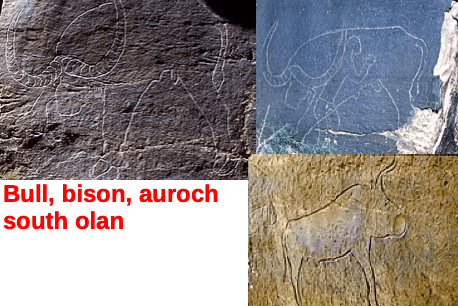
There are depictions of local wildlife: deer, bison, horses, and other fauna. Illustrated hunted and living in the natural environment. While there are also images of various people too. Doing activities, such as hunting, dancing, and participating in rituals.
Paintings were created using mineral pigments, and organic materials. Mixed with h20, animal fats, or plant oil
While sharp bones; flint, obsidian, and other hard stones were used for carvings.
Rock art provides clues about chronological development and changes in the region
Researchers believe the paintings and engravings were part of religious or ritualistic practices. They believed in hunting magic, shamanism, or other spiritual beliefs. And, that it could bring changes in the supplies of tools, wildlife and fauna. It shows that people had a relationship with the wilderness and to the area. And, that art was essential to there survival.

Cro-mags, farmers of asiatic origin. Harratines, proto Libyans, bushman, or others could have been the artists
There was also the black populations ancestral to Mandinka, and Hausa. Tuaregs, Egyptians and ancestors to Berbers. Any one of them could have been involved(1). But no human remains have been found. What did you think?
Paintings and engravings dating back to the neolithic era, and over thousands and thousands of years. Are a vital part of, the south Olan, and Algerias heritage. It offers a valid window into early humans art, creativity, and, there experiences.

-
 Algerian neolithic women t-shirtPrice range: $60.00 through $70.00
Citation: 1) Henri Lhote, Les gravures rupestres du Sud-oranais, (Arts et Métiers graphiques, Paris) 1970
Bibliography:
Balout (L.), Préhistoire de l’Afrique du Nord, Paris, A.M.G., 1955 (544 p., 29 fig.)
Gautier (E.F.), Sahara algérien, Paris, A. Colin, 1908 (371 p., 61 fig., 52 pl.)
Vaufrey (Raymond), L’Art rupestre nord-africain, Paris, Masson, 1939 (127 p., 58 fig. 54 pl.)
Leave a Reply