< home # store # services # articles # game # app #contact >
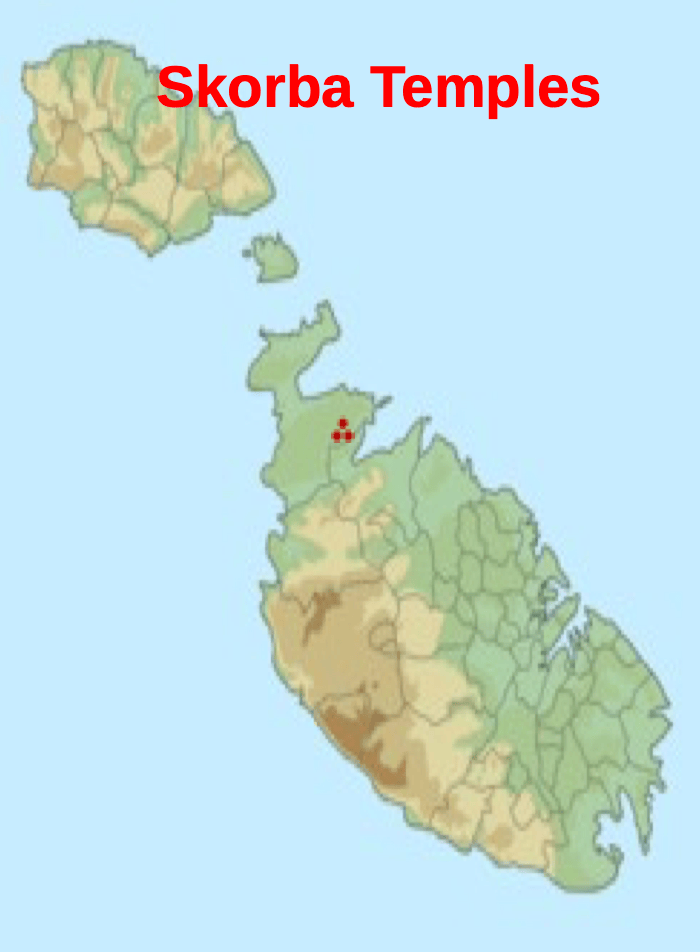
It is located near Żebbiegħ
Though modest in appearance compared to larger Maltese temple sites, Skorba is immensely important for understanding the earliest neolithic to temple-building phases on the islands
Earliest evidence is a straight village wall and oval huts, with possibly boundary or domestic structures
There is village life with stone & mudbrick huts; pottery (grey and red ochre styles); tools; seeds; animal bones; and small clay figurines
Some suggest ritual use in a “shrine” setting.
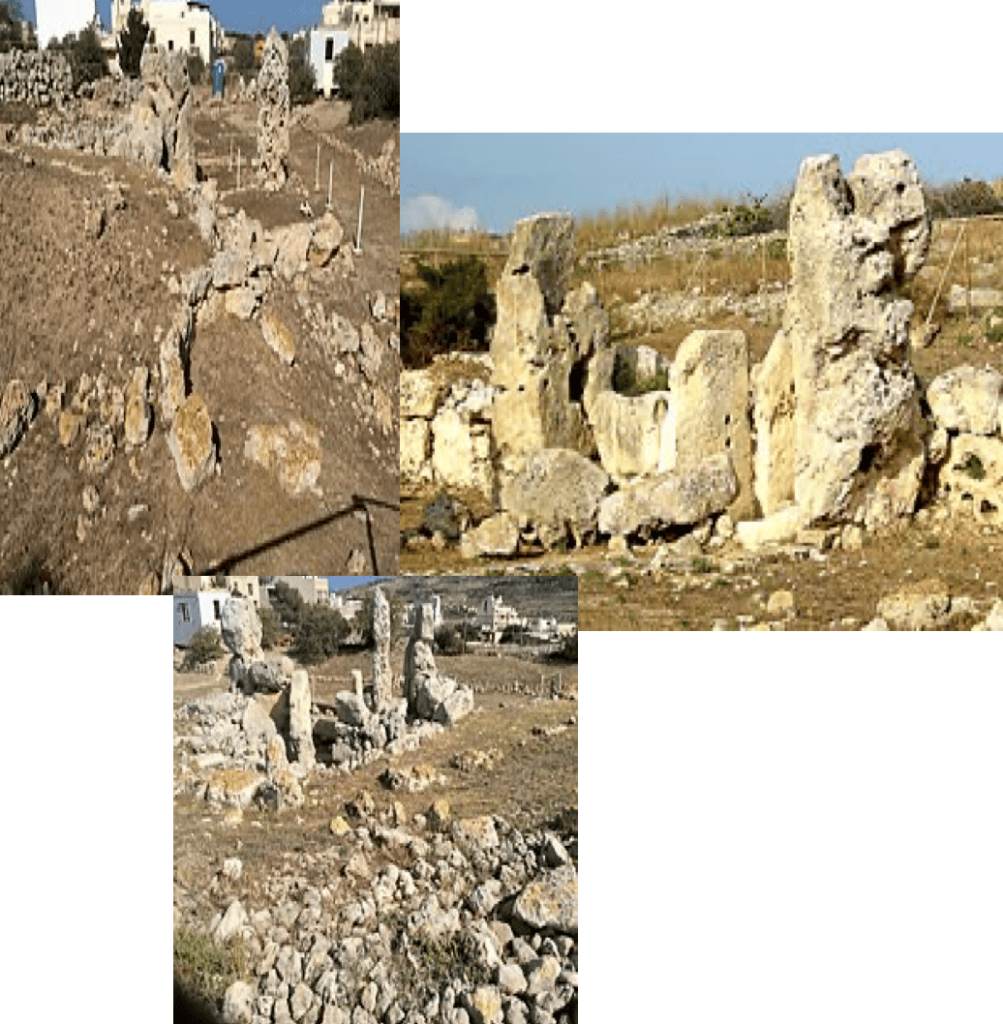
Two megalithic temples built:
A three-apsed phase temple, now mostly foundations and uprights; and,
A four-apsed Tarxien phase temple, with a central niche, suggesting continued ceremonial evolution.
Three-apse temple: typical layout of Ggantija phase, with torba (cement-like) floors and libation holes in entrance slabs
Four-apse temple: later addition during Tarxien phase, with altars and blocked entrance echoes larger temple styles
Libation holes: suggest ritual pouring of liquids as offerings
Domestic remains: huts and everyday pottery reveal the lives of temple builders, linking ritual activity to village life
Figurines and animal remains: stylized female figures and goat skulls point to fertility or ancestral cults
It is important because the site provides a continuous archaeological record from the earliest settlers, through monumental temple construction. It offers rare insight into domestic life, tool usage, agriculture, and ritual practices of Neolithic Maltese people
One of the few temple sites excavated with modern techniques, yielding robust data and chronology. Check it out with some more neolithic architecture today.
Bibliography: National Inventory of the Cultural Property of the Maltese Islands (https://culture.gov.mt/en/culturalheritage/NICPMI_Database/00015.pdf)
Trump, Cilia, Malta Prehistory and Temples
Leave a Reply