<home # start here # guides # builds # services # shop # about # categories>
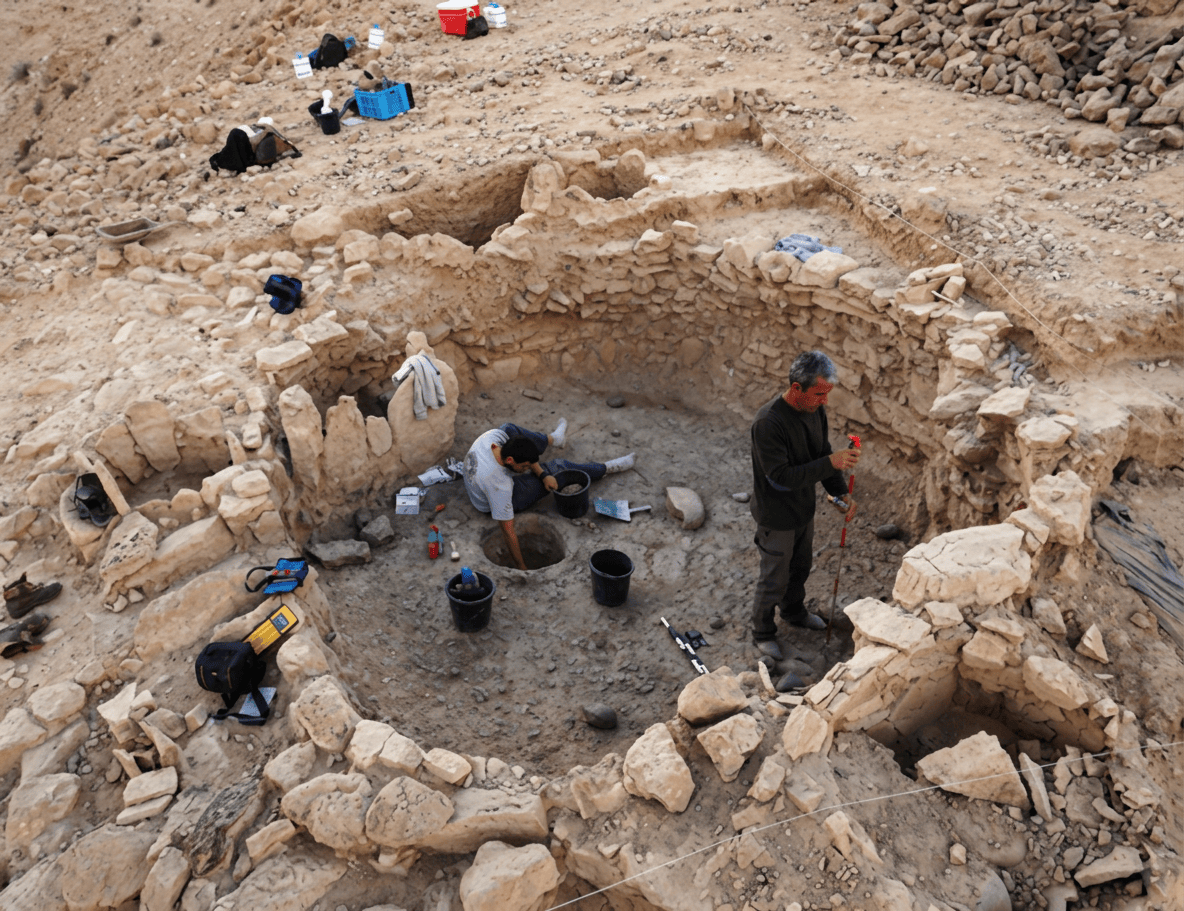
The type-site of the Yarmukian culture, famous for its early pottery, sophisticated village planning, remarkable female figurines, and one of the earliest known systems of streets and courtyard houses in the Levant
Excavations over the last three decades have completely changed archaeologists’ understanding of the sixth millennium BC, demonstrating that substantial permanent villages existed long before the rise of Bronze Age cities.
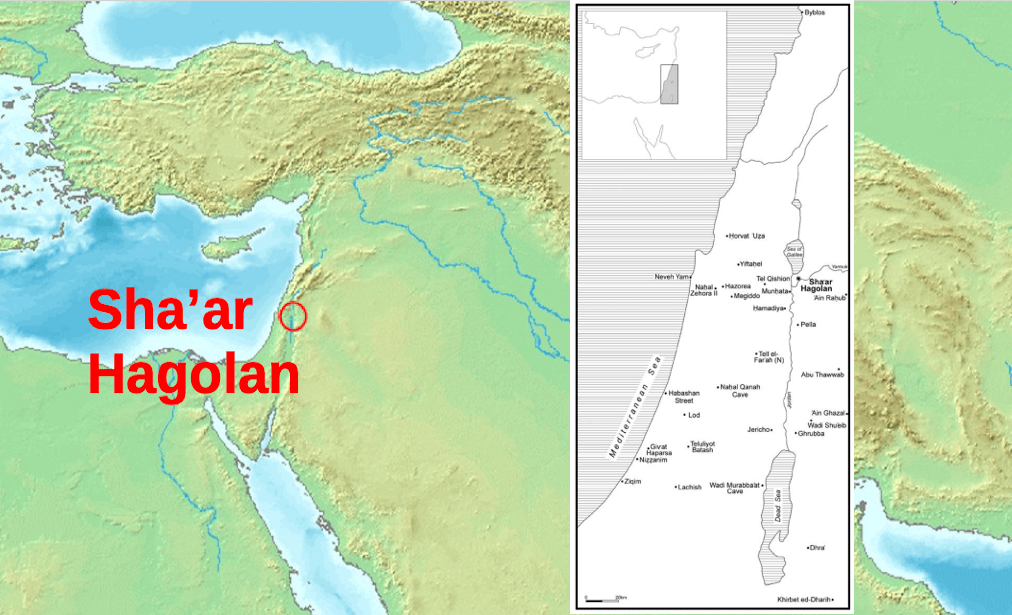
It is located in the central Jordan Valley of northern Israel
About 10 km south of the Sea of Galilee (Lake Kinneret), on the north bank of the Yarmouk River, near its junction with the Jordan River. Its about 70 km east of Haifa, roughly 55 km southeast of Hayonim Cave. Unlike coastal sites such as Kfar Samir or Atlit Yam, Sha’ar Hagolan occupied an inland river valley with fertile alluvial soils and dependable water.
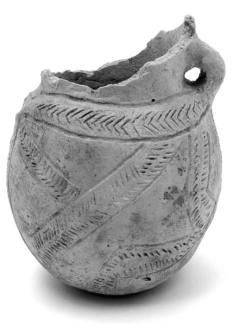
The site belongs primarily to the Yarmukian (Pottery Neolithic) culture
Approximate main occupation dates 6.4 to 6 thousand BC
Earlier surveys recovered a few isolated prehistoric artefacts, but there is no substantial Pre-Pottery Neolithic village beneath the Yarmukian settlement.
After the Neolithic occupation, the site was reused during the Early Bronze Age and later periods.

Around 8,000 years ago the Jordan Valley was somewhat cooler and wetter than today. With denser woodland, and more reliable river flow
The surrounding vegetation likely included: Oak woodland on nearby hills, Pistachio (Pistacia palaestina), Terebinth, Almond, Wild fig, Hawthorn and Wild pear.
The Jordan Valley itself supported riverine vegetation including willow, tamarisk, reeds, and grasses.
Archaeobotanical evidence from Sha’ar Hagolan and comparable Yarmukian sites indicates cultivation of: Emmer wheat, Einkorn wheat and Barley. Legumes: Lentils Peas, Bitter vetch. And, probably flax.
Figs were almost certainly collected and perhaps managed, while olives became more significant during later periods.
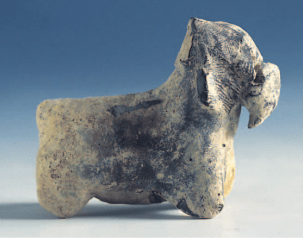
Domestic animals included: Sheep, Goats, Cattle and Pigs
Wild animals continued to supplement the diet: Gazelle, Deer, Wild boar, Hare and Birds. And Fish from the Jordan and Yarmouk Rivers.
This mixed economy of farming, herding, hunting, and fishing was typical of the Yarmukian culture.
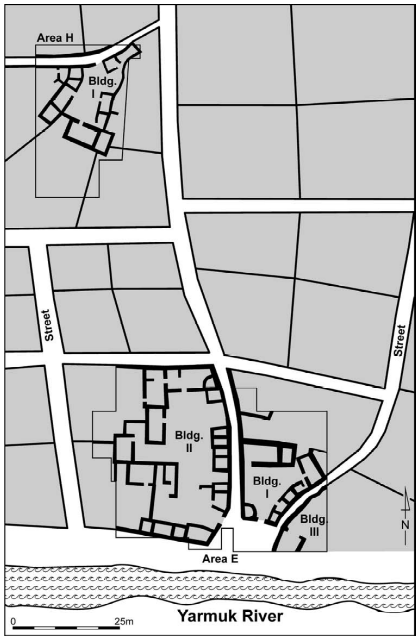
One of Sha’ar Hagolan’s greatest contributions is its architecture
Excavations uncovered Large rectangular courtyard houses. Eight to fifteen rooms surrounding open courtyards. Stone foundations built from basalt cobbles. Sun-dried mudbrick walls. Wooden roof beams. Reed and mud roofing. Beaten earth floors. Wells. Internal storage rooms. And, Outdoor courtyards. Unlike earlier villages of small independent houses, Sha’ar Hagolan exhibits carefully planned neighbourhoods.
Perhaps even more remarkable is the discovery of broad streets, narrow alleyways and open public spaces. It represents some of the earliest known planned street systems anywhere in the Near East.
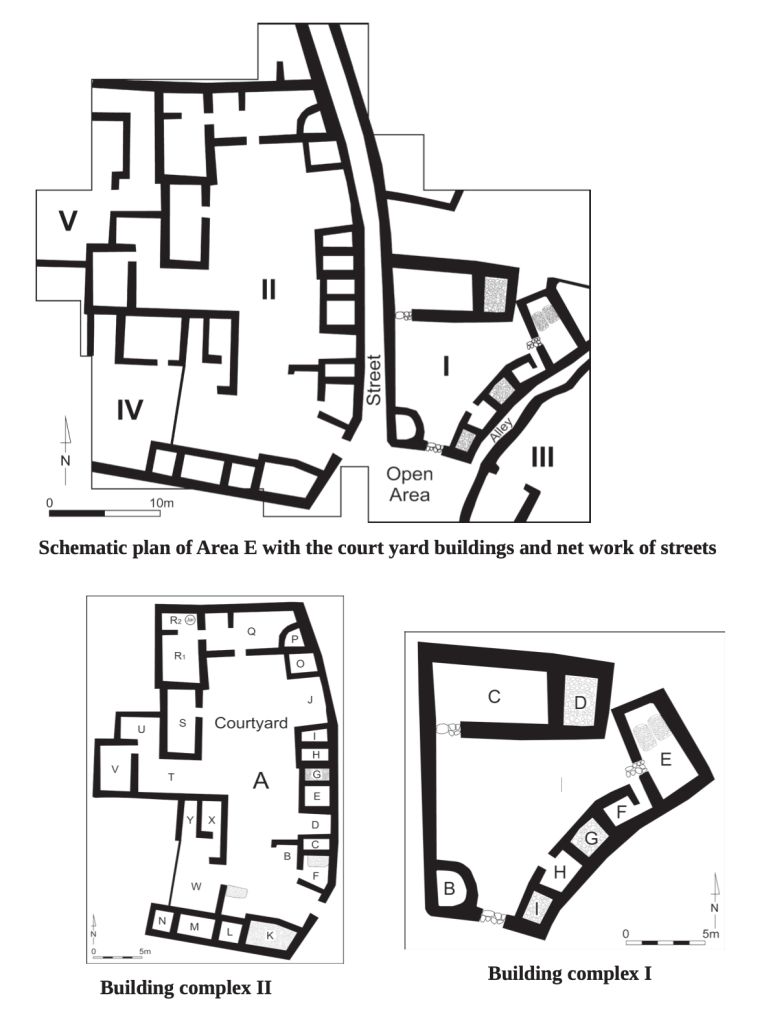
No monumental or temple architecture has been found. It suggests community organization expressed through neighbourhood planning rather than monumental ceremonial architecture.

Sha’ar Hagolan is internationally famous for its figurines
More than 300 anthropomorphic figurines have been recovered, making it the largest prehistoric figurine assemblage in Israel. It includes female figurines with emphasized hips and breasts, standing figurines, seated figures, incised decoration and clay and stone examples. Though their exact function remains not certain. Many researchers interpret them as relating to fertility, identity, or household ritual. Animal figurines are also common and, several small clay and stone objects may have served as counters or tokens. There is clear evidence for formal board games. Some objects could equally represent spindle whorls, weights, or symbolic items.
Sha’ar Hagolan is also famous for producing some of the finest early pottery in the southern Levant
Typical forms include Bowls, Jars, Storage vessels, Decorated pottery and Incised ceramics. This pottery defines much of the Yarmukian cultural tradition.
Woodworking
Wood rarely survives in the Jordan Valley. However, archaeologists recovered postholes, burnt wood fragments, stone adzes, polished axes and chisels. These indicate substantial woodworking for houses, roofing, furniture, and agricultural tools. Unlike submerged sites such as Kfar Samir, complete wooden doors or beams have not survived.
No boats have been recovered
However, proximity to both the Jordan and Yarmouk Rivers suggests that simple rafts or dugout canoes were probably known, although direct archaeological evidence is lacking.
Flint and obsidian
Most stone tools were manufactured from local flint. The site also yielded small quantities of obsidian imported from central or eastern Anatolia, demonstrating participation in long-distance exchange networks extending hundreds of kilometres.
Recovered lithic tools include: Arrowheads, Spear points, Flint knives, Sickle blades, Scrapers, Borers and Polished stone axes
Many of these tools served both domestic and hunting purposes.
Sha’ar Hagolan is notable for one of the earliest planned street systems, monumental courtyard houses, hundreds of figurines, early pottery production, large settlement size (approximately 20 hectares), evidence for neighbourhood organization and water wells. These discoveries overturned the earlier belief that Pottery Neolithic communities were small and largely nomadic.
Archaeology and archaeobotany
The site was first recognized in the 1940s by Moshe Stekelis, who identified the Yarmukian culture. Since 1989, renewed excavations have been directed by Yosef Garfinkel, whose work has produced the definitive publications on the site.
The principal Yarmukian settlement appears to have been occupied for several centuries before being abandoned around 6000 BC
The site was reoccupied much later during the Early Bronze Age, indicating at least one major occupational break between its Neolithic and Bronze Age phases.
Located 10km south of the sea of Galilee, and 100km north of Jericho, Sha’ar Hagolan is one of the most important pottery Neolithic sites in the Near East. Check it out with some more neolithic architecture today.
References: Allen, S. E., Garfinkel, Y., & Miller, M. A. (2002). Sha’ar Hagolan. Qedem Reports. Oxbow Books.
Garfinkel, Y. (1999). The Yarmukians: Neolithic Art from Sha’ar Hagolan. Bible Lands Museum.
Garfinkel, Y. (1989). Sha’ar Hagolan – 1989. Excavations and Surveys in Israel.
Garfinkel, Y., Ben-Shlomo, D., & Marom, N. (2019). “Sha’ar Hagolan: A Major Pottery Neolithic Settlement and Artistic Center in the Jordan Valley.”
Kuijt, I., & Goring-Morris, A. N. (2002). “Foraging, Farming, and Social Complexity in the Pre-Pottery Neolithic of the Southern Levant.” Journal of World Prehistory, 16(4), 361–440.
Kislev, M. E. (various publications). Archaeobotanical studies of Neolithic agriculture in the southern Levant.
Stekelis, M. (1972). The Yarmukian Culture of Sha’ar Hagolan. Israel Exploration Society.
Leave a Reply