<home # start here # guides # builds # services # shop # about # categories>
Saudi Arabia | Late Neolithic | c. 5400–4200 BCE, with some excavated examples concentrated around 5300–4800 BCE
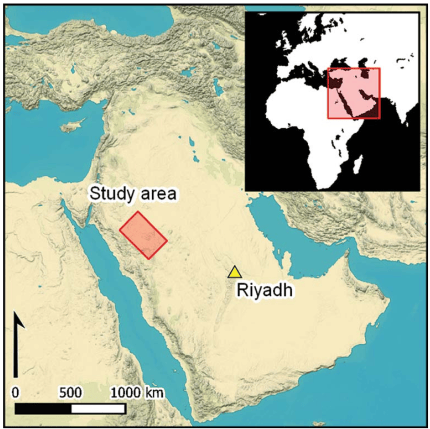
There is an important distinction to make at the beginning: “Mustatil” is not the name of one archaeological site. It is the Arabic word for rectangle and refers to a remarkable class of Neolithic stone monuments spread across northwestern Saudi Arabia. More than 1,600 have now been identified, extending across roughly 300,000 km², particularly around AlUla, Khaybar, the Nefud margins and toward Ha’il and Tabuk. [1][2] They are among the world’s earliest known traditions of large-scale monumental stone architecture. And their purpose is becoming clearer: Mustatils were not houses. They were ritual monuments—probably places where pastoral communities gathered, sacrificed animals and maintained social and religious connections across a surprisingly large landscape. [1][2]

The landscape: not the Tigris, not the Euphrates
A mustatil was nowhere near the Tigris or Euphrates. The monuments are in northwestern Arabia, hundreds of kilometres south of the Euphrates. The best-known concentrations lie around: AlUla, Khaybar, the southern and western Nefud Desert, Jubbah and areas toward Ha’il and Tabuk. [1][3] For the particularly well-preserved mustatil IDIHA-F-0011081, the archaeological site is 55 km east of modern AlUla, in a narrow valley surrounded by sandstone canyons. [4]
Modern geographical setting
The monument sits among sandstone yardangs, rocky ridges, wadis, former playas and desert. Rather than beside a permanent river. There are no perennial rivers in this region today. Instead, prehistoric water came from: seasonal wadis; shallow groundwater; springs/oases; temporary lakes or playas; and, rainfall-fed pools. And, this is significant: mustatils were disproportionately located near water. A 2024 spatial study found that mustatils were commonly within about 5 km of likely ancient water sources and concentrated at approximately 880–950 m above sea level in the southern/western Nefud study area. [3]

Lakes and rivers: Green Arabia was a different world
During the Holocene Humid Period, approximately 8000–4000 BCE, northern Arabia received substantially more rainfall than today. Wadis carried water after rainfall, while depressions became: lakes, marshes and seasonal wetlands. The wider Nefud and Jubbah regions preserve extensive palaeolake evidence. Jebel Oraf, for example, records lake highstands around 6500 and 5300 BCE. [5] At the particularly well-studied AlUla mustatil, researchers found that the monument was oriented toward a playa about 700 m to the east. Other mustatils in Khaybar are demonstrably associated with seasonal wadis or standing water. [4] So the Neolithic landscape was probably much greener: grassland, shrubs, wetlands, grazing animals and seasonal lakes. Rather than today’s hyper-arid desert.
Mountains and elevation
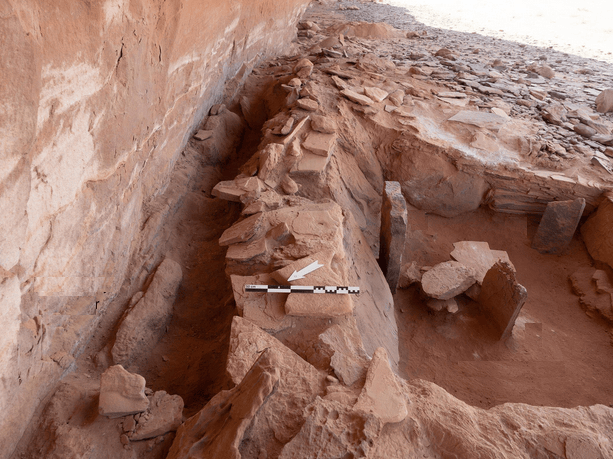
There are no Zagros Mountains near the mustatils. Northwestern Arabia instead has: sandstone mesas and canyons; the Arabian Shield; volcanic harrats, particularly Harrat Khaybar; andthe Hijaz mountain system farther west. Some mustatils were built directly against rock faces or underneath sandstone overhangs. [2] The general mustatil landscape around the Nefud margins is surprisingly elevated for “desert Arabia”: the strongest concentration occurs around 880–950 m asl. [3] The excavated AlUla example is particularly dramatic because its 140-metre-long structure sits between sandstone yardangs, with its “head” tucked beneath a rock overhang. [4]
What did the Green Arabian people eat?
This is where the mustatils become very different from sites such as Jericho or Çatalhöyük.
Wheat and barley?
There is currently no secure archaeobotanical evidence from the excavated mustatils demonstrating cultivated wheat or barley. This is an important distinction. Northern Arabia was becoming pastoral, but it was not necessarily a cereal-farming society. Research on Neolithic northern Arabia emphasizes the poor preservation of plant remains. Even excavated habitation sites have produced little direct botanical evidence. Grinding tools demonstrate plant processing, but this does not automatically mean cereal cultivation. [6]
The real agricultural revolution was pastoralism
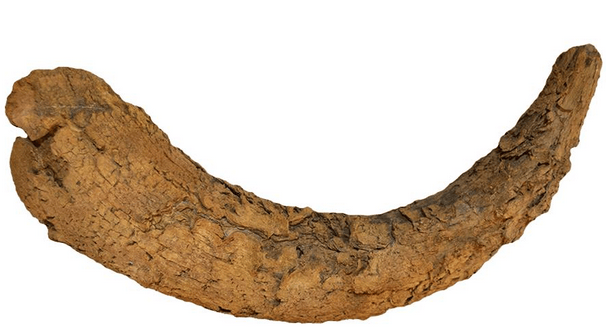
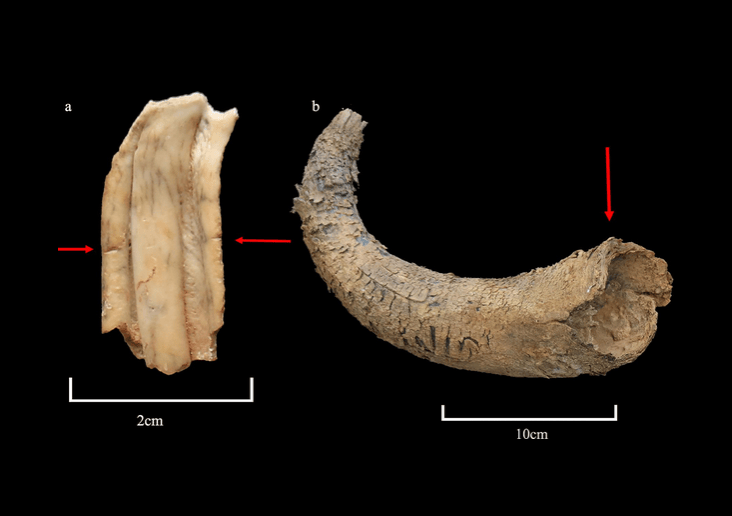
The strongest subsistence evidence is for herding. The excavated mustatil east of AlUla produced: cattle, sheep/goat and gazelle. [4] Cattle are particularly significant. The cattle remains are among the earliest securely dated evidence for domestic cattle in northern Arabia. [4][7] And, the animal remains were not simply discarded food. They were deliberately selected: horns and crania, placed around standing stones. That changes everything.

The “cattle cult”
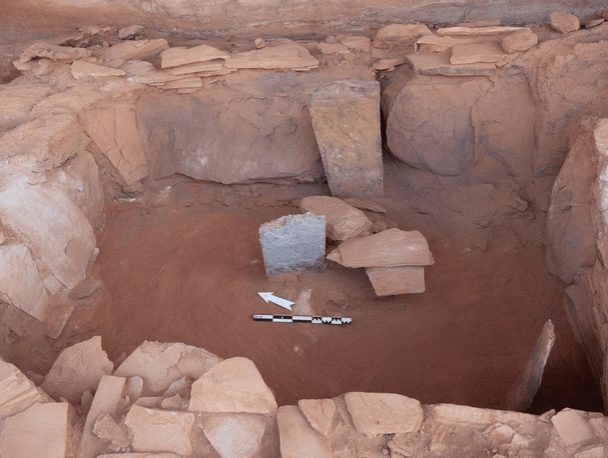
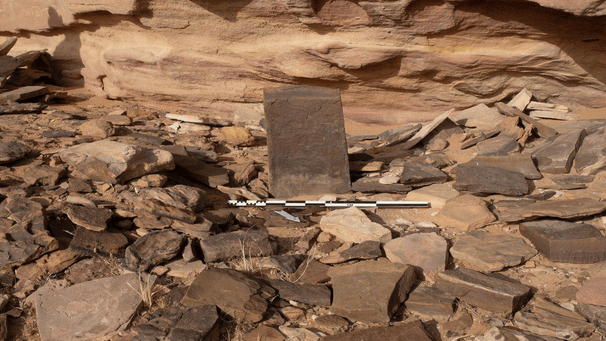
Inside the head of the 140-metre mustatil was a small chamber containing upright stones. Around the principal standing stone were carefully deposited: cattle horns and cranial fragments; sheep/goat remains; and gazelle remains. [2][4] The researchers interpret the large standing stone as a betyl—a sacred or symbolically charged standing stone—and the animal remains as offerings. [2][4] This is the most spectacular discovery associated with the mustatil tradition. It suggests a Neolithic religion centred partly on cattle. The authors cautiously describe this as one of the earliest indications of a cattle cult in Arabia. [2]
Ibex, gazelle and wild animals
Yes, gazelle definitely occurs. Ibex is also documented in mustatil-associated faunal assemblages elsewhere in AlUla, although its representation varies from monument to monument. [8] That is important because it shows that these communities were not simply cattle herders. Their landscape supported: domestic cattle, sheep/goats, wild gazelle, ibex and probably a much broader range of wildlife.
Aurochs?
The terminology requires caution. Some cattle remains are identified only as Bos sp., because the bones cannot always distinguish domestic cattle from wild aurochs. [4] “Cattle are present, with some remains identified only as Bos sp.; securely identified domestic cattle occur in the excavated ritual deposits.”
Deer?
Deer are not a defining component of the excavated mustatil assemblages.
The mustatil faunal signature is overwhelmingly more interesting: cattle + sheep/goats + wild gazelle/ibex
Rather than the classic Southwest Asian farming package of: wheat, barley, sheep, goats and pigs.
Pottery, or a Pre-Pottery Neolithic tradition?
This is another major distinction. Mustatils are not ordinary pottery-bearing villages. The excavated ritual monuments generally contain very little domestic material, and one carefully excavated example had no evidence of domestic occupation. [4] Some mustatil-associated contexts have produced pottery, including a rare local Neolithic vessel elsewhere in the AlUla mustatil tradition, but pottery is not what defines the monuments. [8] There are also lithics characteristic of Middle Holocene Neolithic technology. It is better classified as the mustatil phenomenon: Late Neolithic monumental tradition rather than a straightforward “Pottery Neolithic settlement.” And importantly: there is no securely demonstrated Pre-Pottery Neolithic occupation of the mustatil monument itself.
The wider Nefud, however, absolutely does contain Pre-Pottery Neolithic material, including lithic assemblages dating substantially earlier than the mustatil phenomenon. [9]
Architecture: the extraordinary part
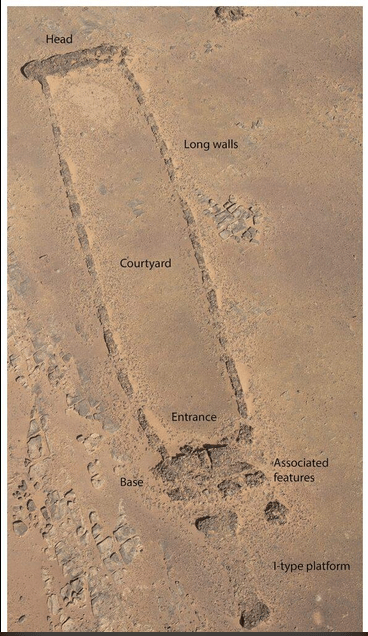
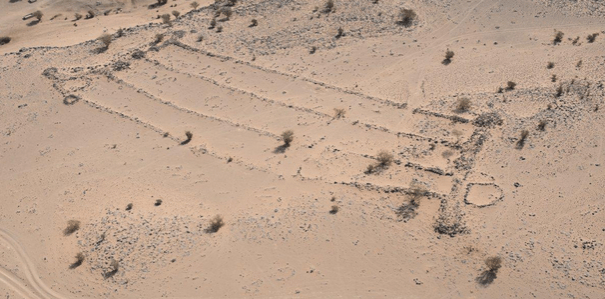
This is where Mustatils belong in a Neolithic architecture article. The basic design is deceptively simple: HEAD ⬇ long wall ┃ courtyard ┃ long wall ⬇ BASE. The monuments range from approximately: 20 m → more than 600 m long. [1][4] The walls are generally low, constructed from locally available stone. The basic components are: two end platforms; two long parallel walls; an enormous open courtyard; entranceways; sometimes internal dividing walls; sometimes cells; sometimes chambers; and orthostats/standing stones. [1][4] More than 1,600 have now been identified. [4] That is not one strange building. It is a regional architectural tradition.
The 140-metre AlUla mustatil
The excavated example is particularly fascinating. It is approximately: 140 m long. And, was constructed from locally available sandstone slabs. [4] Its “head” was placed against a sandstone yardang beneath a natural rock overhang. Inside were two chambers: a long narrow rear chamber; and a roughly trapezoidal central chamber. The principal chamber measured approximately: 3.1 × 2.8 × 2.5 × 2.85 m, and, contained three upright stones. [4] One of the chambers had a small blocked doorway, approximately 56 × 46 cm. [4] That is a remarkable architectural detail.
Was there a roof?
There is no convincing evidence that the enormous courtyard was roofed. The monumental form was primarily an open-air architecture. The enclosed head chamber was different: its walls, rock overhang and small doorway created a much more controlled sacred space. This creates a fascinating spatial hierarchy: huge open landscape, courtyard, platform, small chamber, standing stone and animal offering. The architecture progressively narrows the human experience.
A ritual building—but not a temple in the Mesopotamian sense
Calling a mustatil a “temple” can be misleading. There is no evidence of: priests; writing; permanent priestly institutions; urban settlement; and monumental roofed halls. Instead, it appears to have been a ritual installation used by mobile or semi-mobile pastoral communities. [4][8] The scale is monumental, but the society did not need to be urban. That is one of the most important lessons of Mustatils.
Were they communal buildings?
Almost certainly in some sense, but probably not communal houses. Their enormous size, clustering and repeated construction suggest that considerable numbers of people could participate in ceremonies. Researchers have proposed: feasting; cattle rituals; pilgrimage; territorial marking; social alliance-building; and maintaining relationships between dispersed pastoral groups. [2][8] Some monuments occur in clusters of two to nineteen. [2] The monument may therefore have functioned less like a building and more like a: Neolithic meeting place + shrine + territorial landmark.
Doors and woodworking
Yes, there are actual doorways. The AlUla head chamber had a small blocked doorway connecting the chamber to the courtyard. [4] But: no preserved wooden door has been demonstrated. That is unsurprising in the extremely dry environment. There are also no substantial surviving roof timbers. The architecture is overwhelmingly stone and bedrock, with whatever temporary organic elements existed now largely gone.
Tools and weapons
The excavated cha; mber contained: a grooved sandstone hammerstonea polished sandstone grinder; retouched stone flakes; a side scraper; and chert microflakes. [4] The grooved hammerstone is particularly interesting because comparable objects have been interpreted elsewhere as multipurpose tools and possible arrow-shaft straighteners. [4] So weapons are represented indirectly through the lithic technology. The wider mustatil tradition also includes chipped-stone artefacts and projectile-related technologies.
Obsidian: yes, and this is a great trade clue
Obsidian occurs in the broader mustatil assemblage. One surveyed mustatil courtyard produced an obsidian bifacial foliate, while another produced a flaked microcore. [2] That is significant because obsidian does not occur naturally everywhere in northwest Arabia. It points toward long-distance exchange networks. The best-established obsidian sources in the broader Arabian Neolithic interaction sphere include regions far to the north, particularly eastern Anatolia and adjacent areas. So, just as Dosariyah demonstrates Gulf exchange, Mustatils demonstrate that northern Arabia was connected to wider lithic networks.
Flint and local stone
Local stone was extremely important. The monuments were generally constructed using locally available sandstone or basalt, depending on the landscape. [1][3]
This is architecturally elegant in its simplicity: Use the rock immediately around you. At Harrat Khaybar, basalt dominates the volcanic landscape. Around AlUla and the Nefud margins, sandstone is abundant. Mustatil architecture therefore adapts itself to the geology of each region.
Figurines and game pieces?
Unlike sites such as Çatalhöyük, Ain Ghazal or Jericho: figurines are not a defining feature of Mustatils. Likewise, no convincing standardized assemblage of game pieces is associated with the monuments.
The symbolic objects are architectural: standing stones + animal horns + monumental geometry. The building itself is the ritual object.
A remarkable painted stone
One earlier mustatil investigation recovered a stone painted with a red geometric pattern, apparently incorporated into the monument’s architecture. [6] This is rare and potentially important evidence for pigment and symbolic practices. It reinforces the impression that mustatils were not simply livestock facilities.
Human remains: an important later twist
The excavated AlUla monument itself did not contain human remains in its ritual chamber. But a small cist immediately beside it contained a human burial deposited roughly 400–500 years after the mustatil’s final ritual phase. [4] That is fascinating. The monument appears to have retained social memory after it had been decommissioned. In other words: The building died—but the place did not. Later people still recognized it as meaningful.
Climate change: from Green Arabia to desert
The mustatils belong to the final stages of a remarkable environmental period. During the Holocene Humid Period: Arabia was considerably wetter. Northern Arabia supported: grasses; shrubs; seasonal wetlands; lakes/playas; larger herds of wild animals; and pastoral cattle. Pollen from Tayma indicates extensive grassland between approximately 6600 and 6000 BCE. [3][10] But northern Arabia’s wet phase appears to have been relatively short. Recent work suggests a particularly strong humid interval around 6800–5900 BCE, followed by rapid aridification. [3] That matters enormously for the mustatils. They were built during a world in which: rainfall → grass → cattle → people was possible across landscapes that are now desert.

Did climate change cause the abandonment?
Probably—but we should not make the claim too simple. Mustatils appear to have been constructed during the later part of the Holocene humid phase, and the tradition eventually disappears. The monuments were not necessarily “abandoned” in the way a village is abandoned. They were decommissioned as a ritual tradition. At the AlUla example, the ritual activity went through several depositional phases before the monument was ultimately closed, after which later funerary activity occurred nearby. [4] Across the wider mustatil landscape, later structures frequently reused or robbed their stones, demonstrating that mustatils were generally earlier than many later cairns and monuments. [1] So the sequence seems to be: Green Arabia → pastoralism → mustatil ritual landscape → increasing aridity → changing pastoral systems → end of mustatil tradition → later funerary landscapes.
How many times was a mustatil occupied?
This is a tricky question because these were ritual monuments rather than houses. At IDIHA-F-0011081, the ritual chamber contained multiple stratigraphic phases and several discrete deposition events, rather than a single sacrifice. [4] The study modelled the mustatil’s activity in three chronological phases, with the chamber showing repeated episodes of deposition. [4] So I would not describe it as: “abandoned seven times.” Instead: The monument was used repeatedly for ritual deposition, then decommissioned. That is a much more accurate description.
Dating
The mustatil tradition is broadly dated to the: 6th–5th millennia BCE. With the wider published dataset currently suggesting approximately: 5400–4200 BCE. [3] The best-known excavated AlUla example, IDIHA-F-0011081, produced dates clustering around: 5307–5002 to 5056–4755 cal BCE. [4]
Another early mustatil produced a date around 5000 BCE, making it one of the earliest securely dated large-scale stone monuments in Arabia. [1]
That puts some mustatils roughly contemporary with: Late Neolithic Levant; Ubaid-period Mesopotamia; and, early Chalcolithic transitions elsewhere. And they are older than Stonehenge by several thousand years.

Who studied the Mustatils?
This is now a major international research field. Early documentation Mustatils were known to archaeologists from surveys beginning in the 1970s, when they were often called “gates.” David Kennedy Kennedy’s 2017 remote-sensing study was a turning point, identifying large numbers of these structures from aerial and satellite imagery. [4]
Huw Groucutt and colleagues
The 2020 study of 104 mustatils provided the first major systematic landscape and chronological analysis. [1]
Hugh Thomas, Melissa Kennedy and colleagues
Their 2021 Antiquity study established the increasingly persuasive interpretation of mustatils as ritual monuments and documented their chambers, orthostats, architecture and cattle-related deposits. [2]
Melissa Kennedy and the AAKSAU/UWA team
The 2019–2020 excavations east of AlUla produced the strongest evidence yet for ritual animal deposition and a possible cattle cult. [4]

Why Mustatils are extraordinary
If you want the five things that make Mustatils pop: 1. A possible 7,000-year-old cattle cult. Animal horns and skull fragments were deliberately placed around sacred standing stones. [2][4]
2. Monumental architecture without cities. People constructed structures up to 600+ metres long without urban settlements, masonry houses or states. [1][3]
3. Architecture tied to water. Mustatils preferentially occur near ancient water sources—wadis, playas and wetland areas. [3][4]
4. Green Arabia. These monuments were built during a period when northwest Arabia supported substantially more vegetation and water than today. [3][5]
5. The building itself was the ritual object. Instead of a temple containing the sacred thing, the walls, platforms, chambers, standing stones, landscape and animal offerings formed one enormous ritual system.
The architectural lesson
Mustatils deserve to be presented as a very different category from the mud-brick villages of the Fertile Crescent.
Jericho: house → courtyard → village
Çatalhöyük: house → house → dense settlement
Çayönü: house → cell plan → communal architecture
Dosariyah: coastal camp → reed architecture → trade
Mustatil: landscape → monument → courtyard → sacred chamber → standing stone
That is a major architectural innovation. The Mustatil builders did not simply make a bigger house. They made the landscape itself into architecture. And, they did it during a brief window when Green Arabia provided enough water and pasture for dispersed pastoral communities to meet, herd cattle, hunt gazelle and construct monumental communal places. That makes the mustatil tradition one of the strongest examples anywhere of monumental architecture emerging from pastoral rather than urban society.
References: [1] Groucutt, H. S., Breeze, P. S., Guagnin, M., Stewart, M., Drake, N., Shipton, C., Zahrani, B., Al-Omari, A., Alsharekh, A. M., & Petraglia, M. D. (2020). Monumental landscapes of the Holocene humid period in Northern Arabia: The mustatil phenomenon. The Holocene, 30, 1767–1778.
[2] Thomas, H., Kennedy, M., Dalton, M., McMahon, J., Boyer, D., & Repper, R. (2021). The mustatils: Cult and monumentality in Neolithic north-western Arabia. Antiquity, 95, 605–626.
[3] Hatton, A., Breeze, P. S., Guagnin, M., al-Jibrin, F., Alsharekh, A. M., Petraglia, M. D., & Groucutt, H. S. (2024). Landscape positioning of Neolithic mustatil stone structures along the margins of the Nefud Desert, Saudi Arabia. The Holocene.
[4] Kennedy, M., Strolin, L., McMahon, J., Franklin, D., Flavel, A., Noble, J., Swift, L., Nassr, A., Fallon, S., & Thomas, H. (2023). Cult, herding, and ‘pilgrimage’ in the Late Neolithic of north-west Arabia: Excavations at a mustatil east of AlUla. PLOS ONE, 18, e0281904.
[5] Parton, A., et al. (2020). The Holocene humid period in the Nefud Desert: Hunters and herders in the Jebel Oraf palaeolake basin, Saudi Arabia. Journal of Arid Environments, 178, 104146.
[6] Crassard, R., Petraglia, M. D., Drake, N. A., et al. / Jebel Oraf research. Plant, pigment, and bone processing in the Neolithic of northern Arabia. PLOS ONE. The authors stress the very poor preservation of plant remains in northern Arabia and the lack of recovered plant remains from excavated Neolithic sites despite evidence for plant processing.
[7] Strolin, L. et al. Research on the faunal assemblages associated with the AlUla mustatils, including the unusually high proportion of bovine remains.
[8] Kennedy, M. et al. (2024). The Nexus of Cult and Pastoralism in Neolithic Northwest Arabia: Contextualising the Mustatil Phenomenon. Research presented on the faunal variability between AlUla mustatils, including cattle, sheep/goat, gazelle and ibex.
[9] Groucutt, H. S., et al. (2013). Beyond the Levant: First Evidence of a Pre-Pottery Neolithic Incursion into the Nefud Desert, Saudi Arabia. PLOS ONE, 8, e68061.
[10] Neugebauer, I., et al. (2022). The unexpectedly short Holocene Humid Period in Northern Arabia. Communications Earth & Environment.
Leave a Reply