<home # start here # guides # builds # services # shop # about # categories>
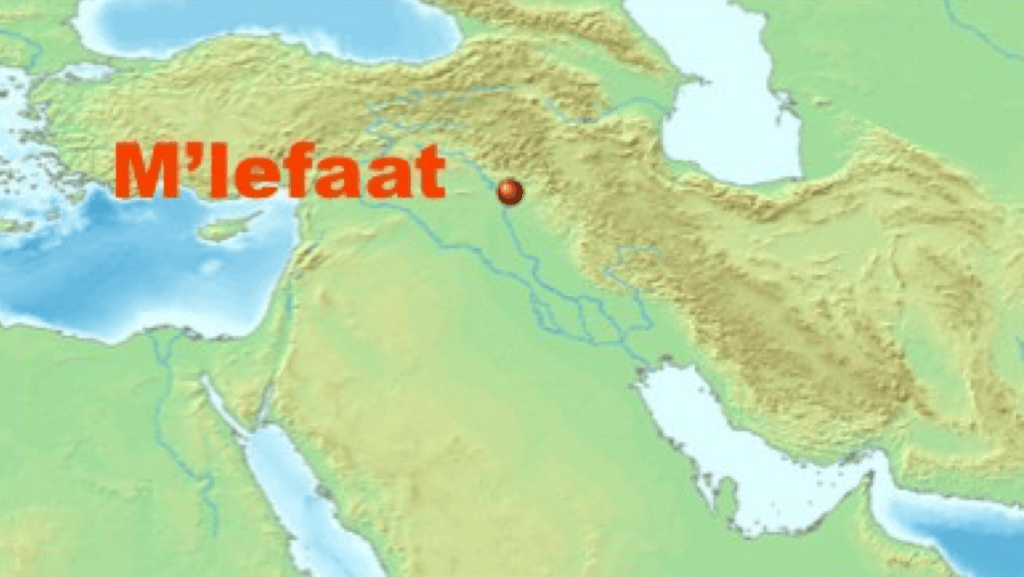
M’lefaat is one of the key Pre-Pottery Neolithic A (PPNA) sites in the eastern Fertile Crescent. It is located in modern day, northern Iraqui Kurdistan region, within the Zagros foothills east of Mosul. The site actually dates broadly to 10,500–9,500 BC (uncalibrated ranges vary by publication and phase definition), and belongs to the same early village horizon as Nemrik 9, Qermez Dere, and Hallan Çemi (slightly earlier).
It is especially important because it shows early village life, early cereal use, and circular domestic architecture before full agricultural “package” standardization.
Where was M’lefaat?
East of Tigris plain. It’s in northern Mesopotamia and the Zagros foothills. This “foothill corridor” begain an early farming transition.
What was the settlement like?
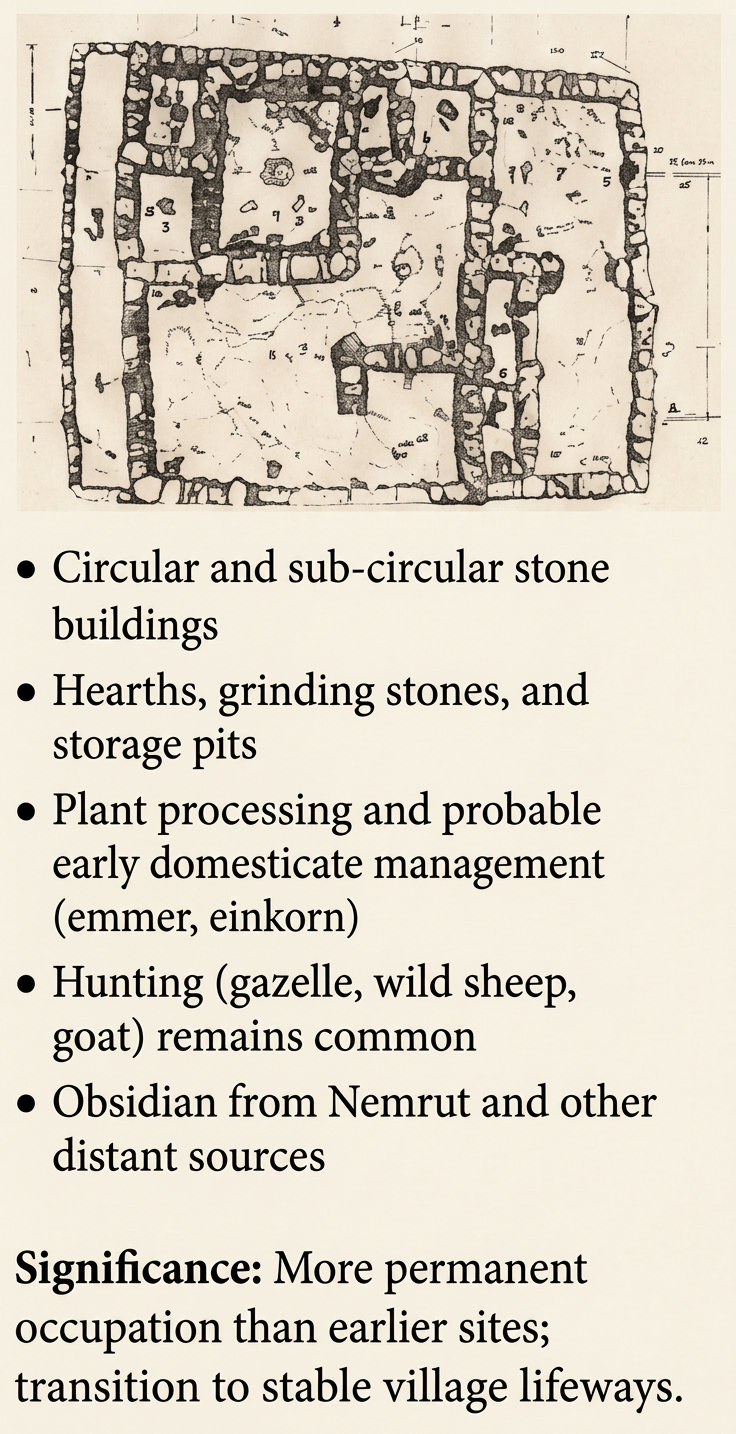
M’lefaat was a small, repeatedly occupied village, not a megasite. It fits the classic PPNA “round-house village model” seen across the Fertile Crescent foothills. Dominantly ROUND in PPNA phase sometimes slightly irregular oval plans partial subterranean construction. Hearths and internal activity zones with evidence of rebuilding over time.
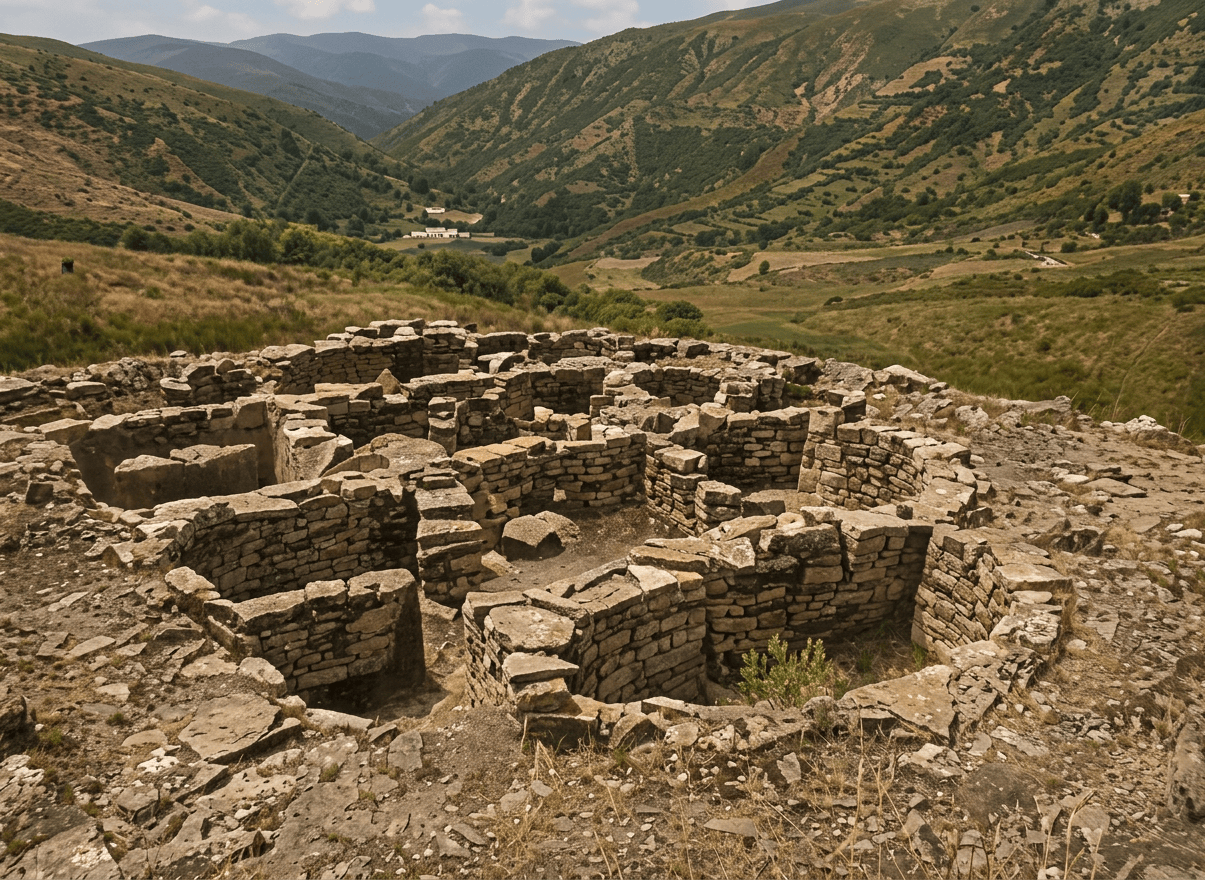
Round houses = early village social units before standardized rectilinear planning
Farming: einkorn, barley, or neither?
Wild cereals dominate early levels; domestication is emerging but not fully fixed. Wild barley (Hordeum spontaneum) and wild einkorn-type wheat (Triticum boeoticum complex) have been found. And, other plant resrouces, legumes (wild peas/vetch relatives in regional assemblages), pistachio and almond (foothill tree resources) and wild grasses and seed plants.
Key idea: M’lefaat is part of the: “pre-domestication cultivation phase”
Humans were intensifying harvesting likely managing stands of wild cereals but not yet fully dependent on domesticated crops.
When did farming begin here? M’lefaat sits in the transition window beginning almost 13 thousand years ago
Late Epipalaeolithic: mobile foraging;
PPNA (M’lefaat phase): permanent villages appear, wild cereal harvesting intensifies and early cultivation begins; and
Early PPNB: full domesticated wheat/barley becomes stable and sheep/goat pastoralism expands.
Gazelle and wild game still important
Though early caprine management begins regionally. And, a transition is underway.
Unlike Göbekli Tepe: no large carved enclosures, no clearly ritual monumental buildings
But: clustered circular houses, repeated rebuilding patterns and possible shared activity zones (uncertain). M’lefaat shows domestic village organization, not ceremonial monumentality.
Published syntheses describe several PPNA occupational phases (generally 2–3 main levels)
Repeated rebuilding of circular houses. Shallow but real stratigraphy (not a deep tell like later periods).
It is significant (early villages, farming transition evidence, and regional bridge site)
1) Early village formation. One of the clearest early examples of: permanent settlement, circular domestic architecture and structured village life in Zagros foothills;
2) Farming transition evidence. It shows cultivation BEFORE full domestication dominance; and,
3) Regional bridge site.
Connects: Levantine PPNA traditions;
Zagros foothill adaptation systems; and
early Mesopotamian village formation.
Obsidian and flint networks
M’lefaat is part of long-distance exchange networks: sources ultimately include eastern Anatolia volcanic zones. And, Flint/chert: locally Zagros foothill cherts.
Early Holocene climate conditions 10,000–12,000 years ago (moisure in foothills, expanded vegitation zones and high resource diversity)
1) More moisture in foothills, Stronger seasonal rainfall and better spring water reliability.
2) Expanded vegetation zones, Oak–pistachio woodland patches, grassland–steppe mosaics rich wild cereal stands.
3) High resource diversity. This is crucial: cereals in valleys, nuts in foothills and game in mixed habitats.
This is exactly the ecology that supports early cultivation and sedentary village life.
M’lefaat represents a small PPNA circular-house village in the Zagros foothills where people were already living permanently. They were intensifying wild einkorn and barley use, beginning early cultivation without full domestication, and participating in early exchange networks that linked the eastern Fertile Crescent to Anatolia and beyond.
References: Matthews, R. (Zagros Neolithic / PPNA–PPNB transition studies)
Pollock, S. (early village social organization in northern Mesopotamia)
General PPNA synthesis works on Nemrik 9, Qermez Dere, M’lefaat regional cluster
British Museum / Iraqi–British excavation reports (Zagros foothills Neolithic program)
Leave a Reply