< home # store # services # articles # game # app #contact >


One of the largest rock shelters excavated in the Lagoa Santa region. With a sheltered area of 1,300m3. is Lapa do Santo
It is an archaeological site located in the state of Minas Gerais, Brazil. An important site for the study of prehistoric human occupation in South America. The site contains numerous artifacts including interesting human and faunal remains. Dating to both the late pleistocene and holocene. It provides valuable insights.

History of research and the Lagoa Santa region
Though it was a long time ago. Peter Lund (known for his discovery of the sabre tooth cat skeleton, amongst others) begin hardcore exploring the area in the 1830s.
In the region, the first human skeletons, in association with megafauna were found
Due to the rare and valuable coexistences. The Lagoa Santa region became the focus of many other 19th century scholars.
They developed and published tons of information on the late pleistocene and early holocene Including the skeletons and remains that were found. But, unfortunately, it had not been documented to more modernly recent scientific methods.

Co-ordinated with a more timely approach by local groups around the populated regions and São Paulo. Researchers begin the “Origins and Microevolution of Man in America: a Paleoanthropological Approach”
It aimed to overcome the situation by identifying and excavating new sites. Especially on the south side, near the shelters entrance. It was amazing. A bunch of new pieces were found.
An individual, known as “Luzia” was dated to around 12,000 years ago
This, and many of the findings here. Have contributed significantly to our understanding of the peopling of the Americas. As well as, what might have been early human migrations in the area.

The physical environment is an environmentally protected zone, comprising 360 km 2 area of eastern central Brazil
The vegetation is dominated by savanna (cerrado) and semi-deciduous forest. Nearby rivers: Mocambo, Samambaia, Jaguara and Gordura make up a tributary net. That flows west, to east, to the Velhas River. The main river in the area.

The annual mean temperature is 23 °C, with lower temperatures (11 °C) occurring between June and July. Higher temperatures (35 °C) occurring between October and November
The average humidity is around 65% in the dry season, from May to September, and around 85% on the rainy summer season, from November to April.
Diet was ‘typical archaic’. Structured around staple carbohydrates like plants, and supplemented by small and mid sized fish, reptiles and animals
There diets were probably based on plants and supplemented by fauna. This is consistent with studies from central Brazil. Deer, peccaries. Also smaller reptiles, birds, rodents and fishes. And a wide variety of tubers and fruits such as pequi (Caryocar brasiliense), jatobá (Hymenaea sp.) and araticum (Annona crassiflora).

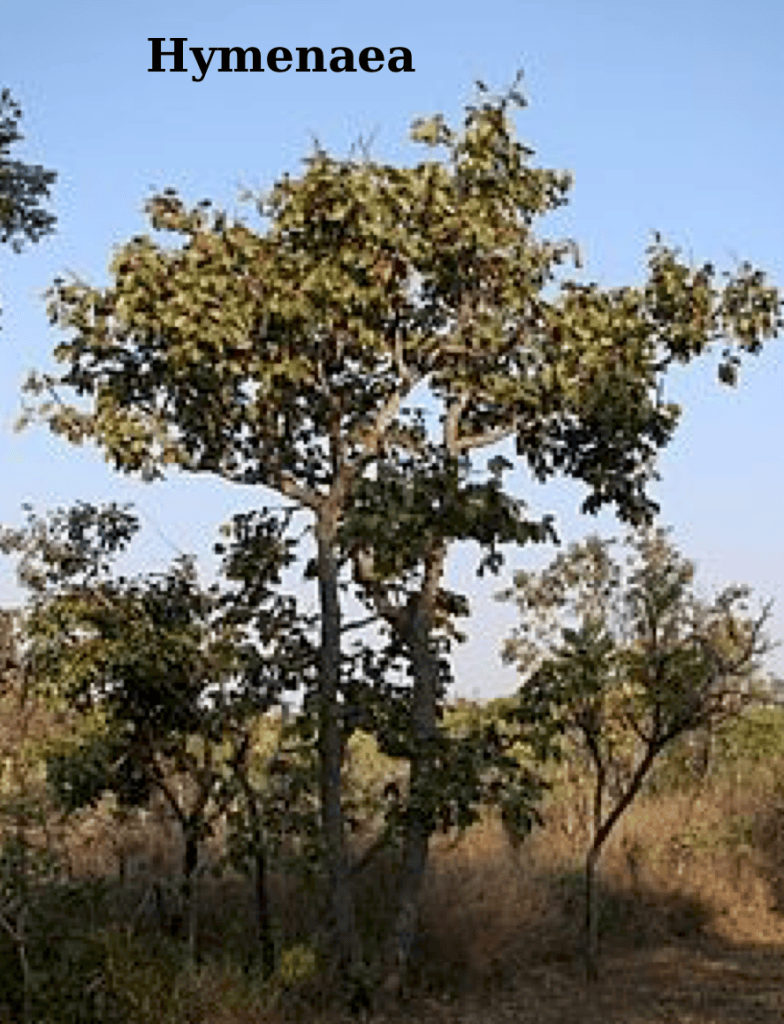

Given the climate and area. It is expected that humans would have had an diverse diet instead of focusing exclusively on meat. It was somewhat tropical.
Technology
Lithic tools were mostly small flakes and cores. Blades, arrow points, other tools; and, some pottery were also found. Crystal quartz was by far the dominant raw material, but silex, quartzite and silicified sandstone were also used. Bone artifacts were found, and similar to many in the area.


Suggesting existence of fertility rituals. The caves low relief rock art depicts phallic imagery and birth scenes (1)
26 human burials have been uncovered. They have been classified in 6 mortuary patterns. That became known for evidence of be-heading, and de-spine-ing; with hands over the face. Dead corpses exposure to fires, and covered in red pigments. Cutting and chopping of remains. And, disartuculation of bones.
Excavations at Lapa do Santo uncovered pieces and artifacts that shed light on technology, subsistence, and cultural practices of Brazils ancient inhabitants. The site continues to be an active area of research, and providing valuable information on our prehistoric past.
Citation: 1) Neves, Walter A.; Araujo, Astolfo G. M.; Bernardo, Danilo V.; Kipnis, Renato; Feathers, James K. (2012-02-22). “Rock Art at the Pleistocene/Holocene Boundary in Eastern South America” (https://www.ncbi.nlm.nih.gov/pmc/articles/PMC3284556). PLOS ONE. 7 (2): e32228.Bibcode:2012PLoSO…732228N (https://ui.adsabs.harvard.edu/abs/2012PLoSO…732228N.doi):10.1371/journal.pone.0032228 (https://doi.org/10.1371%2Fjournal.pone.0032228). ISSN 1932-6203 (https://www.worldcat.org/issn/1932-6203). PMC 3284556 (https://www.ncbi.nlm.nih.gov/pmc/articles/PMC3284556). PMID 22384187 (https://pubmed.ncbi.nlm.nih.gov/22384187).
Bibliography:
Neves, Walter A.; Hubbe, Mark; Piló, Luís Beethoven (2007-01-01). “Early Holocene human skeletal remains from Sumidouro Cave, Lagoa Santa, Brazil: History of discoveries, geological and chronological context, and comparative cranial morphology”. Journal of Human Evolution. 52 (1): 16–30. doi:10.1016/j.jhevol.2006.07.012 (https://doi.org/10.1016%2Fj.jhevol.2006.07.012). ISSN 0047-2484 (https://www.worldcat.org/issn/0047-2484). PMID 16996575 (https://pubmed.ncbi.nlm.nih.gov/16996575).
Da-Gloria, Pedro; Neves, Walter A.; Hubbe, Mark, eds. (2017). Archaeological and Paleontological Research in Lagoa Santa. doi:10.1007/978-3-319-57466-0 (https://doi.org/10.1 007%2F978-3-319-57466-0). ISBN 978-3-319-57465-3.
“Oldest Decapitated Head in New World Found in ‘Vogue’ Pose” (https://www.nationalgeographic.com/science/phenomena/2015/09/23/oldest-decapitated-head-in-new-world-found-in-vogue-pose/). 2015-09-23. Retrieved 2018-10-03.
Strauss, André (2016). “Os padrões de sepultamento do sítio arqueológico Lapa do Santo(Holoceno Inicial, Brasil)” (https://doi.org/10.1590%2F1981.81222016000100013). Boletim do Museu Paraense Emílio Goeldi. Ciências Humanas. 11 (1): 243–276.doi:10.1590/1981.81222016000100013 (https://doi.org/10.1590%2F1981.81222016000100013). ISSN 1981-8122 (https://www.worldcat.org/issn/1981-8122).
Pugliese Junior, Francisco Antonio (2008-02-28). Os líticos de Lagoa Santa: um estudo sobre organização tecnológica de caçadores-coletores do Brasil Central (http://www.teses.usp.br/teses/disponiveis/71/71131/tde-10042008-110501/pt-br.php) (Thesis) (in Brazilian Portuguese). Universidade de Sao Paulo Sistema Integrado de Bibliotecas – SIBiUSP. doi:10.11606/D.71.2008.tde-10042008-110501 (https://doi.org/10.11606%2FD.71.2008.tde-10042008-110501).
Leave a Reply