< home # store # services # articles # game # app #contact >
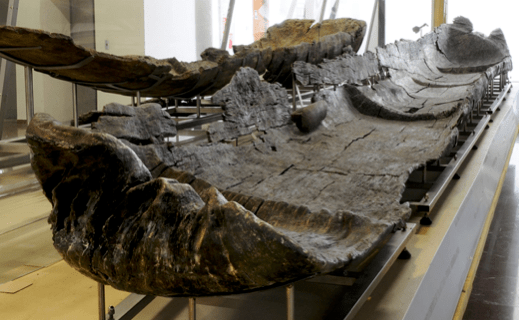
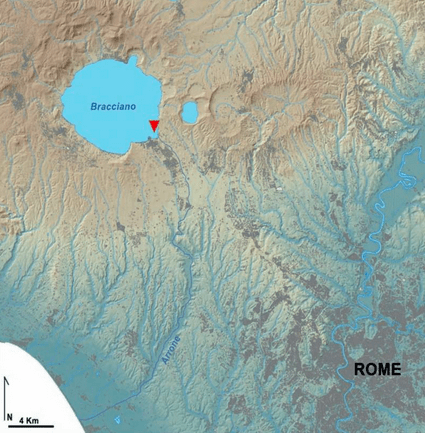
These boats date back to the neolithic period, around 7700 to 7000 years ago, and are among the oldest known watercraft in Europe. La Marmotta, famous for the exceptional preservation of organic materials. Including numerous wooden artifacts related to navigation, agriculture, textile production, and basketry. The site has yielded multiple dugout canoes, each carved from a single tree trunk. Showcasing the advanced woodworking skills and maritime capabilities of the neolithic people.
Boats were made from large tree trunks, hollowed out. Some as long as 36 feet
They show advanced knowledge of woodworking tools, techniques; and material properties too. These early builders had knowledge of navigation, and, sailing.
Waterlogged conditions of the La Marmotta site helped preserve these wooden structures
Anaerobic environments prevented the decay of organic materials, which would typically deteriorate over millennia.
The boats indicate that neolithic communities engaged in activities such as fishing, transportation, and trade
Their existence reflects a sophisticated understanding of boat-building and navigation. There usefulness has even been demonstrated. Using experimental archaeology.
Did you know? Some are on display at the Museo delle Civiltà in Rome
The boats highlight the cultural importance of waterways for early agricultural societies
Along with other artifacts from the site, they provide a glimpse into the daily life, technological advancements, and social organization of neolithic communities.
La Marmotta neolithic boats have become critical for understanding the early technical innovations and lifestyles of Europeans. Emphasizing an adaptability and resourcefulness; for survival, and practicality.

Bibliography: Gibaja JF, Mineo M, Santos FJ, Morell B, Caruso-Fermé L, Remolins G, Masclans A, Mazzucco N. The first Neolithic boats in the Mediterranean: The settlement of La Marmotta (Anguillara Sabazia, Lazio, Italy). PLoS One. 2024 Mar 20;19(3):e0299765. doi: 10.1371/journal.pone.0299765. PMID: 38507432; PMCID: PMC10954169.
Leave a Reply