<home # start here # guides # builds # services # shop # about # categories>
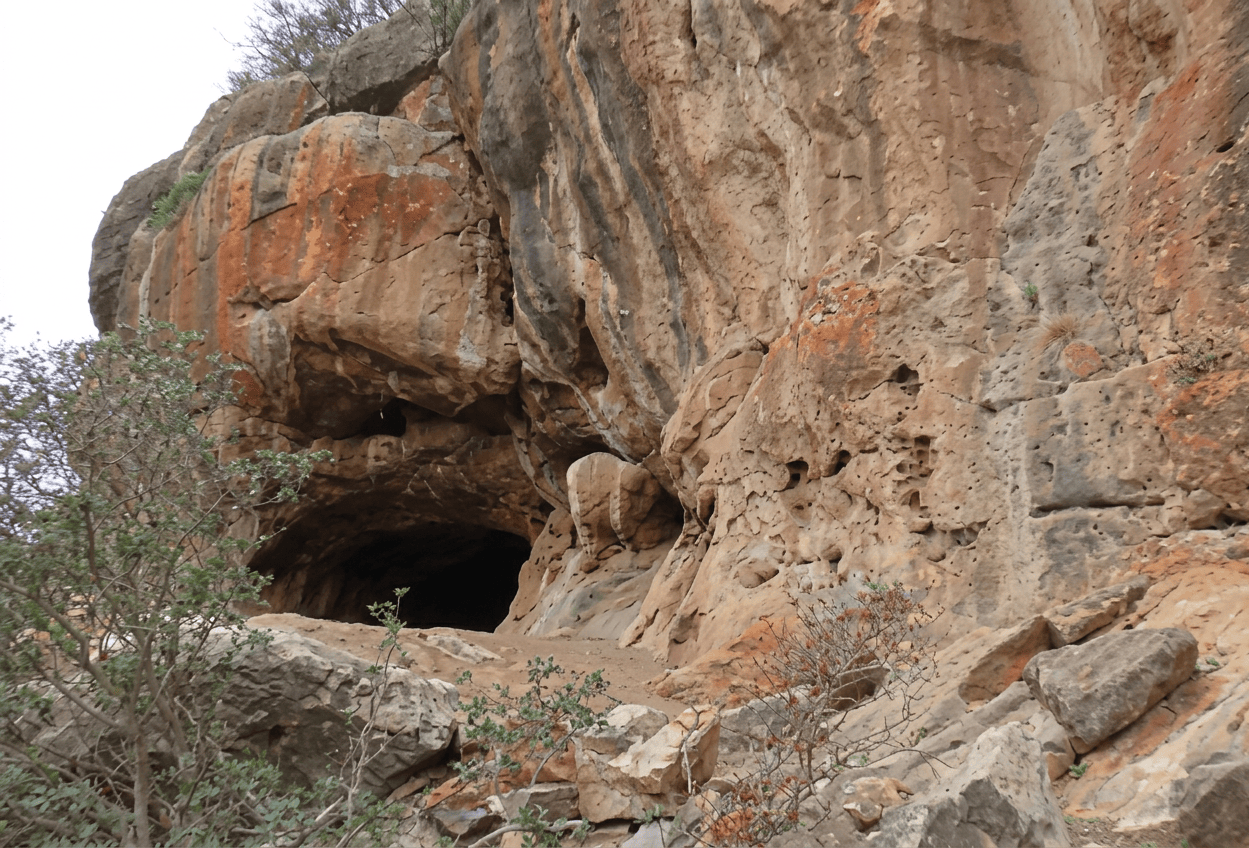
Kehf el Baroud, sometimes written Kef el Baroud or mistakenly “Kelif el Boroud,” is a remarkable prehistoric cave in the Ben Slimane Province of central-western Morocco.
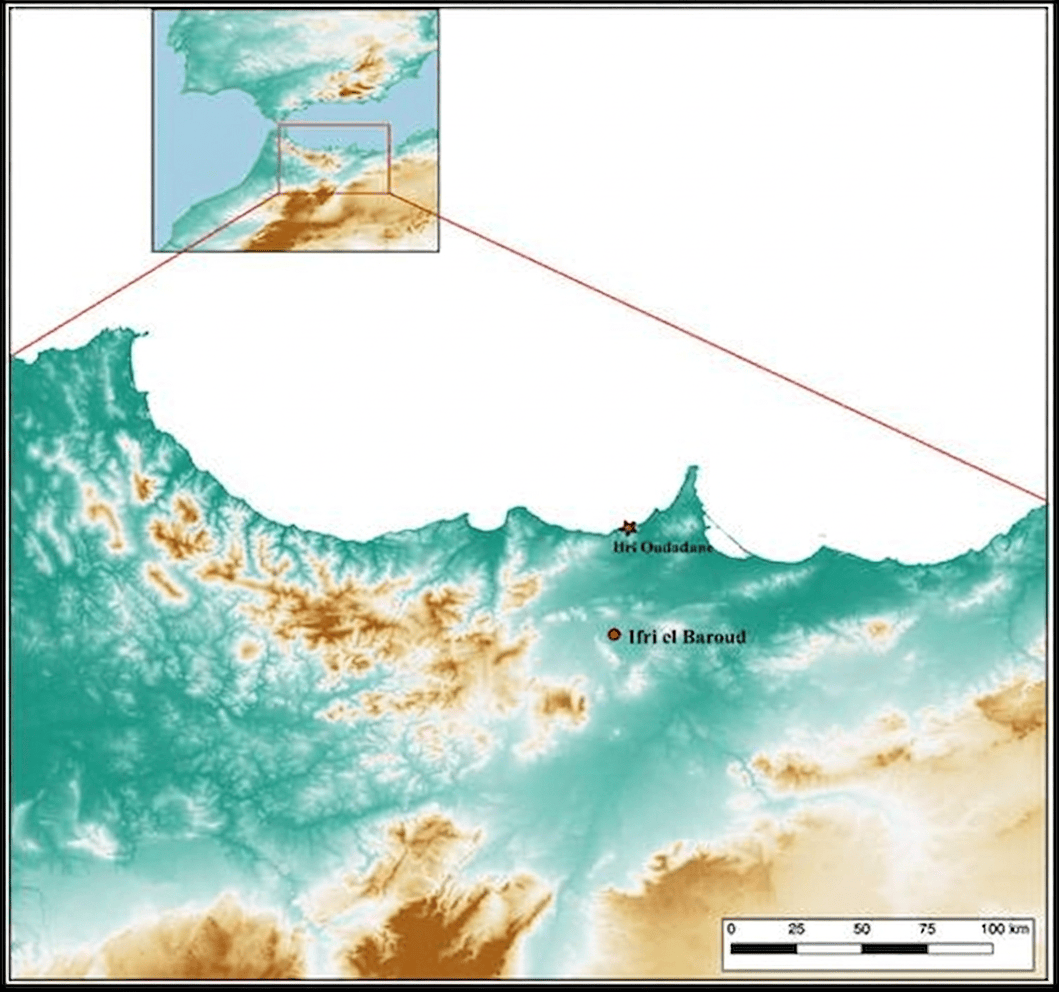
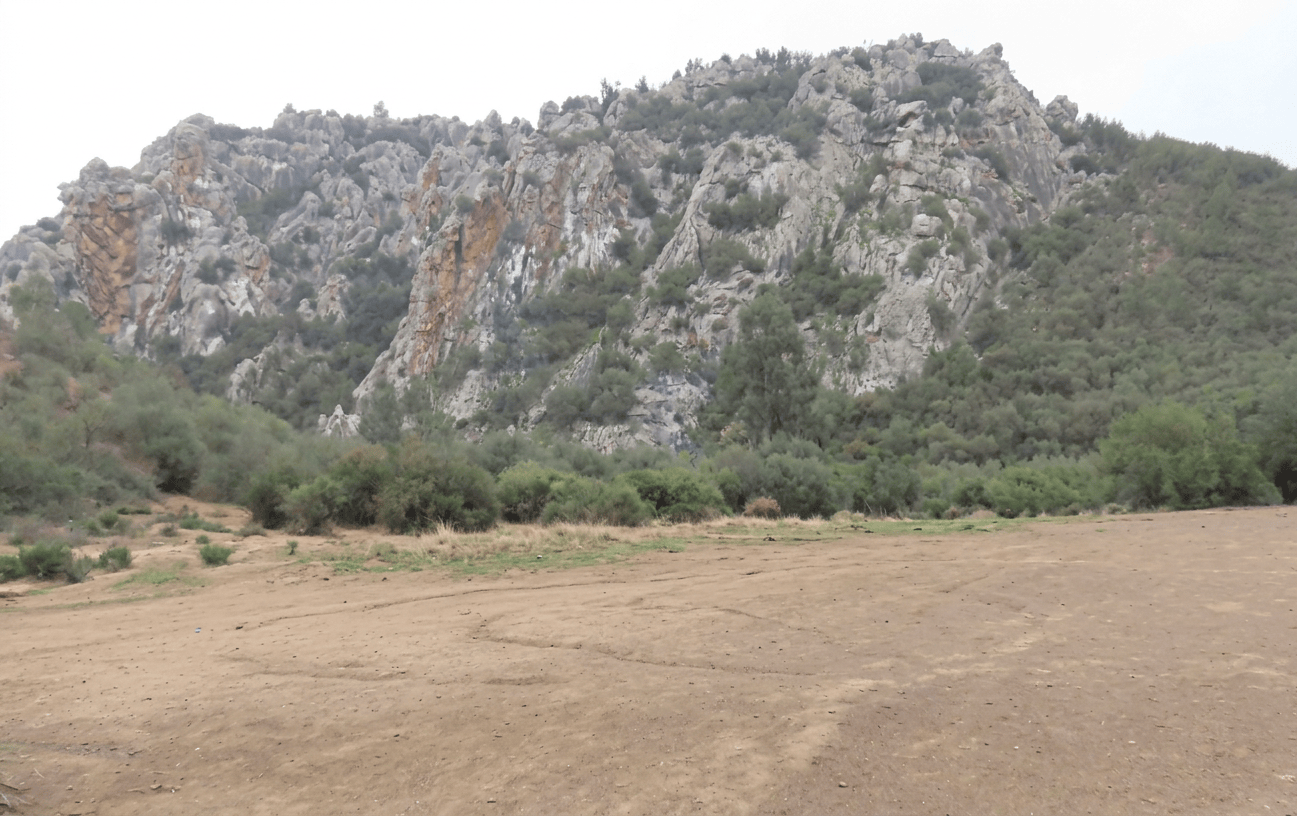
It sits in the Oued Cherrat valley, about 10 km from Ben Slimane and roughly 30 km from the Atlantic coast. The cave is located high in a small limestone massif, overlooking the wadi below [1][2].
This is not simply a Neolithic cave
It has a much longer archaeological history than just the Late Neolithic. [1][2] The archaeological sequence extends from the Epipalaeolithic into the Neolithic, Chalcolithic and later Bronze Age, making it a particularly useful site for watching North African lifeways change over thousands of years [3].

It is also unusual because the cave contains rock art, human burials, domestic animal remains, pottery, flint tools and later copper objects. In other words, Kehf el Baroud combines: shelter, river, animals, food, tools, art, burial and later metallurgy. That makes it an excellent example of architecture without necessarily building a house.
Kehf el Baroud lies in the Ben Slimane region of Morocco’s Atlantic Meseta, approximately: 10 km northeast/east of Ben Slimane. About 30 km from the Atlantic coast, in the valley of the Oued Cherrat. It is at approximately 200 m elevation within a limestone massif [1][2].
Modern speleological mapping places the cave at approximately 33.66° N, 7.01° W, although published coordinates vary slightly depending upon which part of the cave/locality is being referenced [1]. The cave developed in Devonian limestone.
Its principal chamber is approximately 25–26 m long and about 7 m wide at the entrance. Another description records a large, well-lit, relatively level main chamber, together with a steeply descending section or aven [1][4]. The entrance faces approximately east. This was a very useful piece of natural architecture.
The Atlantic is approximately 30 km away
That is close enough for the broader coastal environment to have been important, but Kehf el Baroud should be regarded as an inland/near-coastal river-valley site, rather than a coastal settlement. The distinction matters. Compare: Ifri Oudadane, a Mediterranean shoreline versus Kehf el Baroud, the Oued Cherrat valley. Where the Atlantic coast is 30 km away. The cave therefore occupied a position between the interior plateau and Atlantic Morocco.
The important watercourse was the: Oued Cherrat
The cave overlooks the Cherrat valley, approximately 60 m above the wadi channel according to descriptions of the site [2]. The Oued Cherrat eventually reaches the Atlantic Ocean. The prehistoric drainage system can therefore be simplified as: Kehf el Baroud, Oued Cherrat, Atlantic coastal plain and Atlantic Ocean. The river was potentially important for: drinking water, animals, vegetation, hunting
transportation through the landscape, collecting river cobbles and access between inland and coastal environments.
Kehf el Baroud belongs to the Atlantic Meseta, a relatively low plateau landscape
The major Atlas mountain systems lie considerably farther south and east. The site itself is nevertheless associated with a small limestone massif, rising above the Cherrat valley [1]. This is a very different environment from the Rif mountain caves farther north.
This was not a desert, Arctic environment, high-altitude mountain environment or extreme environment
The Atlantic Meseta has a Mediterranean/Atlantic climate, with: relatively mild winters, seasonal winter rainfall, dry summers and grassland and woodland environments. The prehistoric environment was probably somewhat different from today’s, however. The cave’s position was especially advantageous because it provided a protected microenvironment even when conditions outside changed.
Was anyone there 12,000 years ago?
This question requires some caution. Kehf el Baroud has a long prehistoric sequence, and modern archaeological syntheses describe occupation extending back into the Epipalaeolithic [3]. However, it is not one of Morocco’s best-established 12,000-year-old sites. The important point is that the cave was already being used before the fully developed Neolithic. The broader Atlantic Moroccan region contains much older Late Pleistocene and Epipalaeolithic occupations, including famous sites such as: Dar es-Soltan, El Harhoura and Contrebandiers. Kehf el Baroud belongs to this wider archaeological landscape.
It is safe to regard Kehf el Baroud as having pre-Neolithic occupation, but the strongest published evidence for the site’s famous human burials and farming-associated material belongs to considerably later periods.
The cave was not built
This is the architectural key. There is no convincing evidence that the Neolithic occupants constructed a village of: mudbrick houses, rectangular timber houses, wattle-and-daub houses and subterranean pit houses. Instead: The cave itself was the building. The limestone provided: roof, walls, thermal mass, wind protection, shade, security and elevated observation over the valley. Human architecture was therefore added inside the natural architecture.
Kehf el Baroud should instead be reconstructed as a large natural habitation space
This does not mean wood was unimportant. Wood was almost certainly used for: fuel, handles, shafts, temporary structures and possibly racks or partitions. But archaeological charcoal is not evidence of a wooden house. A burned stick can survive as charcoal for thousands of years. An unburned roof beam can disappear completely.
Kehf el Baroud is not famous for preserved structural timbers
Consequently: The absence of preserved wood cannot prove that the inhabitants never used wooden structures. But there is currently no strong evidence for a sophisticated timber-frame house at the site.
Hearths. Fire was fundamental
The cave contains burned deposits, charcoal and other evidence of human fire use. The principal chamber would have provided a relatively sheltered environment for: cooking, warmth, light, tool production and processing animal products. There is no evidence for an elaborate heating installation such as the channelled clay heating system known from some East Asian sites. The most reasonable reconstruction is: open hearth and natural thermal shelter. That combination can actually be extremely effective.
Did they have benches or chairs?
There is no secure evidence for built chairs or benches. Nor is there good evidence for the kind of architectural furniture seen at some later Neolithic settlements. People could have sat on: mats, hides
baskets, wooden objects and natural ledges. These materials are mostly archaeologically invisible. So the safest reconstruction is an open cave floor with activity zones rather than rooms full of furniture.
The most important cooking technology was probably: Fire and ceramic vessels
Neolithic pottery allowed people to: boil, simmer, heat water, cook grains, process pulses, prepare meat, store food and transport liquids. The Late Neolithic pottery at Kehf el Baroud includes comb-impressed decoration, characteristic of a later Moroccan Neolithic tradition [5]. Later prehistoric occupation introduced additional technologies, including copper objects. But it is important not to project the later metalworking backwards into the first Neolithic occupation.
Storage
There is no securely demonstrated large architectural granary at Kehf el Baroud. Food could instead have been stored in: pottery, baskets, leather bags, organic containers and sheltered areas within the cave. Pottery is particularly important because it survives archaeologically while baskets and bags usually disappear.

What did the settlement look like? It probably did not look like a large agricultural town
Imagine instead: The cave A large natural chamber above the valley. Inside: hearths, pottery, animal bones, stone tools, people and food-processing activities.
Outside: the Cherrat river, grazing areas, wild vegetation, cultivated plots during agricultural phases and hunting territory. The cave could therefore act as a base camp within a larger seasonal landscape.
Farming
Kehf el Baroud belongs to a period when farming was firmly established in Morocco. But an important archaeological caution is necessary: The site’s archaeobotanical record is not nearly as well published as Ifri Oudadane or Kaf Taht el-Ghar. Therefore, we should not assign every crop known from Moroccan Neolithic sites to Kehf el Baroud. The broader northwestern Moroccan Neolithic included: wheat, barley, lentils, peas and broad beans. These crops were introduced into Morocco during approximately the 6th millennium BC, probably through Mediterranean connections [6]. At Kehf el Baroud itself, the strongest evidence comes from the archaeological context of farming, pottery and domestic animals rather than a spectacular collection of preserved seeds.
Animals. Where Kehf el Baroud becomes especially interesting
Archaeozoological research has produced a substantial faunal assemblage [7]. Domestic animals include: sheep/goat, cattle, pig and dog. The exact proportions vary with archaeological phase. This is significant because Morocco’s Neolithic economy was not based upon a single domestic species.
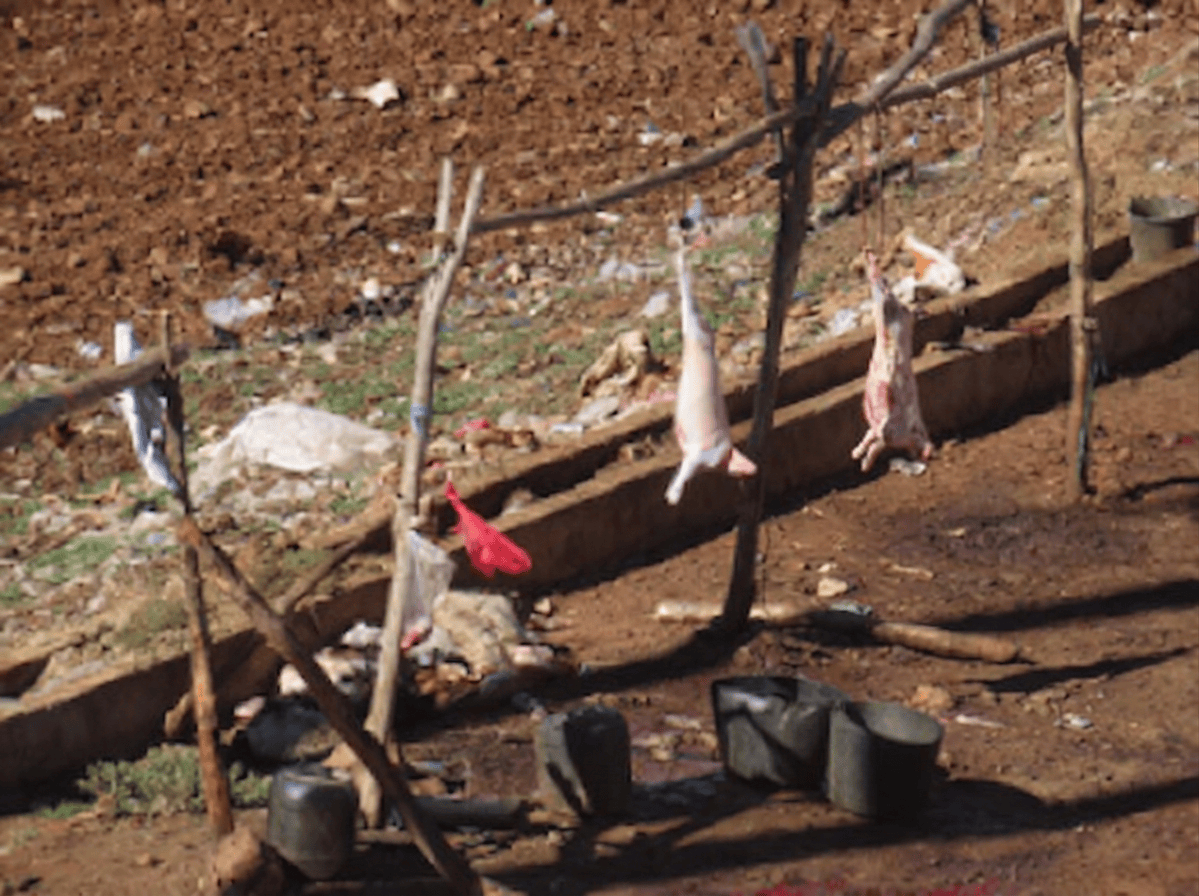
Sheep and goats. Caprines were extremely important throughout the Moroccan Neolithic
At Kehf el Baroud, they form part of the domestic animal assemblage. The broader Moroccan record suggests that caprines were among the earliest and most important domestic animals introduced into northern Morocco [8]. They provided: meat, milk, hides, bones, manure and mobile wealth.
Cattle
Domestic cattle are also represented in the archaeological fauna of Kehf el Baroud [8]. That is important because cattle require substantially more water and grazing than goats. Their presence tells us something about the surrounding landscape: The Cherrat valley and Atlantic Meseta could support substantial grazing resources.
Domestic or managed pigs are also included in the Moroccan Neolithic faunal record from Kehf el Baroud [8]
Pig exploitation is particularly interesting because pigs are less compatible with highly mobile pastoralism than sheep and goats. Their presence therefore supports the possibility of more settled or semi-settled occupation.
Dogs. Interesting
Archaeozoological research on Kehf el Baroud includes a nearly complete dog skull and discusses the early history of domestic dogs in North Africa [7]. Dogs could have served several functions: hunting, guarding, herding, camp protection and companionship. They are one of those small discoveries that make an archaeological settlement feel surprisingly human.
Horses? No domestic horse economy should be reconstructed for the Neolithic
In fact, the archaeological study of the site’s fauna reports that domestic equids were absent even from the protohistoric levels [7].
Aurochs?
Wild cattle/aurochs occur in the Holocene fauna of northern Morocco and are represented in the broader archaeological record. Domestic cattle also occur at Kehf el Baroud. This means that people could have encountered both: wild and domestic cattle within the broader landscape. An important reminder that domestication did not instantly eliminate wild animal populations.
Faunal assemblage includes a surprisingly broad range of animals
Research has identified or discussed: wild boar, Barbary sheep/mouflon (Ammotragus lervia), gazelle, wild bovids, rabbit, carnivores, rodents and other mammals. And, there are even bear remains from later Holocene/protohistoric deposits [7][9].
The presence of bear is particularly interesting because it demonstrates how different the Moroccan fauna was before modern extirpation.
What did they eat?
Their diet was therefore probably a mixture of: domestic meat, wild game, plants/cereals, wild plants and possibly milk and other animal products. The animal-bone assemblage also contains abundant evidence of human processing, including cut and disarticulation marks [7]. So this was not merely an agricultural population raising animals. It remained an omnivorous mixed economy.
Farmer or nomad?
Neither label works perfectly. A better description is: semi-sedentary or seasonally mobile farming and herding with continued hunting. The cave could be revisited repeatedly.
Domestic cattle, pigs and dogs tend to be more compatible with settled occupation than with highly mobile nomadic pastoralism. At the same time, the archaeological evidence does not justify imagining a permanently occupied town of hundreds of people.
The most likely model is a small community embedded in a wider agricultural and pastoral landscape.
Stone tools are an important part of the assemblage
The Neolithic deposits contain: flint tools, flakes, blades, cutting tools and hunting implements. Flint was particularly important. The site’s lithic technology also retains older North African traditions, illustrating the broader pattern seen elsewhere in Morocco: the Neolithic did not replace everything that came before it. People adopted new food-producing technologies while continuing to use familiar stone technology.
There is no convincing evidence for a jade/nephrite or an obsidian industry at Kehf el Baroud
This is very different from some Neolithic societies in China or later European Alpine contexts. The important raw materials here were much more ordinary: flint, limestone, other stone, clay, bone, wood and pigments.
Precious stones and metals
The really interesting metal story belongs to the later Chalcolithic/Bronze Age occupation. Kehf el Baroud has produced reports of: flat copper axe, and two pointed square-section copper objects. These finds were recorded by A. de Wailly, although some of the objects were subsequently lost [10]. The chronology and stratigraphic association of the earliest Moroccan copper objects have been debated. Therefore: Kehf el Baroud is important in discussions of the beginnings of metallurgy in Morocco, but the old claims for extremely early copper need to be treated cautiously.
No major Neolithic figurine tradition is known from Kehf el Baroud
That distinguishes it from sites such as: Ain Ghazal, Çatalhöyük and even Niuheliang (Hongshan). The site’s symbolic record is more strongly associated with rock art and mortuary activity.
Rock art
This is one of the site’s great surprises. Kehf el Baroud contains: pale red non-figurative paintings, cupules, engraved lines and geometric motifs. The paintings have been described as groups of small spirals connected by a short vertical line, producing an appearance reminiscent of ram’s horns [11]. There are also petroglyph concentrations on the eastern façade. The exact age of this art is uncertain. This is extremely important: The rock art cannot automatically be dated to the Neolithic simply because Neolithic archaeology occurs in the cave. Some of it could be later. Some could be earlier. Some may have been produced during several different episodes.
A cave full of smoke
Unfortunately, some of the paintings have become extremely difficult or impossible to see. Modern visitors, shepherds and hunters have used the cave for fires. Smoke has produced a dark coating over parts of the prehistoric art [11]. That creates an extraordinary archaeological irony: ancient people used the cave, modern people continued using the cave and modern fires now obscure the ancient paintings. The same natural architecture that protected the archaeological deposits also continues to attract people today.
Burials
Kehf el Baroud is particularly important for Late Neolithic human remains. Eight individuals were sampled for ancient DNA by Fregel and colleagues [12]. The directly dated human remains fall broadly around: 3800–3600 BC, or approximately 5,800–5,500 years ago. This places them in the Middle/Late Neolithic, rather than the first appearance of farming in Morocco [12][13]. A recent synthesis gives a radiocarbon range of approximately 3702–3536 cal BC for one Kef El Baroud individual [13].
Ochre and grave goods?
The burials do not have the spectacular grave furniture found at some Neolithic cemeteries. There is no securely demonstrated assemblage of: jade, gold, copper weapons, elaborate figurines or large bead necklaces. This is important because the cemetery appears to have emphasized placing people in the cave, rather than displaying enormous quantities of grave wealth.
Ritual architecture?
There is no securely identified: temple, shrine, ceremonial platform and communal hall. The cave itself, however, may have acquired symbolic importance. The combination of: burials, rock art and repeated occupation suggests that this was more than an ordinary shelter. It is better to say: the cave was a socially significant place rather than: the cave was a Neolithic temple.
Textiles
No substantial preserved textiles are known. The Atlantic Moroccan cave environment does not normally preserve ordinary plant fibres for thousands of years. People undoubtedly possessed: clothing, bags, cordage and baskets. But these are largely invisible archaeologically.
Weapons
Hunting weapons and projectile technology are represented by stone tools. The important distinction is that these were practical weapons rather than a ceremonial weapon collection. The combination of projectile tools with domestic animals demonstrates that: hunting continued after farming appeared.
Did they trade with Algeria?
There is good reason to think that North African Neolithic communities participated in wide regional networks, but a specific “Kehf el Baroud → Algerian mountain quarry” trade route has not been securely demonstrated. The wider Maghreb shared: pottery traditions, lithic technologies, animal domestication, ornament traditions and cultural styles. The Mediterranean itself was also a major corridor. Recent genetic research demonstrates that the later Neolithic population at Kehf el Baroud had ancestry connected with European Neolithic populations as well as indigenous North African ancestry [12][14]. This is powerful evidence for movement and interaction. But genetics does not tell us that a particular flint was traded from a particular Algerian mountain.
Extraordinary genetics
One of the most important modern discoveries from Kehf el Baroud. Researchers analyzed ancient DNA from eight human remains. The Late Neolithic individuals show a mixture of ancestry related to: indigenous North African populations, and Early European Farmer populations [12].
Later analyses have refined this picture, emphasizing that the Neolithic Maghreb involved interactions among different ancestral populations, including local North African hunter-gatherer groups and people connected to Europe and the eastern Mediterranean [14].
This means the cave is part of a much larger story: The Neolithic was not simply an invention happening independently inside Morocco. People, animals, crops, pottery and ideas were moving around the Mediterranean.
The 6,000-year climate question
Around 6,000 years ago, Morocco was undergoing major environmental changes associated with the gradual end of the African Humid Period. This was not a single abrupt switch. Instead, the broad pattern was: early/middle Holocene humidity to gradual weakening of rainfall to increasing aridity and expansion of more drought-tolerant landscapes. Regional Moroccan records show that this transition affected rivers, vegetation and human settlement [15]. Kehf el Baroud itself does not provide a simple “climate thermometer.” Its archaeological record must therefore be interpreted together with: pollen, lake sediments, river sediments, charcoal, isotopes and regional archaeological settlement patterns.
What about 8,000 years ago?
Around 8,200 years ago, the Northern Hemisphere experienced a major abrupt climatic event. Moroccan river records preserve evidence for substantial hydrological change around this time [15]. However, the 8.2 ka event should not be directly assigned to a specific occupation layer at Kehf el Baroud without a site-specific palaeoclimate sequence. It matters. We can say: Morocco experienced major climate fluctuations around 8.2 ka. We should not say: “Kehf el Baroud was abandoned because of the 8.2 ka event.” It has not been demonstrated.
10,000 years ago?
At approximately 10,000 years ago, the Sahara and much of North Africa were considerably wetter than today during the broader African Humid Period. The northern Moroccan Atlantic region was also affected by Holocene environmental changes. This helped create a landscape with: more vegetation, rivers, wetlands and larger wildlife populations. The cave therefore belonged to a much greener and more productive regional environment than the stereotype of “prehistoric Morocco = desert” suggests.
How do scientists detect the changes?
The strongest climate reconstructions combine several independent techniques. Pollen. Tells us about vegetation. Charcoal. Shows which plants people were burning and can provide clues about surrounding woodland. River sediments. Reveal changes in water flow and erosion. Stable isotopes. Can indicate rainfall, temperature, vegetation and diet. Radiocarbon. Provides the chronology necessary to determine whether environmental changes happened before, during or after occupation. Archaeological settlement patterns. If many settlements disappear at the same time across a region, that may indicate environmental or social change. The critical principle is: Archaeologists do not identify climate change from one artifact. They reconstruct it from multiple independent datasets.
Was Kehf el Baroud abandoned?
There was no single abandonment event. The cave was reused across different prehistoric periods. Its archaeological history includes: Epipalaeolithic, Neolithic, Late Neolithic, Chalcolithic and Bronze Age / later prehistoric occupation. This is important. People did not simply occupy it for 500 years and disappear. The cave repeatedly became useful again.
The exact reason people stopped using the cave is unknown
Possible explanations include: changing settlement patterns, movement toward open-air villages, changing farming practices, changing pastoral mobility, climate drying, changing social use of caves and new technological and economic systems. By the later prehistoric period, the region was becoming increasingly integrated into wider Mediterranean exchange systems. The cave’s function therefore changed.
The most interesting architectural idea
Kehf el Baroud demonstrates something that is very useful for the Neolithic Architecture project: Architecture does not always begin with construction. The limestone cave already supplied: walls, roof, thermal mass, elevation, visibility, protection, storage possibilities, a place for fire and a place for ancestors.
People then added: hearths, pottery, tools, animals, food, art and burials. That is architecture as a system rather than simply a building.
Two Moroccan caves make excellent pair. Kehf el Baroud compared with Ifri n’Amr ou Moussa
Kehf el Baroud Ifri n’Amr ou Moussa
Setting Atlantic Meseta Zemmour Plateau
Water Oued Cherrat Oued Beht
Atlantic ~30 km farther inland
Cave Yes Yes
Pre-Neolithic occupation Yes Yes
Farming Yes Yes
Domestic animals Sheep/goat, cattle, pig, dog Sheep/goat and broader regional livestock
Flint Yes Yes
Obsidian Not important Not important
Jade No No
Rock art Yes Not major
Burials Yes Yes
Copper Later Later
Bell Beaker Yes Yes/later evidence
Monumental architecture No No
Major lesson Cave as home, cemetery and symbolic place Cave as early farming transition
Kehf el Baroud is a cave that kept changing jobs
At different times it could be: a shelter, a home, a food-processing place, an animal-associated space, a place for art, a cemetery, a place connected to copper and later prehistoric exchange. The physical cave barely needed to change. The people changed. Their economy changed. Their animals changed. Their pottery changed. Their ancestry changed. Their symbolic world changed. And, yet the same natural architecture remained useful. That may be the most important lesson of Kehf el Baroud: Sometimes the most successful prehistoric building was the one people did not have to build.
References: [1] de Wailly, A. (1973/1975). Le site du Kef el Baroud (région de Ben Slimane). Bulletin d’Archéologie Marocaine 9, 39–101. Early major excavation report and principal archaeological reference for the cave.
[2] Benani, H., Ouzzaouit, L. A., Nehili, A., Boudad, L., et al. (2021/2023). Lasergrammetry and Photogrammetry for Survey and 3D Representation of Caves: Case of Kef El Baroud Cave, Province of Benslimane, Morocco. Provides modern cave morphology, geological setting, dimensions and relationship to the Oued Cherrat.
[3] Fregel, R., Méndez, F. L., Bokbot, Y., et al. (2018). Ancient genomes from North Africa evidence prehistoric migrations to the Maghreb from both the Levant and Europe. Proceedings of the National Academy of Sciences, 115, 6774–6779. Ancient-DNA study including eight individuals from Kef/Kehf el Baroud.
[4] Modern speleological surveys of Kef el Baroud document two communicating cave spaces, the main chamber and the descending/aven section, within Devonian limestone.
[5] Linstädter, J. (2017). Climate Induced Mobility and the Missing Middle Neolithic of Morocco. Discusses the Late Neolithic pottery traditions of the Rabat/Casablanca region, including Kef el Baroud.
[6] Morales, J., et al. (2016). The introduction of South-Western Asian domesticated plants in North-Western Africa: An archaeobotanical contribution from Neolithic Morocco. Quaternary International, 412, 96–109. Important comparative evidence for wheat, barley, lentils, peas and broad beans in the Moroccan Neolithic.
[7] Ouchaou, B., Amani, F., & Mouhsine, T. (1999). Etude archéozoologique du gisement de Kehf-el-Baroud. Préhistoire Anthropologie Méditerranéennes, 7–8, 27–38. Principal archaeozoological study of the site.
[8] Ouchaou, B. (2000). Les faunes mammalogiques holocènes des gisements du nord du Maroc: étude paléontologique et observations archéozoologiques. University of Moulay Ismaïl. Major synthesis of northern Moroccan Holocene faunas.
[9] Ouchaou, B., Amani, F., and related studies of Moroccan Holocene fauna. Bear remains from the later levels of Kehf el Baroud demonstrate the survival of large carnivores in the region into the later Holocene.
[10] de Wailly, A. (1976). Le Kef El Baroud et l’ancienneté de l’introduction du cuivre au Maroc. Bulletin d’Archéologie Marocaine 10, 47–51. Important, but historically controversial, evidence for early copper objects.
[11] Rodríguez, A., et al. / Moroccan rock-art surveys. Sites with Paintings in Morocco and the Atlantic Sahara. Arts 6, 9. Documents the red non-figurative paintings, geometric/spiral motifs and problems of modern smoke obscuring the art.
[12] Fregel, R., Méndez, F. L., Bokbot, Y., et al. (2018). Ancient-DNA analysis of eight Kef el Baroud individuals; five produced complete mitochondrial genomes and demonstrated ancestry related to both indigenous North African and European/Anatolian Neolithic populations.
[13] Benattia, H., et al. (2025). Cemeteries, Rock Art and Other Ritual Monuments of the Tangier Peninsula, Northwestern Africa, in Wider Trans-Regional Perspective. African Archaeological Review 42, 229–258. Useful recent synthesis of Moroccan cave burials and the chronology of the Kef el Baroud individual.
[14] Simões, L. G., Günther, T., Martínez-Sánchez, R. M., Vera-Rodríguez, J. C., Iriarte, E., et al. (2023). Northwest African Neolithic initiated by migrants from Iberia and Levant. Nature. Major reassessment of Neolithic population movement and cultural transmission in northwest Africa.
[15] El Amrani, M., et al. (2022). First fluvial archive of the 8.2 and 7.6–7.3 ka events in North Africa (Charef River, NE Morocco). Scientific Reports 12, 7710. Provides an independent Moroccan river record demonstrating major Early–Middle Holocene hydrological changes.
Leave a Reply