< home # store # services # articles # game # app #contact >


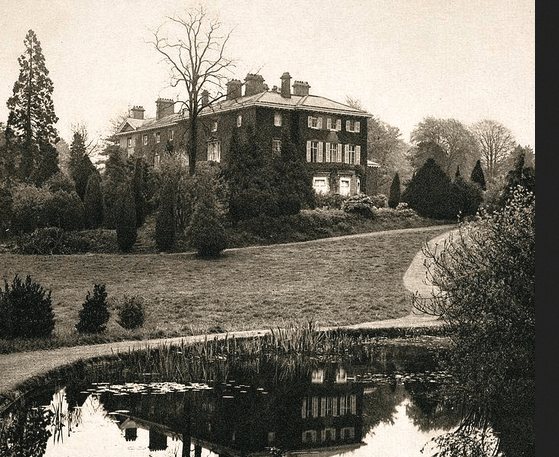
Born into a different time. John was seen as a child prodigy. Growing up neighbour, and best friends with Charles Darwin. During a time when natural curiosity still roamed. Inclined individuals could achieve, experience and advance the unachievable . Exploring archaeological wonders and unknown critters; including landscapes and caves.
As a polymath. Living from 1834-1913. He is notable for his contributions to a wide range of fields. Including anthropology, archaeology, entomology, and evolutionary theory. He also played a role in the establishment of the system of dating prehistoric periods. Based on stone tools; and, other artifacts. Introducing both the “palaeolithic” and “neolithic”. He used these terms to classify different stages of prehistoric human development.


He was surprised by his father in 1842. A banker, who had studied math; and, written on astronomy, and probability at Cambridge. That the 30 something, Charles Darwin had moved down the street. It initiated a passion for excellence. Scientific and evolutionary theory. They developed a great friendship. Lubbock even stayed in the area so they could hang out. They corresponded extensively. As high achievers for there time.
Political aura
In 1870; and, 74, he became a Liberal member of parliament. Promoting study of science(s). Less national debt. More free trade and related economic issues. He also worked on protecting the ancient monuments (ancient monuments act 1886). Securing additional hours vacation. Shorter working days (bank holidays act 1871). And, national curriculum (elementary education act 1870). He would eventually introduce a original law for archaeological and architectural heritage in the UK. He also served as vice chancellor of London’s University.
In the late 1880s he became president of the London chamber of commerce. And, served in similar associations and groups.
Because of his services, he received a bunch of honourary degrees. From Edinburgh, Oxford, Wurzburg, and other schools. In the early 1900s, his talent and relations even helped soothe the sometimes ill relations. Between England and Germany.
Darwin and Origin of man
Lubbock was a strong supporter of Charles Darwin’s theory of evolution. He wrote extensively on the topic. Including support and evidence. From his famous 1860s, Oxford evolutionary debate. He was lead to writing his famous archaeology text book. The Pre-Historic Times. Was published in 1865; and, The Origin of Civilization published in 1870. Both of which. He coined the term ‘neolithic’ and, ‘paleolithic’.
He helped from the X club. Providing elitists; and, early liberals of the time. Opportunities to express theories of natural selection. While dining on fine food and wine.
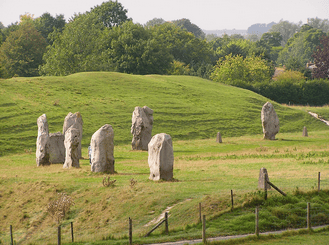
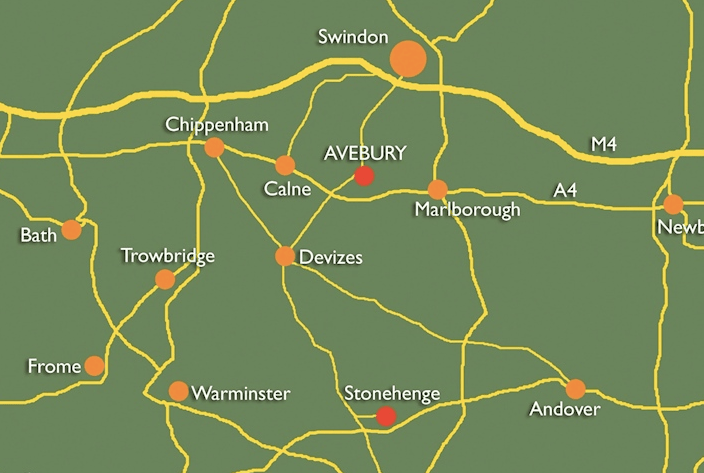
In the 1870s, he bought the land at Avebury
Helping prevent builders from developing the ancient stone circle site. From being built on. It protected Britain’s nation’s heritage. By 1882, the ancient monuments act, came into effect. He provided emphasis on time, and the legal protection that was needed.


Lubbock was also an amateur biologist of some distinction. Writing books on hymenoptera (ants, bees, wasp)
His book: Ants, Bees and Wasps: a record of observations on the habits of the social hymenoptera. From: Kegan Paul, London; Appleton, New York. Was published 1884. It was on insect sense organs. There development; and, the intelligence of animals. It included the first monograph, on Thysanura and UK Springtails (Collembola). He also discovered that ants were sensitive to light in the near ultraviolet range of the electromagnetic spectrum.
His other popular book, Chapters in popular natural history. Was also published.


He had 8 brothers; and, 3 sisters. And, two different wives. He rebuilt Kingsgate Castle. As his family home. Where he died in 1913. In addition to his family and scientific pursuits, Lubbock was a prominent figure in British politics. As Member of Parliament, and various governmental positions. His efforts led to passing of bank holidays, and the protection of neolithic and paleolithic terms.
Overall, John Lubbock was a multifaceted human being. He made significant contributions to various scientific fields. And, left a lasting impact on archaeology, entomology, and evolutionary theory. He will always be know, for his help, understanding prehistoric human societies.
Bibliography:
Mithen, Steven (2006). After the Ice: A Global Human History, 20,000-5000 BC (https://books.google.com/books?id=NVygmardAA4C&pg=PA514). Cambridge, MA: Harvard University Press. ISBN 978-0-674-01570-8.
Howarth & Howarth 1933, pp. 72–73 (http://darwin-online.org.uk/content/frameset?viewtype=text&itemID=A540&pageseq=85)
Baggs, A.P.; Freeman, Jane; Stevenson, Janet H (1983). Crowley, D.A. (ed.). “Victoria County History: Wiltshire: Vol 12 pp86-105
– Parishes: Avebury” (http://www.british-history.ac.uk/vch/wilts/vol12/pp86-105). British History Online. University of London.
Lubbock J. (1865) Pre-Historic Times, Williams & Norgate, London
Freeman 1978, p. 192 (http://darwin-online.org.uk/content/frameset?viewtype=text&itemID=A27&pageseq=199)
“Darwin Correspondence Project”, John Lubbock, 1834–1913″ (http://www.darwinproject.ac.uk/namedef-3026).
Thurley, Simon.”The Men from the Ministry”, Yale University Press. 2013. ISBN 978-0-300-19572-9
Recommended products
-

low tool high skills t-shirt
Price range: $60.00 through $70.00 -

na bold t-shirt
Price range: $60.00 through $70.00 -

sustainable building consulting
$2,000.00 -

log cabin shell
$20,000.00 -

experimental reconstruction products
-

jomon neolithic man women dig hole sticker
$4.00 -

course education service
$700.00 -

Pleistocene & megafauna coloring book
$2,500.00 -

f2j $450 long sleeve t-shirt
Price range: $80.00 through $90.00 -

button down shirt
Price range: $140.00 through $150.00 -

black peace button
$7.50

Leave a Reply