<home # start here # guides # builds # services # shop # about # categories>

Iraq ed-Dubb or “Cave of the Bear” is one of Jordan’s best-preserved Early Pre-Pottery Neolithic B (EPPNB) settlements. Unlike the large later villages of Ba’ja or ‘Ain Ghazal, Iraq ed-Dubb represents a small farming hamlet, occupied during the early stages of the PPNB, when communities were transitioning from circular PPNA houses to the rectangular architecture that became typical of later Neolithic villages.
The site is especially important because it preserves a rare combination of stone-built houses adjacent to a natural cave, providing excellent evidence for early farming, food storage, and household life during the ninth millennium BCE.
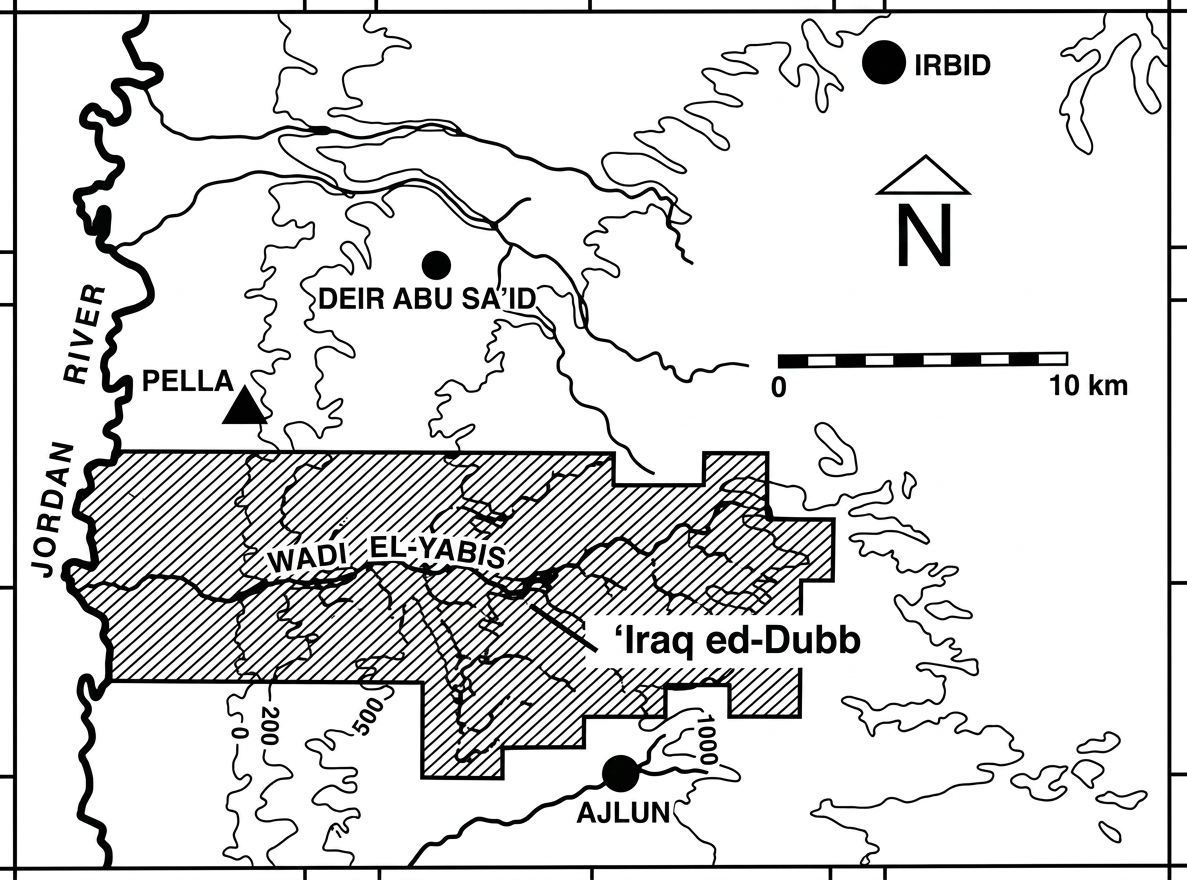
Iraq ed-Dubb is located in the Ajloun Highlands of northern Jordan, one of the wettest parts of the country
It is approximately 70 km north of Amman, around 30 km east of the Jordan Valley. 260 km north of Petra and far west of the Eastern Badia (Black Desert).
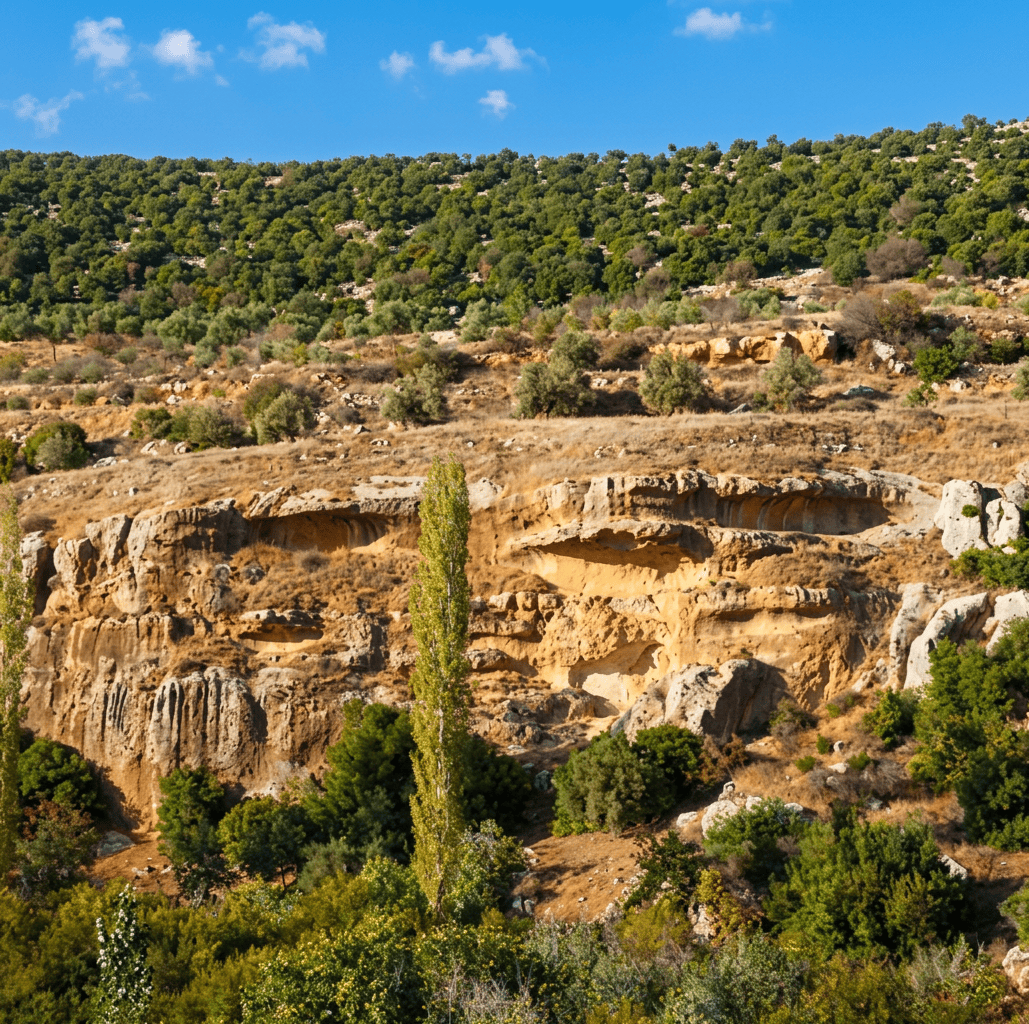
Unlike desert Neolithic sites, Iraq ed-Dubb occupied a well-watered upland environment with nearby springs and fertile soils.
Iraq ed-Dubb belongs primarily to the Early Pre-Pottery Neolithic B (EPPNB)
Phase Approximate dates
Early PPNB 8700–8200 BCE
Limited later activity after 8200 BCE
There is little evidence for a substantial PPNA occupation, although the site lies within a region that had earlier Epipalaeolithic and PPNA settlements.
Environment Around 9,000 Years Ago
Northern Jordan enjoyed a classic Mediterranean woodland climate. Vegetation likely included wild pistachio, almond, wild fig, oak, terebinth, hawthorn, pear and occasional wild olive.
The area received significantly more rainfall than southern or eastern Jordan and supported permanent springs and seasonal streams.
Archaeobotanical evidence indicates that Iraq ed-Dubb’s inhabitants practiced established agriculture
Recovered or inferred cultivated plants include emmer wheat, einkorn wheat, barley, lentils, peas and bitter vetch. Wild foods probably included pistachios, almonds, figs, acorns, wild grapes and more.
Large storage facilities indicate that cereals were an important part of the local economy.
Animal husbandry had become well established
Domestic animals included goats and sheep. While wild animals continued to be hunted, including gazelle, deer, wild boar, hare and birds. Zooarchaeological evidence suggests a mixed farming and herding economy, with hunting remaining a useful supplement.
The site sits within the limestone uplands of northern Jordan
Limestone is the dominant bedrock and was used extensively for house walls, terraces, retaining walls, paving and grinding stones
High-quality flint nodules occur naturally within the limestone formations and provided raw material for chipped stone tools.
Clay was available from nearby valley sediments for mud mortar and plaster.
And, unlike eastern Jordan, basalt is largely absent from the immediate area.
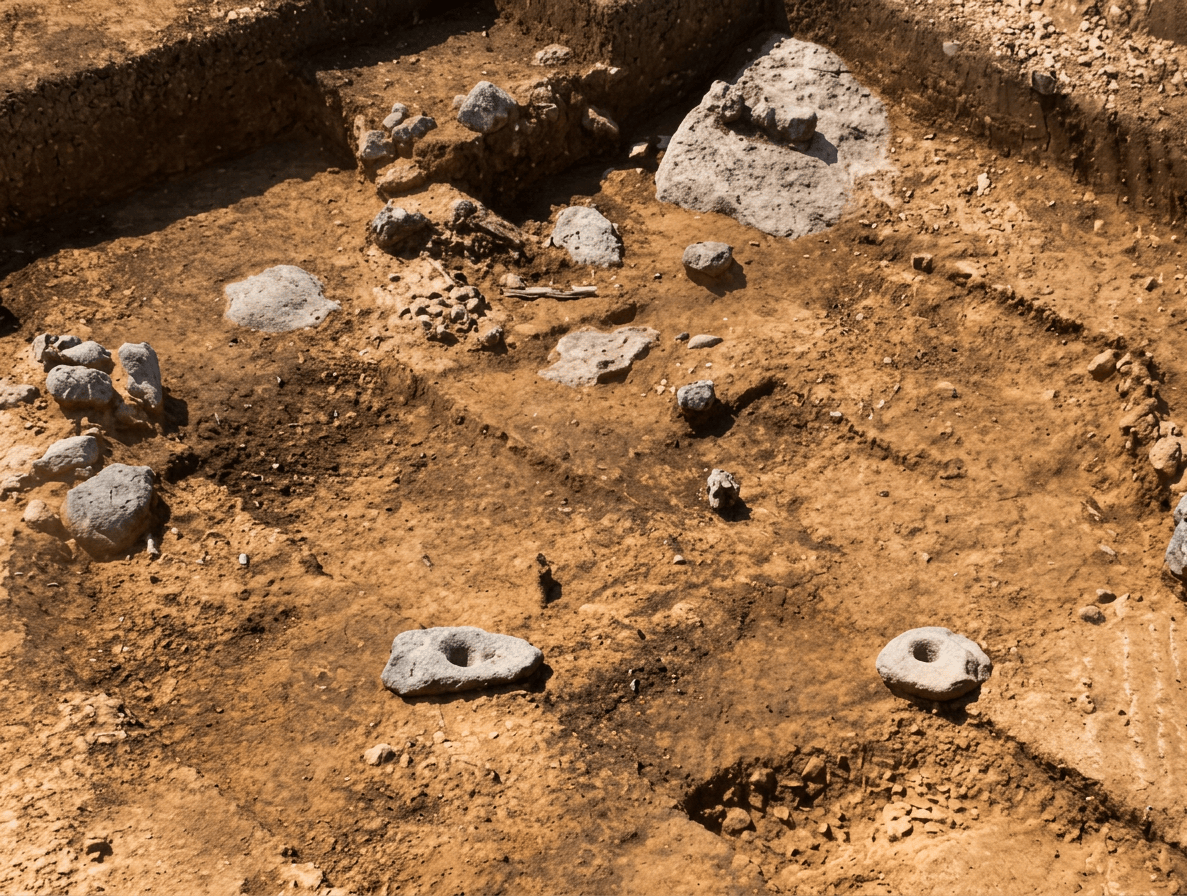
Iraq ed-Dubb is well known for its carefully built domestic structures
Excavations have revealed rectangular stone houses, stone foundations, mudbrick superstructures, lime-plastered floors, storage rooms, hearths, work spaces and, closely associated cave occupation.
The cave may have served as storage, shelter, workshop and seasonal living space
The settlement illustrates the transition toward permanent village life.
Recovered artefacts include: Byblos points, arrowheads, blades, sickle inserts, scrapers, burins and perforators.
Small quantities of Anatolian obsidian have been reported from Early PPNB contexts in northern Jordan, although Iraq ed-Dubb itself has yielded only limited evidence. Its presence in the region indicates participation in long-distance exchange networks.
Figurines and Symbolic Objects include: beads, personal ornaments, worked bone and shell objects
No major assemblage of anthropomorphic figurines has been reported, and there is no convincing evidence for gaming pieces.
Iraq ed-Dubb is particularly notable for (5): one of Jordan’s earliest farming hamlets;
association with a natural cave;
well-preserved storage facilities;
evidence for year-round occupation; and,
excellent preservation of Early PPNB architecture.
Its modest size offers an important contrast to later “mega-sites” such as ‘Ain Ghazal.
Occupation and Abandonment
Current evidence suggests: occupation during the Early PPNB, rebuilding of houses through several generations and eventual abandonment before the Late PPNB. There is no evidence for repeated destruction events. Instead, the site appears to have been gradually abandoned, perhaps as populations shifted to larger nearby villages.
Climate Change Over 10,000 Years
10,000–8500 BCE. Cooler, wetter, more extensive oak-pistachio woodland and reliable springs.
8500–6000 BCE. Holocene Climatic Optimum, productive farming and stable woodland.
After 6000 BCE. Gradual drying, woodland reduction and increased erosion.
Historic Period. Forest clearance, grazing, terracing and agricultural expansion. Today, the Ajloun region remains one of Jordan’s greenest landscapes.
Iraq ed-Dubb is one of the clearest examples of an Early PPNB farming hamlet in Jordan. It demonstrates how relatively small communities successfully combined agriculture, herding, woodland resources, and cave use before the emergence of the much larger Neolithic villages that later dominated the southern Levant. Its evidence for cereal cultivation, food storage, and permanent architecture makes it a key site for understanding the early development of settled farming.
References: Finlayson, B., Mithen, S., & colleagues. Publications on the excavation of Iraq ed-Dubb and Early PPNB settlement in northern Jordan.
Finlayson, B., & Mithen, S. (2007). The Early Prehistory of Wadi Faynan and Northern Jordan (regional context).
Rollefson, G. O. (1998). The Aceramic Neolithic of Jordan.
Kuijt, I., & Goring-Morris, N. (2002). Foraging, Farming, and Social Complexity in the Pre-Pottery Neolithic of the Southern Levant. Journal of World Prehistory.
Colledge, S., Conolly, J., & Shennan, S. (various publications on Early Neolithic archaeobotany in the southern Levant).
Leave a Reply