<home # start here # guides # builds # services # shop # about # categories>

Trust is one of the most powerful technologies humans have ever developed. Long before written contracts, governments, police forces, or banking institutions existed, Neolithic communities exchanged goods, shared resources, coordinated labor, and maintained social relationships across vast distances. The question is: how did they trust one another?
Archaeological evidence suggests that belief systems and trade networks worked together to create trust among growing populations. Shared rituals, symbols, ancestry, traditions, and exchange relationships allowed people to cooperate beyond their immediate families. In many ways, these systems laid the foundations for the complex societies that would later emerge throughout the ancient world (Graeber & Wengrow, 2021).
Sites such as Çatalhöyük, Göbekli Tepe, and Jericho reveal how trust may have been scaled from small groups to entire regions.
The Challenge of Cooperation
For most of human history, people lived in small bands where everyone knew each other personally. Trust was built through direct relationships, family ties, and repeated interactions.
As villages expanded during the Neolithic period, communities faced a new challenge. People increasingly interacted with strangers from neighboring settlements. Trade routes extended over hundreds of kilometers, and cooperative projects required coordination among larger groups.
Without mechanisms for creating trust, large-scale exchange would have been difficult and potentially dangerous. The archaeological record suggests that belief systems and trade networks evolved together as solutions to this problem (Cauvin, 2000).

Shared Beliefs as Social Glue (common symbols, ancestors and collective identity and ritual gatherings)
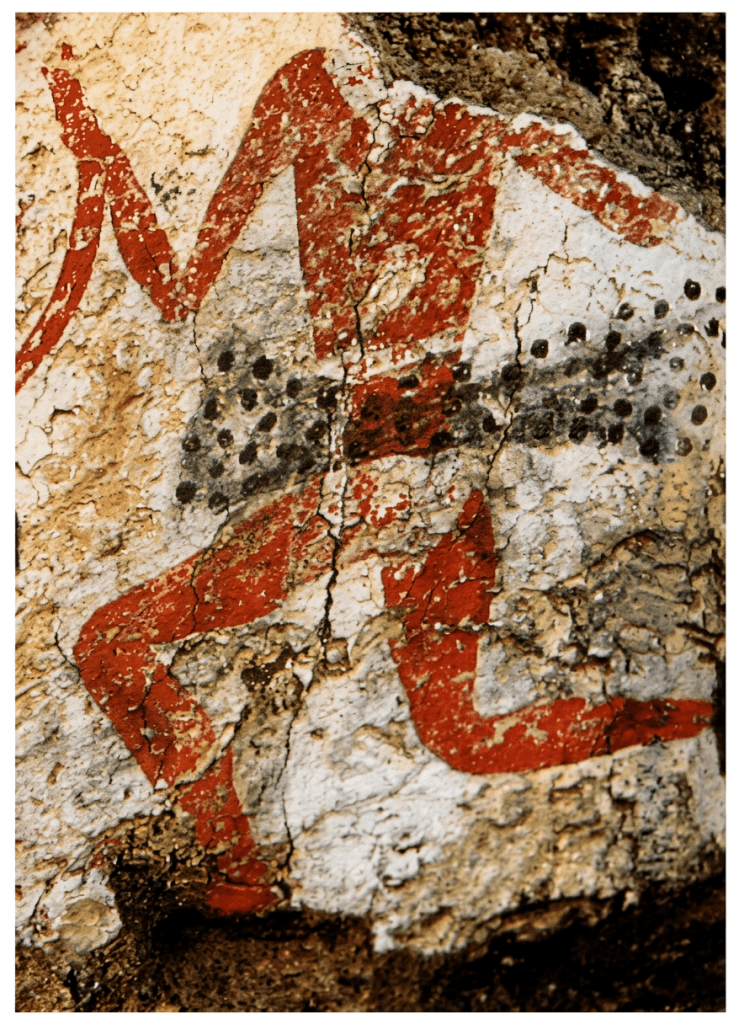
Common Symbols. Many Neolithic sites contain recurring symbolic imagery, including animals, geometric motifs, figurines, plastered skulls, and ceremonial architecture. These symbols may have functioned as a shared cultural language. When people recognized familiar rituals or iconography, they could identify others as belonging to a broader social network. At sites such as Göbekli Tepe, monumental stone pillars featuring animals and symbolic carvings suggest the existence of widely understood belief systems that extended beyond individual settlements (Schmidt, 2010).
Ancestors and Collective Identity. Ancestor veneration appears throughout many Neolithic communities. Burials beneath homes at Çatalhöyük and skull-focused rituals in the Levant may have reinforced social continuity across generations (Hodder, 2006; Kuijt, 2008). Shared ancestry narratives likely helped establish expectations of cooperation and reciprocity. When communities believed they were connected through common traditions or origins, trust could extend beyond immediate kinship groups.
Ritual Gatherings. Large ceremonial gatherings may have played a crucial role in maintaining regional relationships. Periodic feasts, construction projects, and ritual events allowed people from different settlements to meet, exchange information, establish partnerships, and reinforce social bonds. Such gatherings transformed strangers into familiar allies.

Trade Networks as Trust Networks (obsidian exchange, shells stone and prestige goods and repeated exchange)
Obsidian Exchange. One of the clearest examples of Neolithic trust networks involves obsidian, a volcanic glass prized for making exceptionally sharp tools. Archaeologists have traced obsidian from central Anatolian sources to settlements hundreds of kilometers away throughout the Near East (Renfrew, Dixon, & Cann, 1966). The movement of obsidian required more than transportation. It depended on stable relationships between communities that often had no centralized authority enforcing agreements.
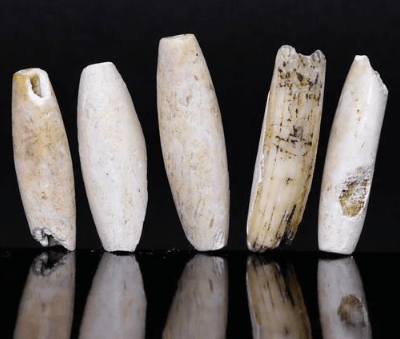
Shells, Stone, and Prestige Goods. Marine shells, decorative beads, pigments, and rare stones circulated across extensive trade routes during the Neolithic period. These objects often held symbolic as well as practical value. Exchanging such goods may have strengthened alliances and demonstrated commitment to ongoing relationships. Trade therefore functioned as a form of communication as much as an economic activity.
Repeated Exchange. Trust grows through repeated successful interactions. Communities that consistently honoured exchange agreements developed reputations for reliability. Over generations, these reputations became valuable social assets that encouraged further cooperation. In this sense, trade networks acted as self-reinforcing systems of trust.
The Role of Monumental Architecture
Large communal structures may have helped communicate trustworthiness and social commitment (Göbekli Tepe and Jerichos tower and walls)
Göbekli Tepe. The monumental stone enclosures required extraordinary cooperation among groups of hunter-gatherers and early farmers. Constructing and maintaining these structures would have demanded shared goals, coordination, and mutual trust (Schmidt, 2010). The site may have served as a regional gathering center where social relationships were renewed and strengthened.
Jericho’s Tower and Walls. At Jericho, large communal construction projects demonstrate the ability of communities to organize collective labor on a significant scale. Participation in such projects may have reinforced obligations and social cohesion among residents (Kenyon, 1981).

Community Investment
When people contribute labor to a shared structure, they create a visible commitment to the group. Monumental architecture therefore acts not only as a building but also as evidence of collective trust.
Trust Before Governments
Modern societies often rely on formal institutions such as courts, contracts, police, and regulatory systems to maintain cooperation. Neolithic societies generally lacked these mechanisms. Instead, trust appears to have been maintained through shared belief systems, ritual participation, kinship networks, reputation, reciprocal exchange, community labor projects and collective memory These informal institutions were remarkably effective. They enabled trade, construction, resource sharing, and cultural transmission across large regions for thousands of years.

Lessons from Çatalhöyük
The settlement of Çatalhöyük provides a particularly useful example. Thousands of people lived in close proximity for centuries without clear evidence of centralized political authority. The community maintained extensive trade connections while sharing symbolic traditions, burial practices, and architectural norms (Hodder, 2018). Trust was not imposed from above. Instead, it appears to have emerged through countless daily interactions reinforced by shared beliefs and reciprocal obligations. The site demonstrates that complex cooperation does not necessarily require strong hierarchical institutions.
Did Belief Create Trade, or Did Trade Create Belief?
Archaeologists continue to debate the relationship between ritual and exchange. One possibility is that shared beliefs emerged first, creating social bonds that enabled trade. Another possibility is that growing exchange networks encouraged communities to develop broader symbolic systems capable of connecting diverse populations. Most likely, the two processes reinforced one another. Belief systems increased trust, which facilitated trade. Expanding trade networks then spread ideas, symbols, and traditions to new regions. Together they formed powerful mechanisms for scaling human cooperation.
The Neolithic period witnessed one of the most important developments in human history: the expansion of trust beyond face-to-face relationships. Through shared beliefs, ritual practices, exchange networks, and communal projects, early societies learned how to cooperate with increasingly large groups of people. Sites such as Göbekli Tepe, Jericho, and Çatalhöyük demonstrate that trust was not merely a social virtue. It was a practical technology that enabled trade, construction, innovation, and cultural growth.
Long before written laws or formal governments emerged, belief systems and trade networks helped transform small communities into interconnected societies. Their success reminds us that civilization depends not only on buildings and tools, but also on the ability of people to trust each other.
References: Cauvin, J. (2000). The Birth of the Gods and the Origins of Agriculture. Cambridge University Press.
Graeber, D., & Wengrow, D. (2021). The Dawn of Everything: A New History of Humanity. Farrar, Straus and Giroux.
Hodder, I. (2006). The Leopard’s Tale: Revealing the Mysteries of Çatalhöyük. Thames & Hudson.
Hodder, I. (2018). Where Are We Heading? The Evolution of Humans and Things. Yale University Press.
Kenyon, K. M. (1981). Excavations at Jericho. British School of Archaeology in Jerusalem.
Kuijt, I. (2008). The regeneration of life: Neolithic structures of symbolic remembering and forgetting. Current Anthropology, 49(2), 171–197.
Renfrew, C., Dixon, J. E., & Cann, J. R. (1966). Obsidian and early cultural contact in the Near East. Proceedings of the Prehistoric Society, 32, 30–72.
Schmidt, K. (2010). Göbekli Tepe—The Stone Age sanctuaries. New results of ongoing excavations. Documenta Praehistorica, 37, 239–256.
Leave a Reply