< home # store # services # articles # game # app #contact >

The Dneiper-donets cultural complex (DDCC), was a mesolithic, and neolithic culture north of the Black sea. It dates to around 5000-4200 BC. It has parallels to the contemporary Samara culture to the north; (1)(2) and, Sredny Stog culture too. Which it was succeeded by. (3)(4)
It was also contemporary with the Bug–Dniester culture.(11) But is was clearly distinct from the Cucuteni–Trypillia culture. (5)(6)
DDCC was originally hunting and gathering. Economic evidence from earliest stages exclusivly from hunting fishing (7)
The culture is known from more than 200 sites (7)
Only a few settlements with semi subterranean huts been found (8). The huts were covered in bark. (8)
Archaeological sites associated with the Dneiper-Donets culture reveal the hunting, fishing, gathering; and, eventually part agricultural lifestyles
Settlements from this period include both permanent and semi-permanent villages. It was the shift from purely nomadic or semi-nomadic lifestyles to settled communities. DDCC was defined by Soviet archaeologist Dmytro Telehin. (9)(10)
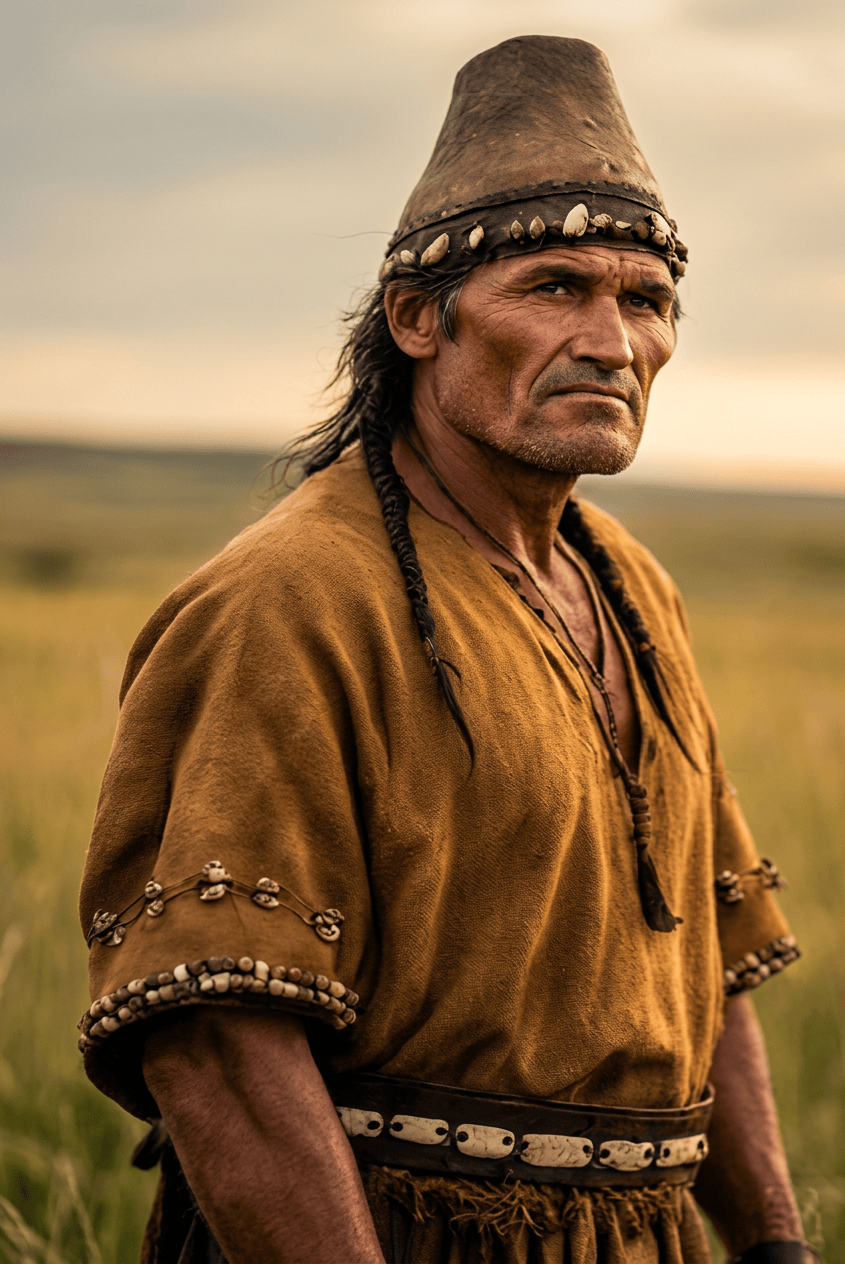
The Dnieper–Donets culture were strong. They were distributed in the steppe and forest-steppe areas north of the Black Sea. Throughout their existence, rapid population growth, and expansion towards the steppe is noticeable. The culture quickly expanded in all directions, eventually absorbing all other local neolithic groups.(7)
They used both microliths, bones, wood clubs; as well as flint and polished stone tools
Later phases see the appearance of polished stone axes, and flint; while the disappearance of microliths.[7]
This culture is notable for its distinctive pottery, which often features complex, decorative designs. Well-crafted and decorated, with patterns that may include incised, impressed, or stamped motifs. Initially it was pointed based. In later phases flat-based wares emerge. (7) The ceramics reflect a high level of skill and artistic expression.
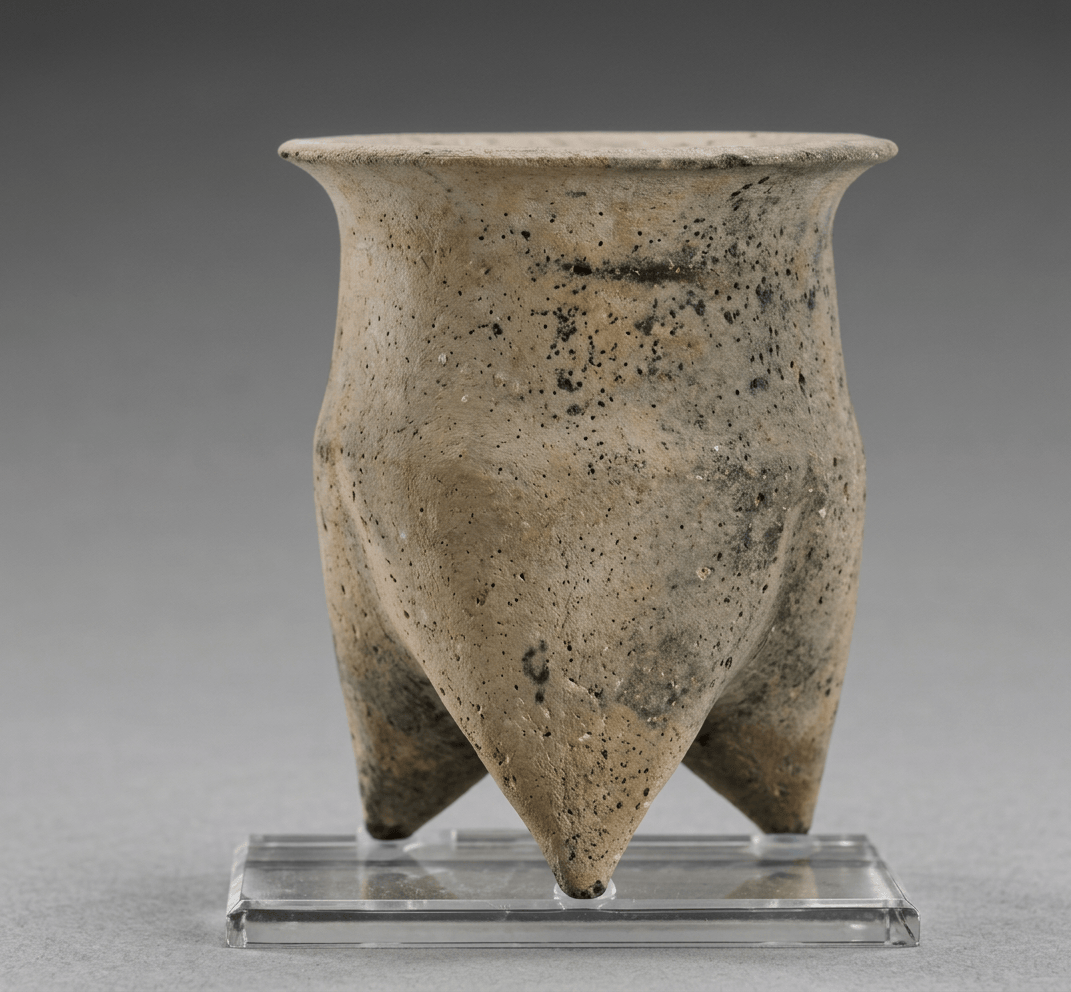
The early use of point base pottery interrelates with other mesolithic cultures. That were peripheral to the expanse of neolithic farmer cultures
The special shape of this pottery. That allowed them to cook on open fires.
It has been related to transport by log boat. Especially to wetland areas. Like the Swifterbant in the Netherlands, and Ertebølle. Also, Northern France, Belgium, Poland and others. (11)
Influences from the DDCC and the Sredny Stog culture on the Funnelbeaker culture have been suggested (12)
It remains controversial. (12)
The economy of the Dneiper-Donets culture was mixed. It supported a growing population
Evidence suggests a relatively complex society with specialized roles. It possibly included craft production and trade. And, the hunting, fishing, and gathering.
Did you know? In accordance with the original Kurgan hypothesis. J. Mallory (1997). Suggests DDCC were pre indo European speakers who were absorbed by Indo-Europeans expanding westward. (8)(13)
Physical anthropologists have pointed out similarities in the physical type of the Dnieper-Donets people with the Mesolithic peoples of Northern Europe. (8)
There rugged physical traits are thought to have genetically influenced later Indo-European peoples. (8)(14) Males were average 172 cm in height, which is much taller than other contemporary neolithic populations. (7)
Among food sources were aurochs, elk, red deer, roe, wild boar, fox, wildcat, hare, bear onager. (7) Primarily food high in protein, with meat, fish, nuts being consumed (8)
They also kept animals such as pigs, horses, and dogs. (7) And, Millet had also been recovered (15). As well as wheat, and pea. (8)
Many burials have been discovered. One notable thing was that tools and artifacts were found with children. It potentially shows wealth was inherited in Dnieper-Donets society, and that there was an existence of an institute of power. (9)
The Dneiper-Donets neolithic culture or DDCC, played a significant role in in Eastern Europe. It contributed to the broader patterns of social and economic change during the period. And, it contributes to the broader understanding of societies and cultures you see today.

Cite: 1) Mallory, J. P. (1991). In Search of the Indo-Europeans: Language Archeology and Myth (https://books.google.com/books?id=lENVpwAACAAJ). Thames & Hudson. pg. 206–207
2) Mallory, J. P.; Adams, Douglas Q. (1997). Encyclopedia of Indo-European Culture (https://books.google.com/books?id=tzU3RIV2BWIC). Taylor & Francis. ISBN 1884964982. pg. 498
3) Mallory 1991, pg. 210
4) Mallory 1991, pg. 174–182
5) Anthony, David W. (2010). The Horse, the Wheel, and Language: How Bronze-Age Riders from the Eurasian Steppes Shaped the Modern World (https://books.google.com/books?id=0FDqf41
5wqgC). Princeton University Press. ISBN 978-1-4008-3110-4. pg. 104
6) Anthony 2010, pg. 173–174
7) Mallory 1991, pg. 190–191
8) Mallory & Adams 1997, pg. 166–167
9) Anthony 2010, pg. 174–182
10) Anthony 2010, pg. 240
11) de Roever, Jutta Paulina (2004). Swifterbant-aardewerk: Een analyse van de neolithische nederzettingen bij Swifterbant, 5e millennium voor Christus (https://web.archive.org/web/20080
227223520/http://dissertations.ub.rug.nl/FILES/faculties/arts/2004/j.p.de.roever/thesis.pdf)
(PDF) (in Dutch). Barkhuis. Archived from the original (http://dissertations.ub.rug.nl/FILES/faculties/arts/2004/j.p.de.roever/thesis.pdf) (PDF) on 27 February 2008 pg. 162–163
12) Mallory 1991, pg. 252
13) Anthony, David (1 January 2019). “Archaeology, Genetics, and Language in the Steppes: A Comment on Bomhard” (https://www.academia.edu/39985565). Journal of Indo-European Studies
14) Kuzmina, Elena E. (2007). Mallory, J. P. (ed.). Encyclopedia of Indo-European Culture (https://books.google.com/books?id=x5J9rn8p2-IC). BRILL. ISBN 978-9004160545 pg. 384
15) Mallory & Adams 1997, pg. 384
Bibliography:
Mathieson, Iain (21 February 2018). “The Genomic History of Southeastern Europe” (https://www.ncbi.nlm.nih.gov/pmc/articles/PMC6091220). Nature. 555 (7695). Nature Research: 197–203. Bibcode:2018Natur.555..197M (https://ui.adsabs.harvard.edu/abs/2018Natur.555..197M). doi:10.1038/nature25778 (https://doi.org/10.1038%2Fnature25778). PMC 6091220 (https://www.ncbi.nlm.nih.gov/pmc/articles/PMC6091220). PMID 29466330 (https://pubmed.ncbi.nlm.nih.gov/29466330)
Leave a Reply