< home # store # services # articles # game # app #contact >


It’s challenging to pinpoint a specific individual or culture responsible breads discovery. It probably dates back tens of thousands of years
A leading team from university of Copenhagen claims it was Natufians first. At Shubayqa 1 in Jordan.
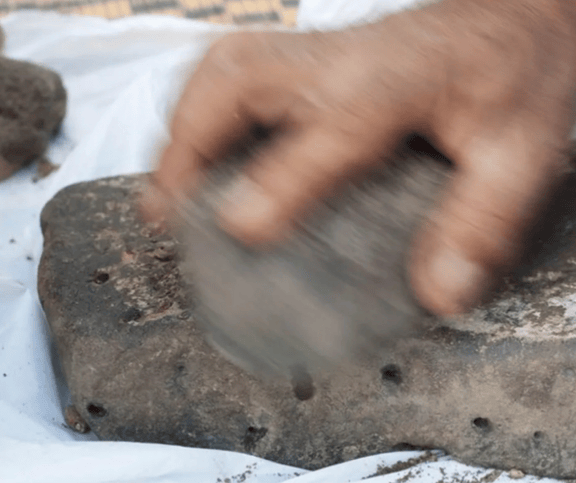
Because of the development of agriculture, and finds in the region. It likely originated here, and independently in various other places
The process of making bread involves combining flour and water to create a dough, which is then typically leavened using yeast or other agents
The use of leavening agents is crucial for creating the characteristics and texture of bread.
Early forms of leavened bread may have occurred accidentally, when wild yeast in the environment interacted with the flour and water mixture, causing it to ferment and rise
Shubayqa 1 is an archaeological site located in northeastern Jordan, near the northeastern edge of the Jordanian desert
The site gained significance due to its association with bread-making, and unique oven design. Providing insights into the past.

Excavations at Shubayqa 1, led by researchers from the university of Copenhagen, revealed evidence of a Natufian settlement dating back to around 14,000 years ago
The Natufian culture existed during the Late Epipaleolithic period in the Near East, approximately between 12,000 and 9,800 BC.
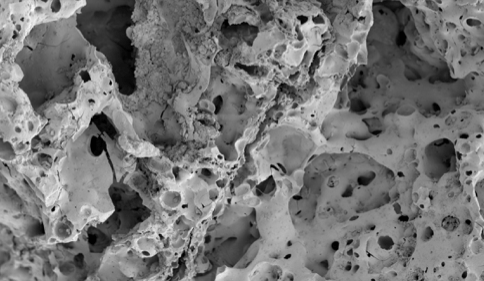
One of the key findings at Shubayqa 1 is a hearth containing charred plant remains. Analysis of these remains indicated the presence of wild cereals. Particularly wild einkorn wheat and wild barley
The significance of this discovery is that it suggests the inhabitants of Shubayqa 1, were processing, and possibly baking wild cereals. Making it one of the earliest known instances of bread-making. Identified in current human history. (1, 2)
Did you know? In Europe and Austrailia, they have found grinding stones, dated to 30,000 years ago. But they’res no corresponding evidence they were used for crushing grains and seeds into flour. (3,4)
The findings at Shubayqa 1 contribute valuable information to our understanding of the transition from a hunter-gatherer lifestyle to settled agriculture
The evidence of early bread-making at the site suggest inhabitants were experimenting. They wanted to test the processing of wild cereals before the advent of farming, and agriculture. It was an important step in the development of food production, and, the eventual cultivation of domesticated crops.
Did you know? A Stanford university team, analyzed residues on three Natufian stone mortars. They were unearthed roughly 150 miles west of Shubayqa 1. In Israel’s Raqefet cave. On them, they detected evidence that Natufians were brewing beer from wild wheat and barley 13,000 years ago. This was well before the grains were domesticated. The two discoveries, suggest our prehistoric ancestors, were both bakers and brewers. Thousands of years before they even contemplated becoming farmers full time.
The development of bread-making techniques coincided with advancements in agriculture, particularly the cultivation of grains such as wheat
As such, societies became more settled and agriculture flourished. It was during the neolithic period, the production of bread became a staple of many diets.
While the exact inventor of bread remains unknown. A team from Copenhagen has identified a probable location in Jordan. It’s discovery and evolution are integral to human history and the development of civilizations. The art and science of bread-making have continued to evolve over the centuries. Leading us to the diverse array of bread types, and styles we enjoy today.
-
 neolithic diet t-shirtPrice range: $60.00 through $70.00
Citation: 1) Briggs, Helen (17 July 2018). “Prehistoric bake-off: Recipe for oldest bread revealed” (https://www.bbc.co.uk/news/science-environment-44846874). BBC News. British Broadcasting
Corporation.
2) Arranz-Otaegui, Amaia; Gonzalez Carretero, Lara; Ramsey, Monica N.; Fuller, Dorian Q.;
Richter, Tobias (16 July 2018). “Archaeobotanical evidence reveals the origins of bread 14,400
years ago in northeastern Jordan” (https://www.ncbi.nlm.nih.gov/pmc/articles/PMC6077754).
Proceedings of the National Academy of Sciences. 115 (31): 7925–7930.
Bibcode:2018PNAS..115.7925A (https://ui.adsabs.harvard.edu/abs/2018PNAS..115.7925A).
doi:10.1073/pnas.1801071115 (https://doi.org/10.1073%2Fpnas.1801071115). PMC 6077754
(https://www.ncbi.nlm.nih.gov/pmc/articles/PMC6077754). PMID 30012614 (https://pubmed.nc
bi.nlm.nih.gov/30012614).
3) Behrendt, Larissa (22 September 2016). “Indigenous Australians know we’re the oldest living
culture – it’s in our Dreamtime | Larissa Behrendt” (https://www.theguardian.com/commentisfre
e/2016/sep/22/indigenous-australians-know-were-the-oldest-living-culture-its-in-our-dreamtime)
. The Guardian. ISSN 0261-3077 (https://www.worldcat.org/issn/0261-3077).
4) “Prehistoric man ate flatbread 30,000 years ago: study” (https://phys.org/news/2010-10-prehist
oric-ate-flatbread-years.html). phys.org.
Bibliography: Powell, E. A. (n.d.). The First Bakers – Archaeology Magazine. https://www.archaeology.org/issues/323-1901/features/7197-jordan-shubayqa-natufian-pita
.
Leave a Reply