<home # start here # guides # builds # services # shop # about # categories>
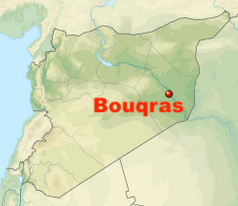
Tell Bouqras compares with other northern Levant PPNB sites like Dja’de, Mureybet, and Abu Hureyra
It is on the right bank of the Euphrates, 35 km SE of Deir ez‑Zor;
Its economy was of rain‑fed cereals (emmer, einkorn, barley), pulses; sheep/goat herding; hunting; and
And, there was exchange quantities of obsidian (Anatolian links).

Architecture had rectangular mudbrick houses with 3 to 4 rooms, plastered interiors; hearths, decorations, and organized house plans
Location, environment and vegetation
Tell Bouqras sits on a promontory overlooking the Euphrates floodplain, directly opposite the Khabur mouth; it exploited both riverine resources (poplar, tamarisk) and steppe vegetation. Palaeobotanical work records river‑forest taxa.
Economy and farming
Flotation and seed analyses show cultivated cereals (emmer, einkorn, hulled/naked barley) and pulses, indicating rain‑fed agriculture was practiced at Bouqras during the Neolithic; sheep/goat remains indicate herding was established, but Bouqras is part of a regional adoption of farming rather than the single origin of domestication.
Bouqras lacks a single famous ritual “house” like Dja’de, or others
Though communal features like drawings, storage pits and specialized rooms appear.

There are stamp seals, beads (bone, shell, carnelian), alabaster/gypsum vessels and clay figurines. And, later thousands of pottery sherds appear.
Excavation history and institutions
Discoverers/excavators: Willem J. van Liere (survey), Henri de Contenson (1965 trial), later campaigns and re‑excavations led by Dutch teams including H. T. Waterbolk, M. van Loon, P. Akkermans (1976–78). Major analyses published by teams from the Universities of Amsterdam and Groningen and collaborators.
Bouqras was a large Euphrates‑valley PPNB tell with evidence for early farming (wheat/barley, pulses), sheep/goat herding, long‑distance exchange (obsidian), & well‑organized rectangular mudbrick houses. Check it out with some more neolithic architecture today!

References: Van Zeist & Waterbolk‑van Rooijen, “The Palaeobotany of Tell Bouqras” (Paléorient 1985) — archaeobotanical dataset.
Akkermans et al., “Bouqras Revisited” (Proceedings of the Prehistoric Society) — field report and synthesis.
Wikipedia contributors. Bouqras – Wikipedia. https://en.wikipedia.org/wiki/Bouqras
Leave a Reply