<home # start here # guides # builds # services # shop # about # categories>
Before metals transformed human technology, Neolithic communities relied on an enormous range of organic materials to survive and build permanent settlements. Among the most important were bone and antler tools. Strong, flexible, renewable, and widely available, these materials played a major role in construction, farming, hunting, textile production, woodworking, and daily life.
Although stone tools often receive the most attention in discussions of prehistory, bone and antler technologies were equally important. In many situations, they offered advantages that stone could not. Bone could be shaped into fine points and needles, while antler provided toughness and shock resistance ideal for heavy-duty work.
Across the Neolithic world, from the Near East and Europe to Asia and the Arctic, bone and antler tools formed part of a highly adaptable technological system that supported the rise of villages, agriculture, and architecture.

Why Bone and Antler Were Valuable
Neolithic people used nearly every part of the animals they depended on. Bone and antler were especially useful because they were: Durable, Lightweight, Renewable, Easier to shape than stone, Resistant to certain forms of breakage & Widely available from hunting and domesticated animals.
Unlike stone, bone and antler could also flex slightly under pressure. This made them effective for tools requiring impact resistance or fine precision. Common sources included: Deer antler, Elk antler, Reindeer antler, Cattle bone, Sheep and goat bone, Wild boar tusks & Large mammal long bones. Different animal parts served different purposes depending on their density, shape, and strength.
The Difference Between Bone and Antler
Although often grouped together, bone and antler have different physical properties. Bone is: Dense, Hard, Relatively brittle & Good for sharp precision tools. Bone worked well for: Needles, Awls, Pins, Fine carving tools & Fish hooks.
Antler is: Tougher, More flexible, Shock resistant, & Fibrous internally. Antler was especially useful for: Hammer tools, Picks, Pressure flakers, Hoes, Wedges & Heavy-duty carving tools. Because antler absorbs impact better than bone, it became important in quarrying, woodworking, and stone tool production.

How Bone and Antler Tools Were Made
Creating tools from bone and antler required careful shaping and finishing.
Step 1: Material Selection. Toolmakers selected parts based on intended use. Examples: Long bones for needles and awls; Antler tines for points and wedges; & Dense joint sections for heavy-duty tools. Fresh material was often easier to shape than dry material.
Step 2: Splitting and Rough Shaping. Bones and antlers were: Cut, Broken, Grooved & Split using stone tools. Hammerstones, flint blades, and wedges helped shape rough blanks.
Step 3: Scraping and Grinding. The surface was refined using: Abrasive stone, Sand & Flint scrapers. This stage could produce: Sharp edges, Smooth handles & Polished points
Step 4: Polishing and Hafting
Some tools were polished extensively to reduce friction and improve durability. Others were hafted into wooden handles using: Plant fibers, Sinew, Resin & Bitumen.
Common Bone and Antler Tools
Awls were pointed tools used for: Piercing leather, Basketry, Textile production & Repair work. They were among the most widespread Neolithic bone tools.
Needles. Bone needles allowed people to: Sew clothing, Repair bags, Create shelters & Produce woven materials. Some were extremely fine and carefully polished.
Fish Hooks and Harpoons. Bone points and hooks supported: Fishing, River harvesting & Coastal economies. Barbed harpoons appear in many prehistoric regions.
Antler Picks. Antler picks were important in: Digging, Quarrying & Mining. Archaeologists have found antler picks in prehistoric flint mines across Europe. These tools may have been used to: Loosen sediment, Extract flint nodules, Break soft rock.
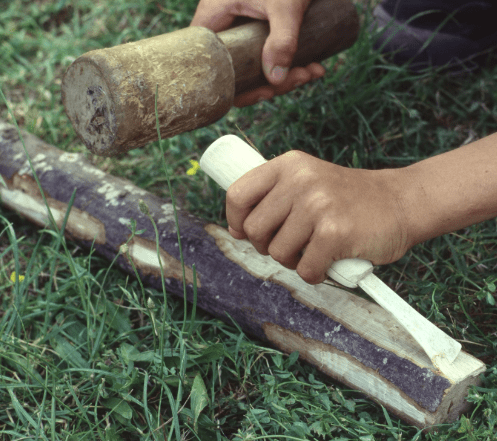
Wedges. Bone and antler wedges helped split: Wood, Stone & Bone itself. Builders may have inserted wedges into cracks and expanded them using water or hammering.
Pressure Flakers. Antler pressure flakers were essential in advanced flintknapping. These tools helped shape: Arrowheads
Blades, Scrapers & Fine stone tools. The flexibility of antler allowed precise pressure control.

Bone and Antler in Neolithic Construction
Bone and antler tools played supporting roles in architecture and settlement building. In woodworking assistance antler wedges and carving tools helped: Split timber, Shape beams & Refine wooden joints. Bone awls may have been used in: Cordage work, Roofing materials, Hide coverings, Basket construction, Quarrying & Mining. Some of the clearest archaeological evidence comes from prehistoric mines.
Sites like Grimes Graves in England, archaeologists discovered antler picks used for flint extraction, underground digging & sediment removal. This demonstrates that large-scale resource extraction existed long before metal mining technologies.
Clay and Earth Construction
Bone tools may also have assisted in: Smoothing clay, Incising decoration & Basket weaving for wattle-and-daub systems. Organic tools were often better suited for finer finishing work than heavy stone implements.
Antler Tools and Flint Technology
One of the most important uses of antler was in stone tool manufacturing itself. Flintknappers used antler hammers and pressure flakers because antler transfers force differently than stone. They reduce uncontrolled fractures & it allows finer shaping. This technology helped produce: Thin blades, Sharp edges, Symmetrical points & Polished tool preforms. Without antler tools, many advanced stone-working techniques would have been much more difficult.
Evidence from Archaeological Sites
Bone and antler tools have been discovered across countless Neolithic settlements and burial sites. Important evidence includes: Wear patterns, Polishing marks, Cut marks, Manufacturing debris & Hafting traces. However, organic tools are often underrepresented archaeologically because: Bone decays, Organic materials rot & Soil acidity destroys preservation. Dry caves, waterlogged sites, frozen regions, and protected burials tend to preserve these artifacts better.
Ritual and Symbolic Uses
Some bone and antler objects may also have carried symbolic importance. Possible ceremonial uses include: Decorated handles, Animal symbolism, Status objects, Ritual deposits & Burials with tools. Antlers especially may have represented: Strength, Seasonal cycles, Hunting power & Fertility. In some regions, animal materials likely held both practical and spiritual significance.

Regional Variations
Europe. Red deer antler became widely used in: Flint mining, Farming tools & Woodworking.
Arctic and Subarctic Regions. Bone technologies remained extremely advanced because: Wood was scarce, Marine hunting dominated & Organic materials were abundant.
Near East. Bone awls and needles were common in early agricultural villages.
East Asia. Bone tools supported fishing, weaving, and woodworking traditions.
Experimental Archaeology and Modern Understanding
Modern experiments have helped researchers understand how effective bone and antler tools truly were. Reconstructed tools show that: Antler picks can excavate substantial soil and chalk; Bone needles are highly durable; Antler pressure flakers allow remarkable precision; and, Organic tools can survive extensive repeated use. These experiments challenge outdated assumptions that prehistoric technologies were crude or inefficient.
The Importance of Organic Technologies
Modern discussions of prehistoric technology often focus too heavily on stone monuments and flint blades. Yet Neolithic societies depended equally on organic tools made from bone, antler, wood, hide, and fiber. Bone and antler technologies reveal: Sophisticated material knowledge, Efficient resource use, Adaptation to local environments, Specialized craftsmanship & Early engineering traditions. They also demonstrate how closely human survival was connected to animals, ecosystems, and seasonal cycles.
Bone and Antler as Foundations of Early Technology
Axes and stone blades may have shaped landscapes, but bone and antler tools helped hold entire Neolithic societies together.
They assisted in: Construction, Agriculture, Clothing production, Fishing, Mining, Basketry & Toolmaking. These organic technologies were flexible, repairable, renewable, and deeply integrated into everyday life.
Understanding bone and antler tools provides a fuller picture of Neolithic innovation — one based not only on stone monuments, but also on careful craftsmanship, environmental adaptation, and complete use of natural resources.
Leave a Reply