< home # store # services # articles # game # app #contact >


The exact origin of beer is difficult to pinpoint, but evidence suggests that brewing beer has a long history. Predating recorded history
The earliest chemically confirmed barley beer to date was discovered at Godin Tepe in the central Zagros Mountains of Iran. During the chalcolithic or Late Uruk Period. Around 3400 to 3000 BC.
Malted wheat/or barley; water; and, yeast is fermented. To make beer
Adding a dietary staple in ancient near east civilizations was formed. Malting the grains, whereby starches transform to sugars, increased the caloric value. And, because alcohol killed the bacteria. Beer formed natural nutrition. The brewing process involved malting, mashing, boiling, fermenting. And sometimes flavoring with various herbs or spices.
Ancient evidence suggests that beer was highly regarded and used extensively is religious ritual (1)
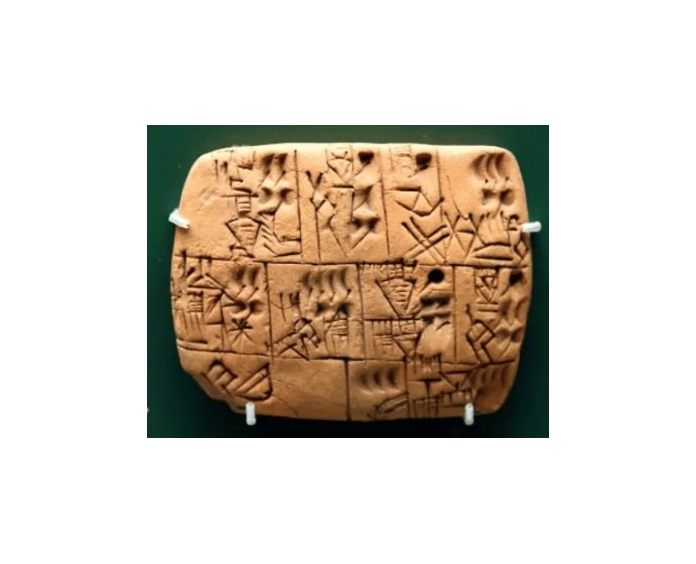
Sumerians are often credited with developing some of the earliest written recipes for brewing beer on clay tablets
These tablets detail the brewing process, including the use of ingredients like barley.


The university of Pennsylvania, analyzed Godin Tepes large wide mouth jugs. To determine beers manufacture date (2)(3)
The jugs were decorated with notched ropes on there exterior. Included was a knot, with loose ends hanging down. And, applied to two handles on one side. Probably for holding when you are drinking. There were many decorations on the jugs found. In part, with the royal Ontario museums research and U of Ps findings.

Interpreted as a ‘prehistoric silk road’. A ‘great Khorasan Rd.’ passed near Godin Tepe
Found in the digs was a large central supply room. The Godin ‘oval’. Where the beer jugs were found. At the time, it was import because of other important artifacts and botanicals were found. Including the then-earliest wine jars; pictographic tablets; sling-stones; carbonized barley and lentils; and, beveled-rim bowls for bread production. There was also a probable wine press and a large funnel, for making wine; and, identification that partying and events took place here.
The Khurasan road was used to transport wine; semi-precious stones, (such as lapis lazuli from Afghanistan); metals: including copper, silver and gold; and, wood
Sometimes items were unavailable in the Tigris-Euphrates valley. It’s believed that much earlier, palaeolithic humans may have even followed the same route (Khurasan road) east.
In many ancient societies. Beer had cultural, religious, and economic significance
It was consumed daily by people of various social classes. And, it was often associated with religion. We know from later texts, that beer, wine, or some other item was used most common in Mesopotamia. Even the upper class there would normally have drunk beer. Many varieties of beer were enjoyed: light, dark, and amber beers. Sweet beers, specially filtered beers, and more.
As ancient civilizations interacted through trade and conquest. The knowledge of beer brewing spread to different parts of the world. Including Europe and Asia

The invention and evolution of beer have played a significant role in human history, shaping social, cultural, and economic aspects of various civilizations over thousands of years.
Citation: 1) Michael M. Homan, Beer and Its Drinkers: An Ancient near Eastern Love Story, Near Eastern Archaeology, Vol. 67, No. 2 (Jun. 2004), pp. 84–95.
2) R. H. Michel, P. E. McGovern, and V. R. Badler 1993 The First Wine and Beer: Chemical Detection of Ancient Fermented. Analytical Chemistry 65: 408A-413A.
3) R. H. Michel, P. E. McGovern, and V. R. Badler
1992 Chemical Evidence for Ancient Beer. Nature 360 (Nov. 5): 24.
Bibliography:
“Beer” (http://www.britannica.com/eb/article-66615/beer). Britannica.com. Archived (https://web.archive.org/web/20070511010251/http://www.britannica.com/eb/article-66615/beer) from the original on 2007-05-11.
Leave a Reply