< home # store # services # articles # game # app #contact >
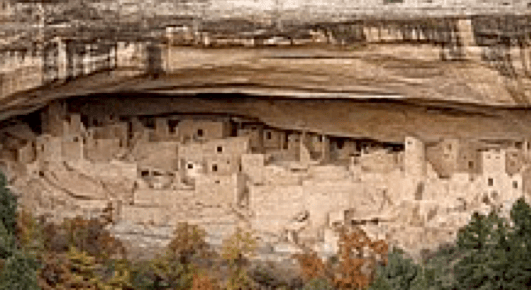
A prehistoric native American civilization inhabited the four corners region of the southwestern United States. Utah, Arizona, New Mexico, and Colorado
They are known for their distinctive architecture, including cliff dwellings, pueblos (multi-story stone structures), and kivas (underground ceremonial chambers). As well, sophisticated pottery; artwork; and trade.
Ancestral Pueblo people may have been the home of the north American southwest. Where they crafted there unique architecture there, and planned community spaces. They are perhaps best known for stone dwellings. Its people built, along cliff walls. At Mesa Verda
Typically they were centered around these dwellings, or pueblos. They were organized into communities. Having complex social and religious structures; and, engaged in trade networks, with neighboring groups.
Its not just Mesa Verde, (near Cortez, Colorado). Chaco Canyon, (outside Crownpoint, New Mexico); and, Bandelier national monument (near Los Alamos, New Mexico). Have brought renown to the ancestral Pueblo peoples
Consisting of apartment type complexes, and structures made of stone, adobe mud, and other local material. They carved into canyon walls. And, built/brought the ancestral people a unique tradition. It gave the Pueblo people recognition. They also adopted design details from other cultures. Like Mexico.
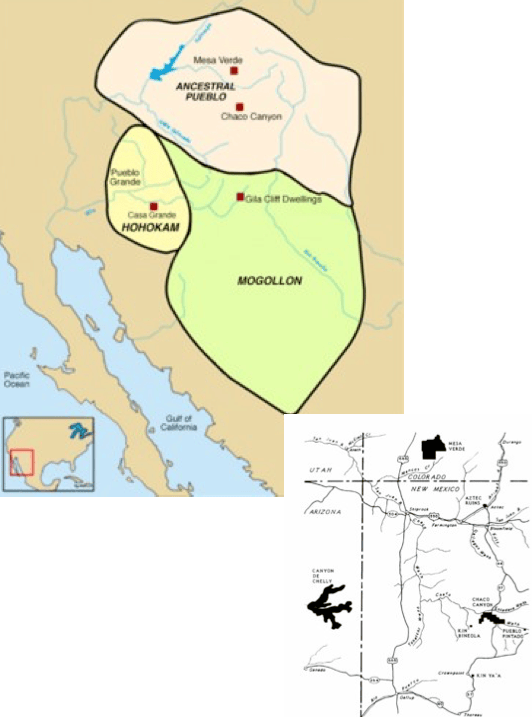
Known as oasis America. The ancestral Puebloans, were one of four major prehistoric archaeological traditions
The others are the Mogollon, Hohokam, and Patayan. All are recognized in the north American south west.
They were skilled hunters and farmers. While cultivating maize (corn), beans, and squash. They traveled
To compensate hunting. They developed sophisticated irrigation systems. And, to help with the sometimes arid landscapes. It supported their agricultural activities, and trade.
Because of environmental change; social upheaval, and a combination of factors. Around the late 13th century, ancestral Puebloan society began to decline
Many ancestral Puebloan communities abandoned their settlements, and migrated to other areas. Many evolved, into the modern Pueblo peoples. Such as the Hopi, Zuni, and Rio Grande.
Did you know? The term “ancestral Puebloans” is preferred by archaeologists and native American communities. “Anasazi,” is a Navajo word meaning “ancient enemies” or “ancient ones”. It has sometimes been negatively connotated .
Today, Mesa Verde, Chaco Canyon, and Bandelier are main sites, left behind by the ancestral Puebloans. And, they are preserved as American national parks you can go visit. These sites, and other surrounding landscapes, provide insight into rich cultural heritage, and way of rich, prehistoric; south western, north American life.

Bibliography: Fagan, Brian M. “Ancient North America: Tha Archaeology of a Continent (part five).” Thames and Hudson, Inc., New York City, 1991. ISBN 0-500-05075-9
Hewit (2010-07-09). “Puebloan Culture” (https://web.archive.org/web/20100709073248/http://hewit.unco.edu/dohist/puebloan/begin.htm). University of Northern Colorado. Archived from the original (http://hewit.unco.edu/DOHIST/puebloan/begin.htm)
Cordell, Linda; McBrinn, Maxine (2012). Archaeology of the Southwest (3 ed.)
“Ancestral Pueblo culture” (https://www.britannica.com/EBchecked/topic/22804/Ancestral-Pueblo-culture). Encyclopædia Britannica.
Leave a Reply